Every fact about the flag, each with what it means.
Proportions
10:1919 wide for every 10 high. 2 flags in the catalogue share it.
Properties
Normal flagFIAV symbol: the form of the flag.
Use
Civil, state and militaryFIAV symbol: who may fly the flag.
Adopted
19604 July 1960 · 66 years ago
Colours
Red
White
Blue
Reference shades: the official one may vary slightly.
Coat of arms
YesIt carries the coat of arms on the cloth.
Nickname
The Stars and Stripes, Old Glory
Origin
Grand Union Flag (1775)
Take a closer look
The thirteen stripes
1
The fifty stars
2
The blue canton
How it is described
The flag in the words of vexillology and heraldry.
Vexillological description
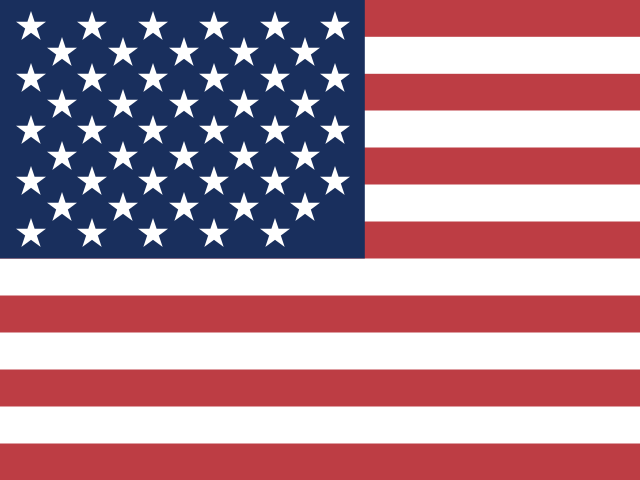
It is a rectangular field —the field is the cloth of the flag— with a 10:19 ratio, with thirteen alternating red and white stripes and a blue rectangle with fifty stars in the upper corner next to the flagpole.
Stripes (a stripe is a band of colour)
thirteen, all of the same thickness; the first and the last are red.
Canton
the blue rectangle in the upper corner on the hoist side (the pole it is hoisted on); it takes up seven stripes in height and two fifths of the length.
Stars
fifty white five-pointed ones, in nine alternating rows of six and five.
No coat of arms
it carries no coat of arms or other figure.
What it carries
Each element and how many of the 1,390 flags in the catalogue carry it. In yellow, the rarest.
In 1775 the Thirteen Colonies rose against Great Britain
1776
Thirteen stripes: the thirteen colonies that declared independence in 1776
1777
After the Declaration of Independence, on 14 June 1777 Congress approved a very brief resolution:…
1782
In 1782, for the Great Seal of the country
The full story
How it was born, how it has changed and what it means.
The flag of the United States is one of the most recognisable in the world. It has thirteen horizontal red and white stripes and a blue rectangle in the upper corner with fifty white stars. Its great peculiarity is that it is designed to grow: every time the country adds a state, the flag adds a star.
How it came about
In 1775 the Thirteen Colonies rose against Great Britain. Their troops used the Grand Union: thirteen red and white stripes with the British flag in the corner. They were not yet talking about independence.
After the Declaration of Independence, on 14 June 1777 Congress approved a very brief resolution: thirteen red and white stripes and thirteen white stars on a blue field, ‘a new constellation’. It did not say how to arrange the stars, so each maker laid them out in their own way. Nobody knows for certain who designed it: the politician Francis Hopkinson claimed authorship, but Congress did not acknowledge it.
How it has changed
It has changed 26 times, almost always to add stars. These are the key versions.
1775-1777
The Grand Union of the rebellious colonies.
1777-1795
First official flag: thirteen stars, one for each colony.
1795-1818
Vermont and Kentucky arrive: two more stars and two more stripes.
1818-1819
A law returns the stripes to thirteen. Since then every new state adds only one star, on the following 4 July.
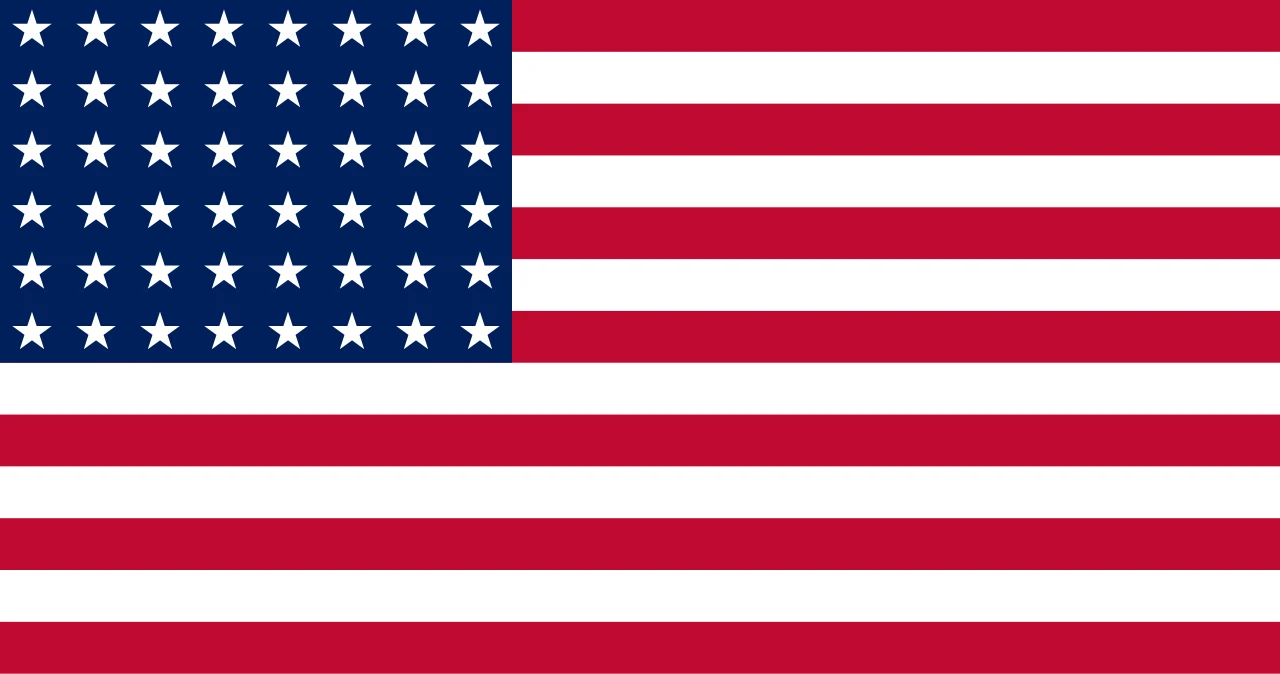
48 stars. For the first time a rule fixes their position: six rows of eight.
1960
With Alaska and Hawaii the fifty arrive. It is the version that has lasted longest.
What it means
The stripes and the stars have a clear meaning. The colours, not so much:
Thirteen stripes
the thirteen colonies that declared independence in 1776.
Fifty stars
today’s fifty states, united as a constellation.
Red, white and blue
the 1777 resolution gave them no meaning. In 1782, for the Great Seal of the country, it was said that white is purity, red valour and blue justice. Many people apply that reading to the flag today.
Fun facts
Betsy Ross, a story without proof
According to tradition, the seamstress Betsy Ross sewed the first flag for George Washington. Her grandson told the story in 1870 and no document confirms it.
The flag that inspired the anthem
In 1814, after a British attack, a flag of fifteen stars about 9 by 13 metres was still flying over Fort McHenry in Baltimore. On seeing it, Francis Scott Key wrote the poem that is today’s anthem.
A school project that perhaps was not
The fifty-star version is attributed to Robert Heft, a student from Ohio. A 2022 journalistic investigation concluded that the story does not hold up: that design was already circulating in the early 1950s.
Six flags on the Moon
Every Apollo mission that reached the Moon planted one. Photos from a probe showed in 2012 that almost all are still standing, except Apollo 11’s: the engine knocked it over at lift-off.
Buy the flag
Buy the flag on AmazonAffiliate link: if you buy, Wiki Banderas receives a small commission.
Buy the flag on AmazonAffiliate link: if you buy, Wiki Banderas receives a small commission.
Buy the flag on AmazonAffiliate link: if you buy, Wiki Banderas receives a small commission.




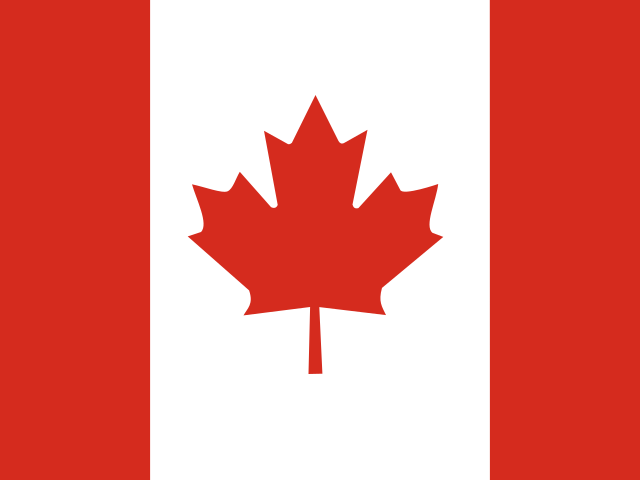 Canada
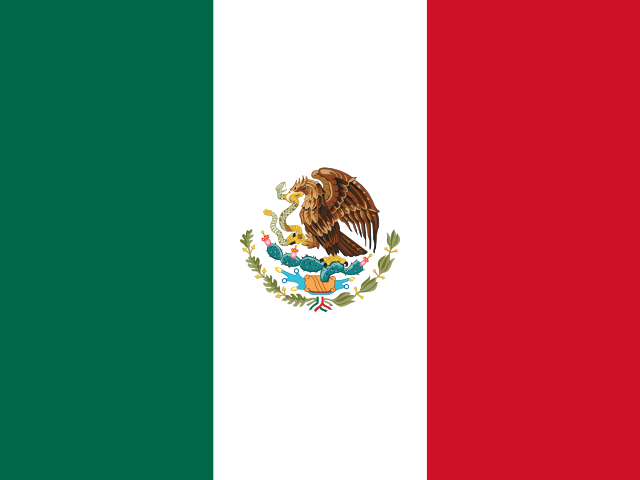 Mexico