Every fact about the flag, each with what it means.
Proportions
1:22 wide for every 1 high. 49 flags in the catalogue share it.
Properties
Normal flagFIAV symbol: the form of the flag.
Use
Civil, state and military, on land and at seaFIAV symbol: who may fly the flag.
Adopted
199125 June 1991 · 35 years ago
Colours
white
blue
red
Reference shades: the official one may vary slightly.
Coat of arms
YesIt carries the coat of arms on the cloth.
Take a closer look
The three stripes
1
The white mountain
2
The three stars
How it is described
The flag in the words of vexillology and heraldry.
Vexillological description
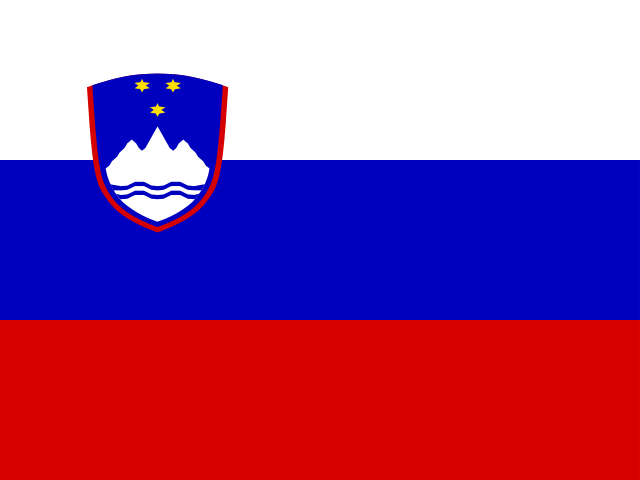
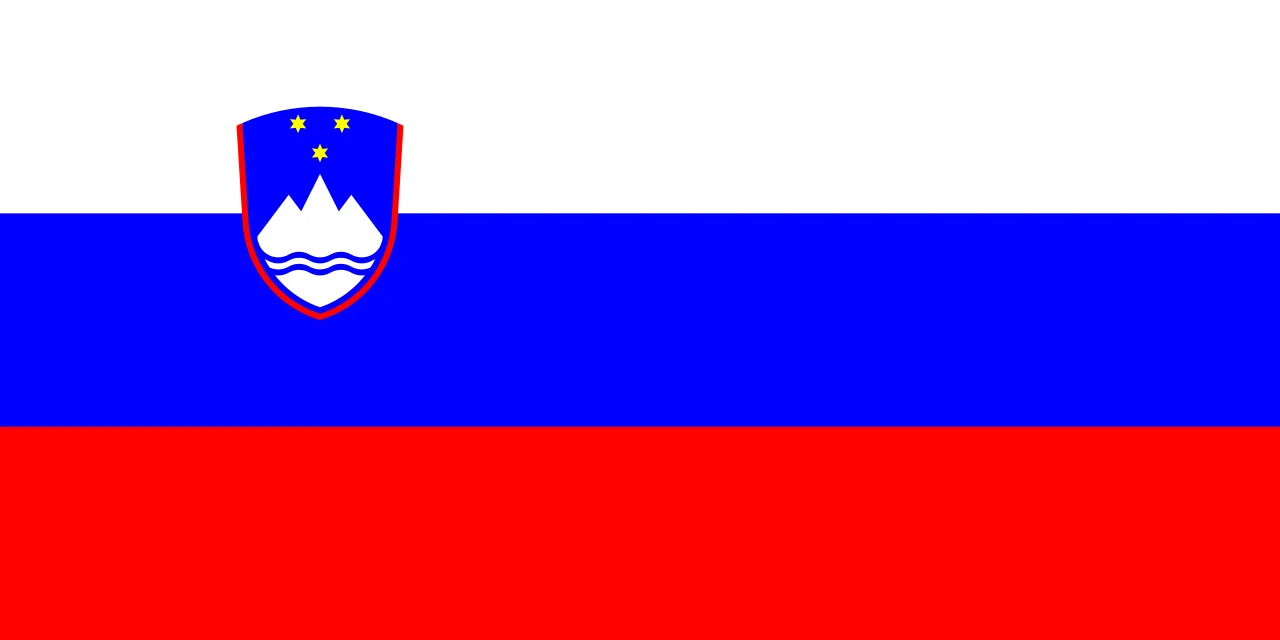
It is a rectangular field with a 1:2 ratio with a coat of arms at the top by the flagpole.
Stripes
three horizontal ones: white and blue of the same thickness on top, and red below, twice as wide as each of the others.
Coat of arms
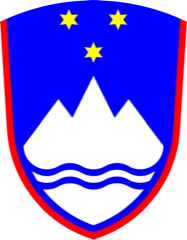
in the upper quarter by the flagpole, touching the white and blue stripes halfway. It shows Triglav, the highest mountain in the country, in white on blue, with two waves below and three golden six-pointed stars above.
What it carries
Each element and how many of the 1,390 flags in the catalogue carry it. In yellow, the rarest.
How it was born, how it has changed and what it means.
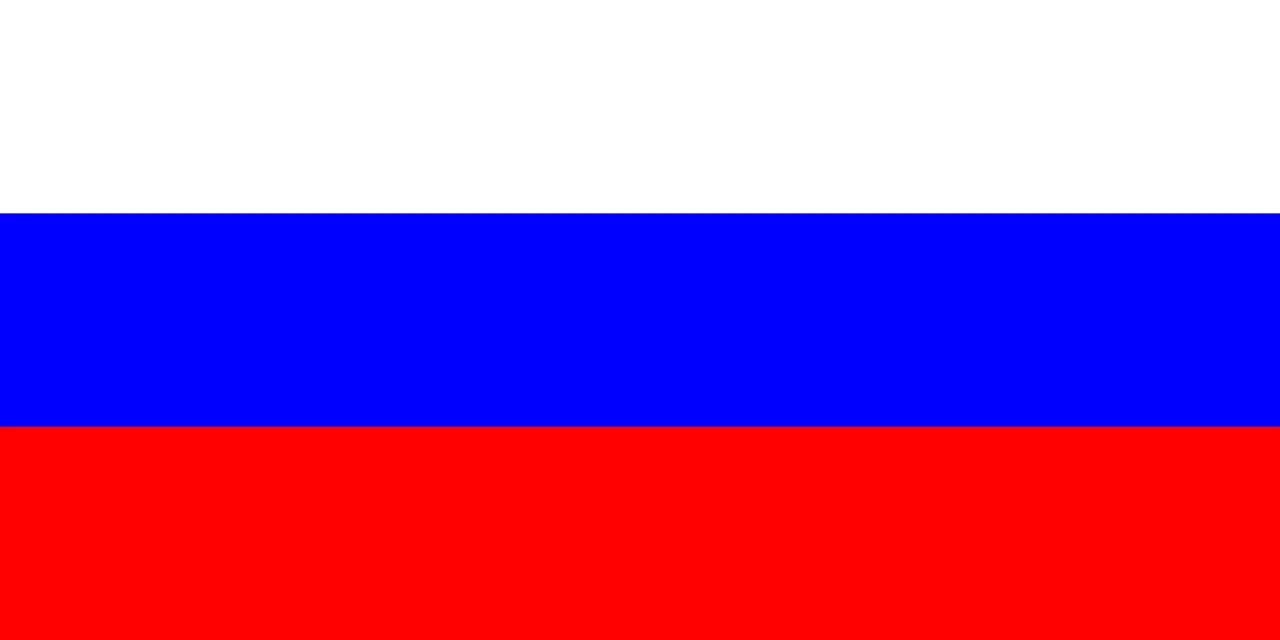
The flag of Slovenia has three horizontal stripes: white, blue and red. At the top, on the left, it carries a small coat of arms with a mountain. Without that coat of arms it would be almost identical to Russia’s, and it looks a lot like Slovakia’s, a country Slovenia is often confused with.
How it came about
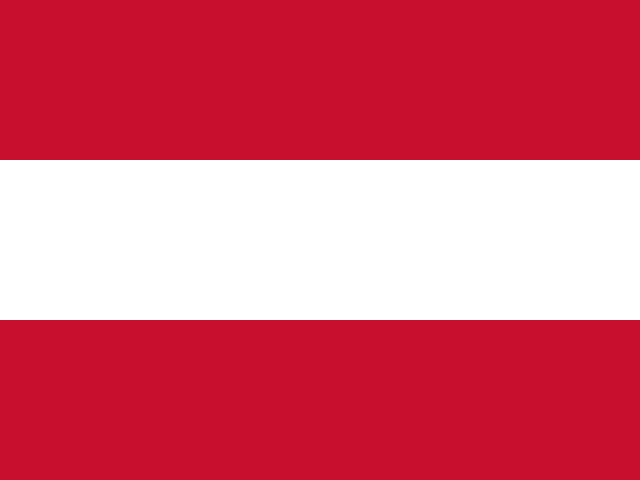
The colours come from Carniola, an old territory of the Austrian Empire where much of the Slovene population lived. Its coat of arms had a blue eagle on a white ground, with a crescent of red and gold checkers on its chest.
In 1848 half of Europe was living through revolutions, and many peoples were asking for their language and culture to be recognised. In April of that year, in Ljubljana, someone hung a German flag on the castle. In response, a student called Lovro Toman took a white, blue and red tricolour out into the street. From then on it was the flag of the Slovenes, although Austria almost never accepted it officially.
How it has changed
The order of the colours has never changed. What has changed over time is the symbol on top of it.
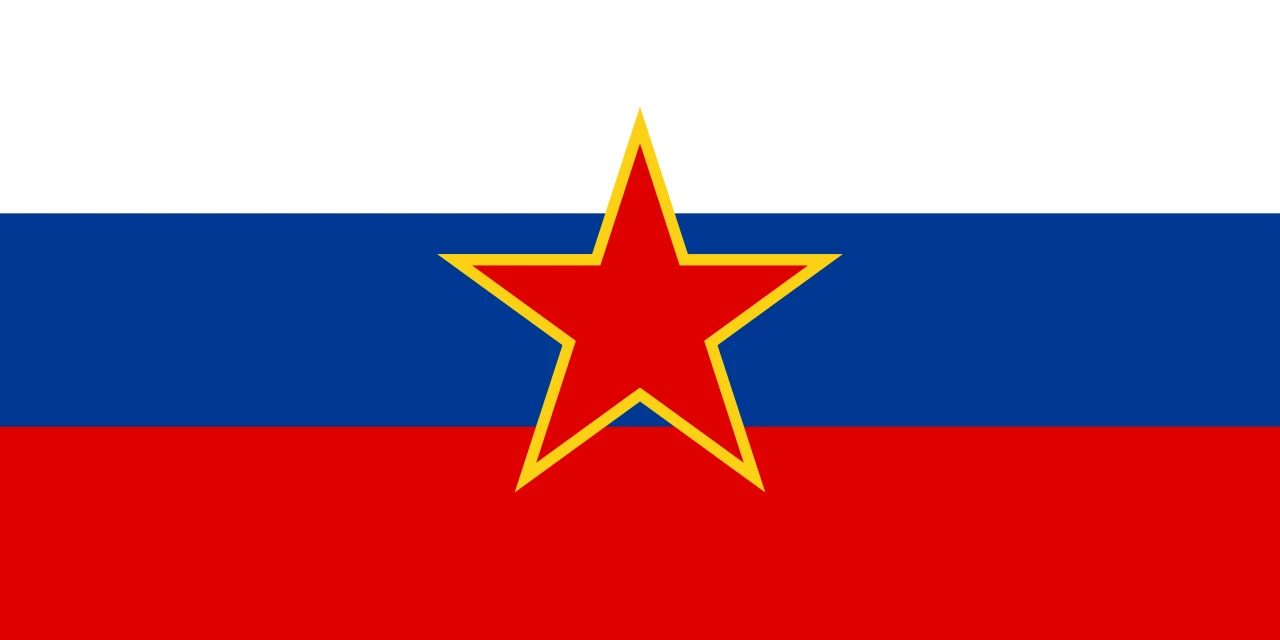
Slovenia becomes a republic of Yugoslavia, a communist country. The flag carries a red star with a yellow border in the centre.
1991
With independence, the star disappears. In its place comes the new coat of arms, the work of the artist Marko Pogačnik.
What it means
The colours remember Carniola. The coat of arms, on the other hand, speaks of the landscape and the history of the country:
White, blue and red
the colours of the old coat of arms of Carniola.
White mountain
Triglav, the highest peak of Slovenia, at 2,864 metres.
Two wavy lines
the Adriatic Sea and the rivers of the country.
Three golden stars
they come from the coat of arms of the counts of Celje, a very powerful Slovene family about six hundred years ago.
Fun facts
A very long flag
On independence day, in June 1991, the flag raised in Ljubljana was much longer than usual: about four or five times as long as it was high. It stayed on the mast throughout the brief war that followed, to give encouragement.
Lost letters
Slovenia and Slovakia have such similar names and flags that the post often ends up in the wrong country. There is a story that their embassies in Washington meet every month to exchange letters. Both embassies deny it, though in London, in the nineties, they really did do it.
The name of a god
Triglav means “three heads”. The most likely explanation is that the mountain is named after Triglav, an ancient three-headed Slavic god.



 Austria
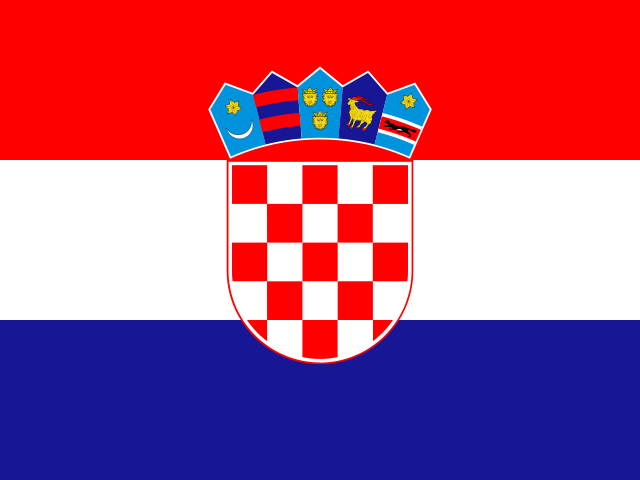 Croatia
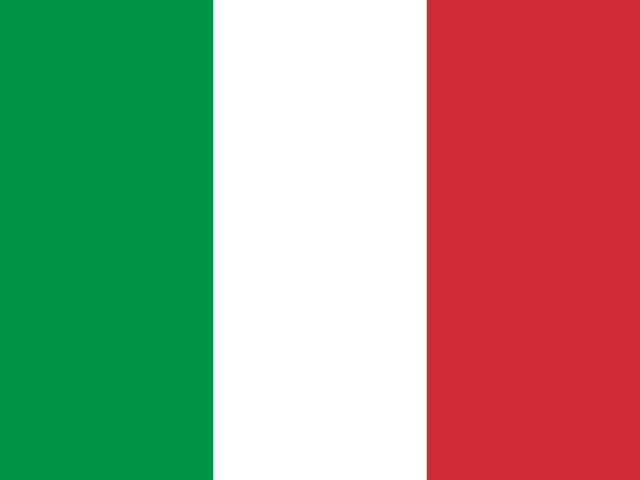 Italy
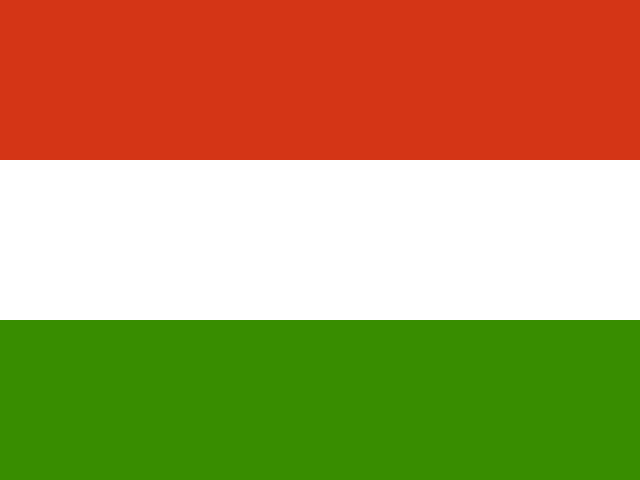 Hungary