Skip to content

Wiki Banderas
Open menu

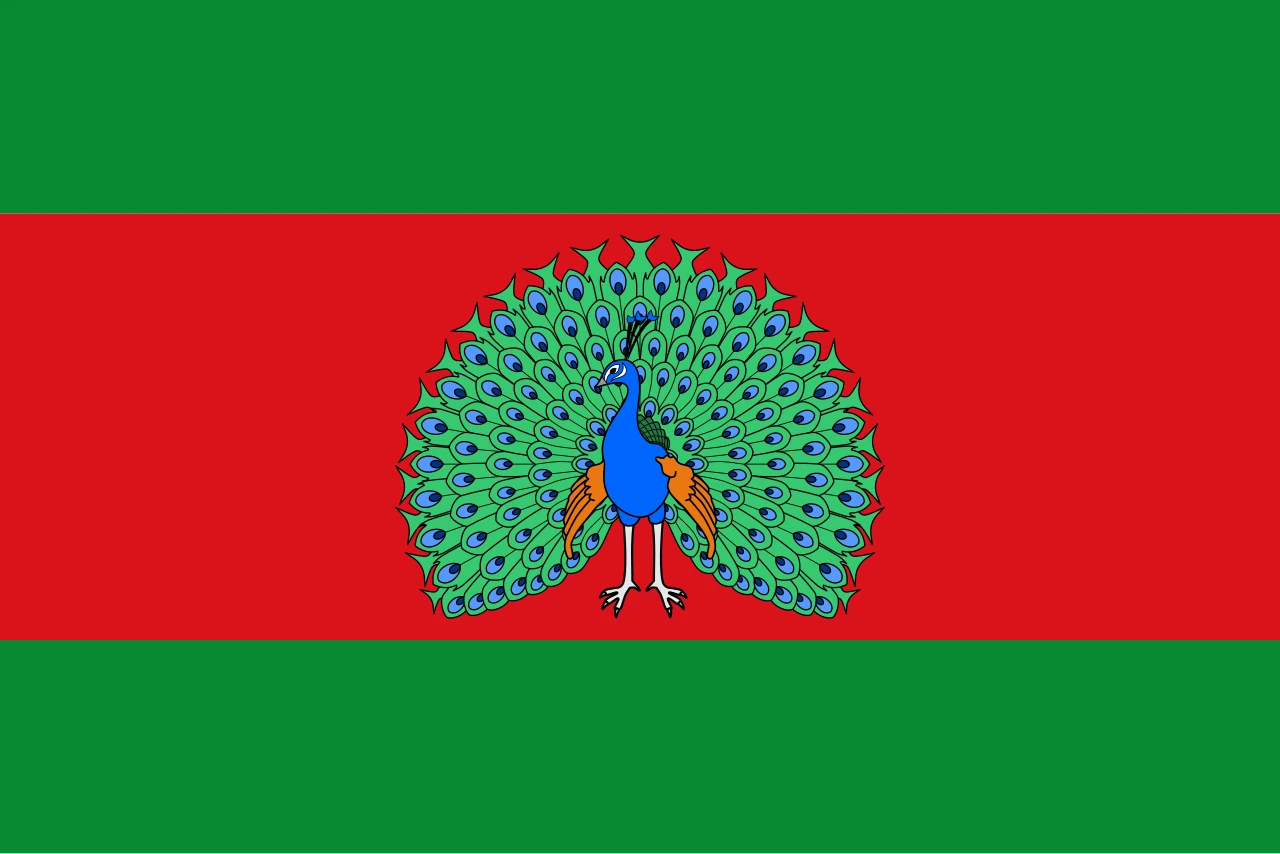
Flag of Benissa

The senyera with the coat of arms of the town in the centre: the flag of Benissa carries the bars twice, on the background and inside the coat of arms.

Flag of Benissa
Coat of arms

The flag, in figures

Every fact about the flag, each with what it means.

Proportions
2:33 wide for every 2 high. 989 flags in the catalogue share it.
Properties
Normal flagFIAV symbol: the form of the flag.
Use
CivilFIAV symbol: who may fly the flag.
Adopted
199027 February 1990 · 36 years ago
Colours
  • yellow
  • red
Reference shades: the official one may vary slightly.
Coat of arms
YesIt carries the coat of arms on the cloth.
Origin
Coat of arms of Benissa
123

Take a closer look

  1. The nine stripes

  2. 1

    The royal crown

  3. 2

    The gold castle

  4. 3

    The bars of Aragon

How it is described

The flag in the words of vexillology and heraldry.

Vexillological description

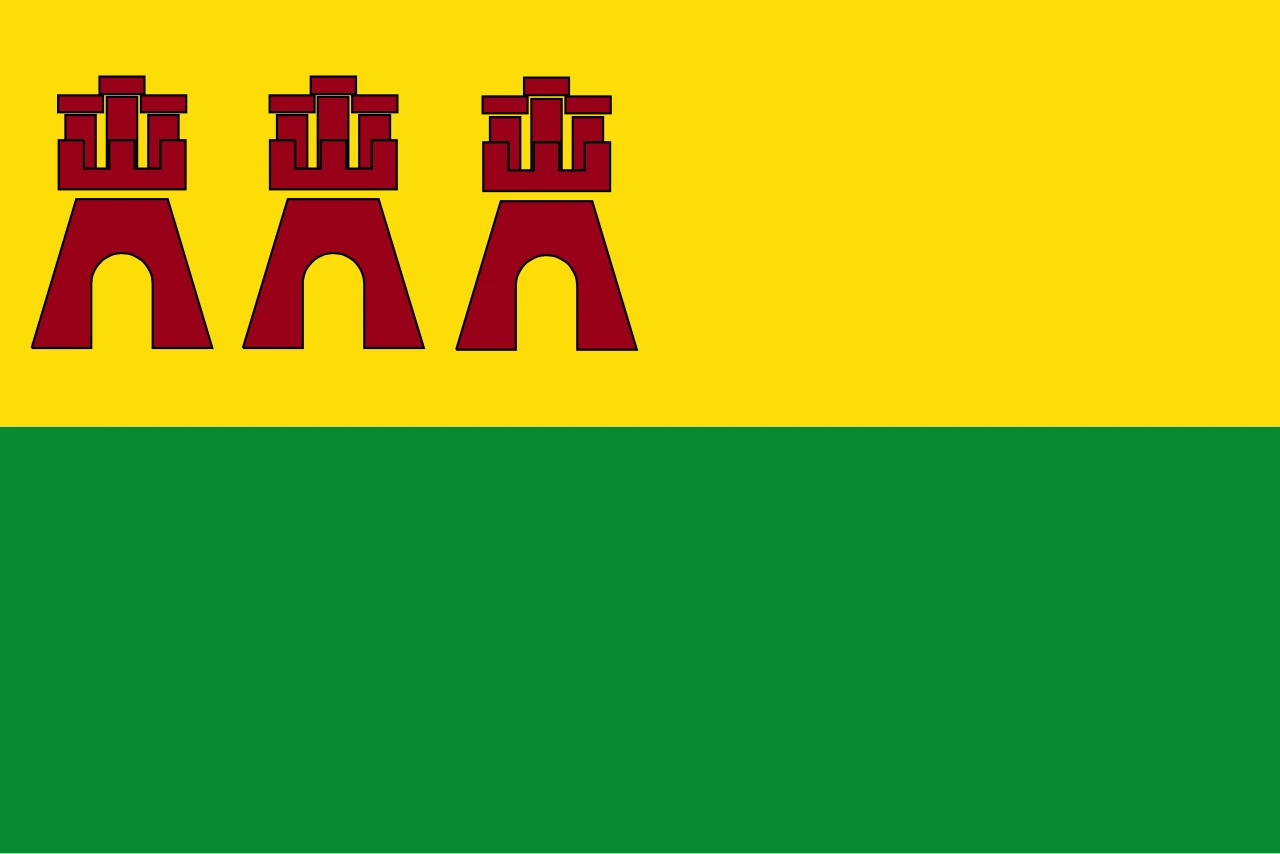
It is a rectangular field with a 2:3 ratio, yellow, with four horizontal red stripes: nine equal stripes in all, starting and ending in yellow. In the centre it carries the coat of arms of the municipality.

Stripes
five yellow and four red, alternating, like the senyera.
Coat of arms
centred. In the upper part, a golden castle on rocks, on a blue field; in the lower one, four red bars on gold.
Crown
royal and closed, above the coat of arms.
What it carries

Each element and how many of the 1,390 flags in the catalogue carry it. In yellow, the rarest.

Its history in dates

Every date in its story, at a glance.

  1. 1982

    The coat of arms came first, approved by royal decree of 9 July 1982

  2. 1990

    The Valencian Government approved it by order of 27 February 1990

The full story

How it was born, how it has changed and what it means.

The flag of Benissa, in the Alicante comarca of Marina Alta, is the senyera of yellow and red stripes with the coat of arms of the town in the centre. It carries the bars twice: on the background of the cloth and inside the coat of arms.

How it came about

The coat of arms came first, approved by royal decree of 9 July 1982. Eight years later the city council asked for a flag and chose a formula shared by many Valencian towns: put that coat of arms on top of the senyera. The Valencian Government approved it by order of 27 February 1990, with the endorsement of the Royal Academy of History.

How it has changed

It has not changed since it was approved in 1990.

What it means

  • Yellow and red stripes

    the colours of the Kings of Aragon, the same as the Valencian senyera.

  • Golden castle on blue

    it is not a real castle. It stands for the old church of San Pedro, which looked like a fortress high above the town.

  • Four red bars on gold

    they remember that Benissa formed part of the Kingdom of Valencia from very early on.

  • Royal crown

    it tops the coat of arms.

Fun facts

  1. A castle that never existed

    Benissa never had a castle. The one on the coat of arms is the church-fortress of San Pedro, a building so imposing that the town used it as its symbol.

  2. A church built for pirates

    The church of San Pedro was built in the 16th century with defensive walls, because pirates often attacked the coast. It was demolished in 1940, and today only a replica of its portal and a tile mural in the Plaza de la Iglesia Vieja remain.

Location

Buy the flag

Buy the flag on AmazonAffiliate link: if you buy, Wiki Banderas receives a small commission.

How much have you learnt?

Test what you have read about the flag of Benissa.

  1. 1. Which one is the flag of Benissa?

  2. 2. Which of these elements appears on the flag?

  3. 3. What are the proportions (height:width) of the flag?

  4. 4. In which year was the current flag adopted?

Sources

Text based on the article “Benissa (Alicante, Spain) — Flags of the World” from the Spanish Wikipedia, published under the licence CC BY-SA 4.0.

Sources consulted:

Credits

Flag image: Mutxamel, Wikimedia Commons · Public domain.

More flags

Accessibility preferences

Accessibility statement

Quick profiles

Text and reading

Text size
Default
Line height
Default
Letter spacing
Default
Word spacing
Default

Colour

Motion and orientation

Cursor