Skip to content

Wiki Banderas
Open menu

Flag of Guarda

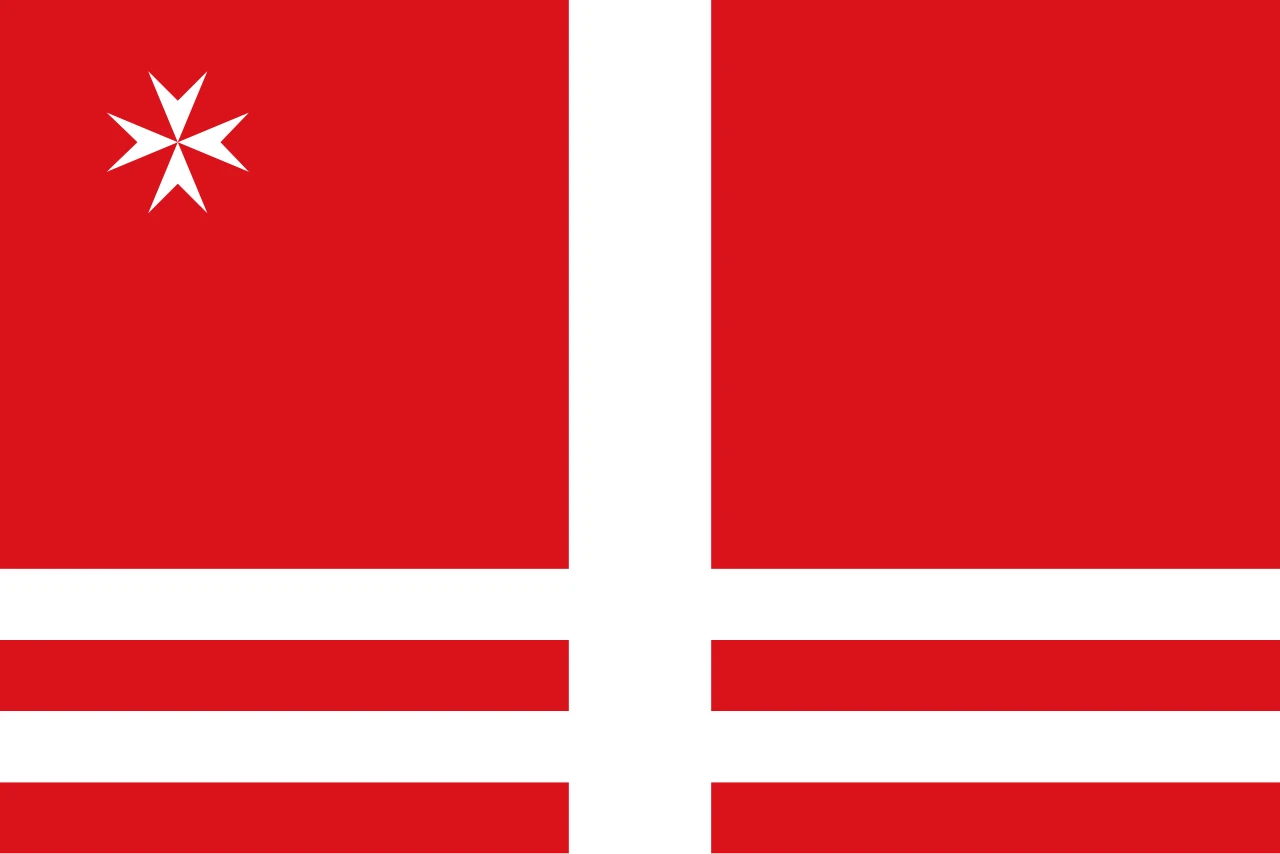
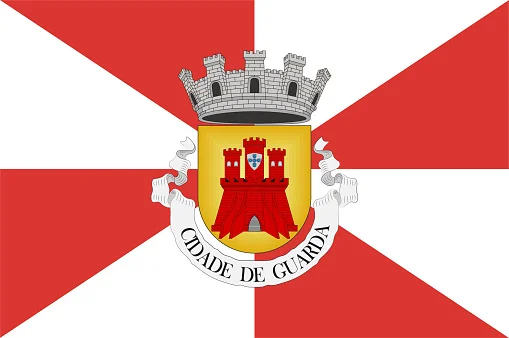
Eight red and white gironnies with a castle in the centre, because Guarda means “to watch”: the flag of the city was published in 1945.

Flag of Guarda
Coat of arms

The flag, in figures

Every fact about the flag, each with what it means.

Proportions
2:33 wide for every 2 high. 989 flags in the catalogue share it.
Properties
Normal flagFIAV symbol: the form of the flag.
Use
CivilFIAV symbol: who may fly the flag.
Adopted
194523 July 1945 · 81 years ago
Colours
  • red
  • white
Reference shades: the official one may vary slightly.
Coat of arms
YesIt carries the coat of arms on the cloth.
12

Take a closer look

  1. The gyronny cloth

  2. 1

    The coat of arms

  3. 2

    The mural crown

How it is described

The flag in the words of vexillology and heraldry.

Vexillological description

It is a rectangular field —the cloth of the flag —with a 2:3 ratio, divided into eight red and white gironnies that start at the centre, with the coat of arms of the city in the middle of the design.

Gironnies
eight equal triangles, four red and four white, all joined at the centre.
Coat of arms
centred over the gironnies, just the right size so as not to touch any edge.
Colours
only red and white on the field.

What it carries

Each element and how many of the 1,390 flags in the catalogue carry it. In yellow, the rarest.

Its history in dates

Every date in its story, at a glance.

  1. 1199

    King Sancho I founded the city on 27 November 1199 to defend and administer that part…

  2. 1930

    They followed the model that Portugal had fixed in 1930 for cities: eight gores with the main…

  3. 1945

    Flag and arms were published in the Diário do Governo on 23 July 1945

The full story

How it was born, how it has changed and what it means.

The flag of Guarda has eight red and white gores and a red castle in the centre. It is a “canting” flag: the city is called Guarda, and its arms are a fortress that watches over the border.

How it came about

King Sancho I founded the city on 27 November 1199 to defend and administer that part of the frontier, which then bordered the kingdoms of León and Castile. Hence the name: to guard the border.

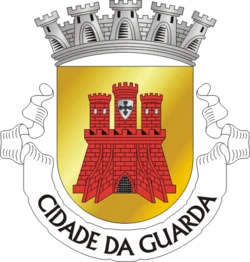
Flag and arms were published in the Diário do Governo on 23 July 1945. They followed the model that Portugal had fixed in 1930 for cities: eight gores with the main colours of the arms, as in Lisbon. The arms are a red castle with white doors and windows, and from them come the red and the white.

How it has changed

I have not found a flag of Guarda earlier than the 1945 one, nor old versions of the arms.

  1. Before 1945

    No earlier documented flag or arms are known.

  2. Current banner of Guarda: red and white gores with the arms of the castle
    Zloyel · CC BY-SA 3.0

    1945

    The current official flag and arms. Red and white, like Aveiro, Faro and Leiria, because the rule requires using the colours of the arms.

What it means

  • Red and white

    the red castle with white doors and windows.

  • Crenellated castle

    the fortress of the frontier. It is a “canting” figure, because guarda means to watch.

  • Portcullis on the main tower

    the grille that closes the entrance.

  • Small shield with the old arms of Portugal

    over the castle.

  • Mural crown of five towers

    it indicates that it is a city.

Fun facts

  1. The city of the five e’s

    Guarda is called the “city of the five e’s”: strong, fertile, cold, faithful and beautiful. Cold because it lies at a great altitude, near the Serra da Estrela.

  2. Founded to watch

    The founding charter of Sancho I, of 1199, set a military and frontier function for the city. Hence its name.

Localisation

How much have you learnt?

Test what you have read about the flag of Guarda.

  1. 1. Which one is the flag of Guarda?

  2. 2. Which of these elements appears on the flag?

  3. 3. What are the proportions (height:width) of the flag?

  4. 4. In which year was the current flag adopted?

Sources

Sources consulted:

Credits

Flag image: Zloyel, Wikimedia Commons · CC BY-SA 3.0.

More flags

Accessibility preferences

Accessibility statement

Quick profiles

Text and reading

Text size
Default
Line height
Default
Letter spacing
Default
Word spacing
Default

Colour

Motion and orientation

Cursor