Every fact about the flag, each with what it means.
Proportions
2:33 wide for every 2 high. 989 flags in the catalogue share it.
Properties
Normal flagFIAV symbol: the form of the flag.
Use
CivilFIAV symbol: who may fly the flag.
Adopted
198530 April 1985 · 41 years ago
Colours
White
Red
Yellow
Reference shades: the official one may vary slightly.
Coat of arms
YesIt carries the coat of arms on the cloth.
Origin
Cross of St George
Take a closer look
The white cloth
1
The cross of Saint George
2
The gold cross
How it is described
The flag in the words of vexillology and heraldry.
Vexillological description
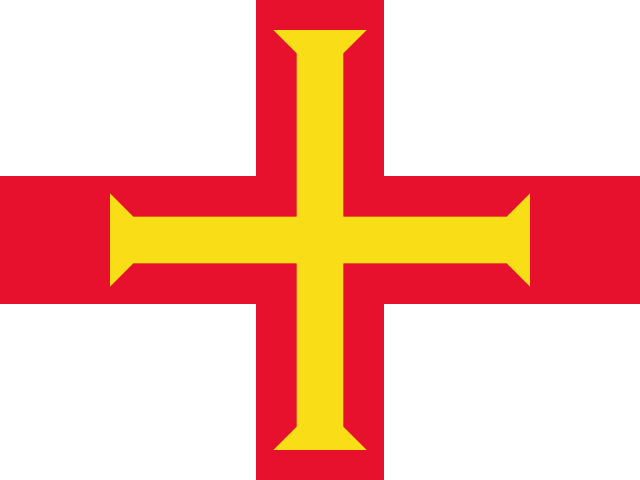
It is a white field with a 2:3 ratio with two crosses laid one over the other.
Red cross
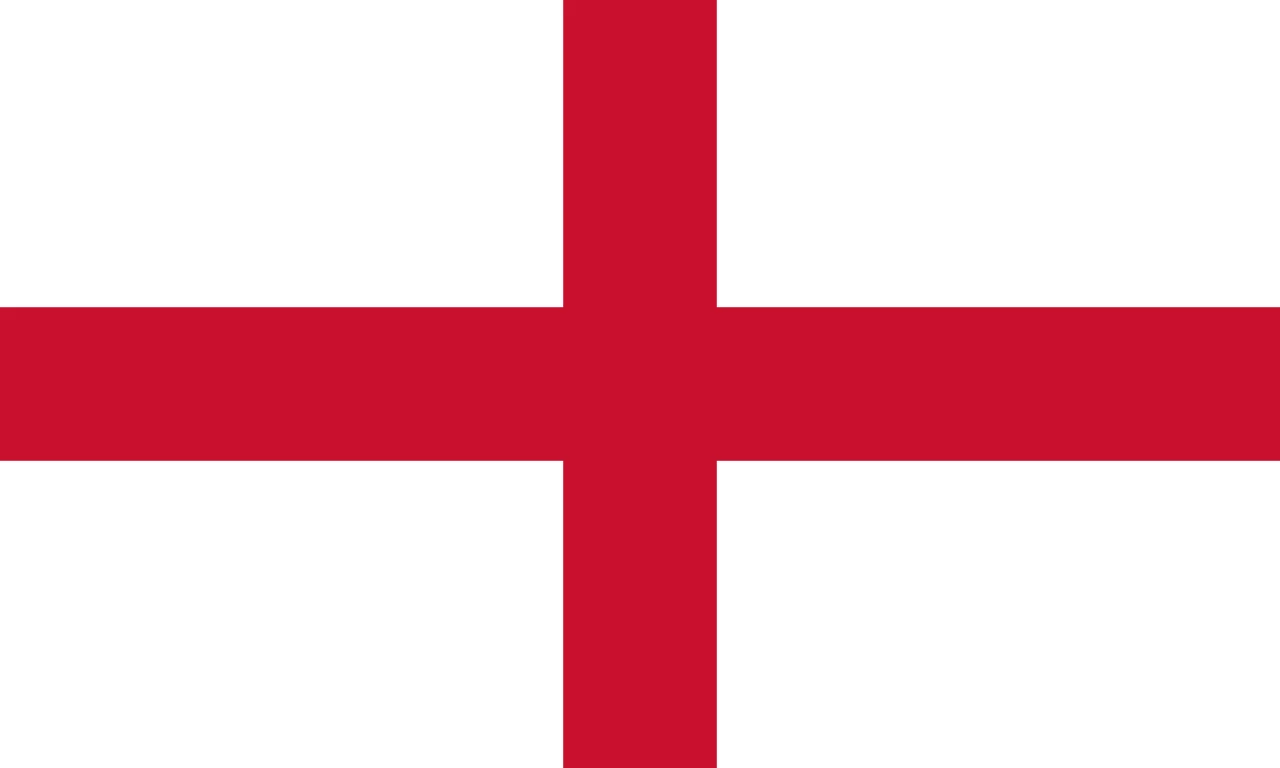
a straight cross with horizontal and vertical arms that runs from side to side of the field —the Cross of St George, the same as England’s flag—, with the crossing exactly in the centre.
Golden cross
centred on top of the red one and smaller, with arms of equal length and flared ends; in heraldry that shape is called ‘paté’. It is the cross of the Duchy of Normandy, copied from a standard of William the Conqueror embroidered on the Bayeux Tapestry.
Colours
Pantone 185 red and 108 yellow on white.
What it carries
Each element and how many of the 1,390 flags in the catalogue carry it. In yellow, the rarest.
According to tradition, William of Normandy, the duke who conquered England in 1066, carried…
1936
In 1936 King Edward VIII gave official permission to do so
1982
At the 1982 Commonwealth Games
1985
It was approved in 1985 and hoisted for the first time on 9 May
The full story
How it was born, how it has changed and what it means.
The flag of Guernsey is white with a red cross, like England’s, but on top of it carries another, smaller cross, golden and with flared ends. Guernsey is an island in the English Channel, near the French coast, which depends on the British Crown without being part of the United Kingdom. Together with its neighbour Jersey it forms the so-called Channel Islands.
How it came about
For a long time Guernsey used the Cross of St George, the flag of England, as if it were its own. In 1936 King Edward VIII gave official permission to do so.
The problem came with sport. At the 1982 Commonwealth Games, the Guernsey athletes marched with the English flag, and some participants thought England had sent two teams. To avoid that, a committee led by the vice bailiff Graham Dorey, the island’s second office, prepared a flag of its own. It was approved in 1985 and hoisted for the first time on 9 May, Liberation Day, which commemorates the end of the German occupation in 1945.
How it has changed
The flag has changed only once: when the golden cross was added to it.
Guernsey uses the Cross of St George, just like England. From 1936, with the king’s permission.
1985
The golden cross of Normandy is added so that the flag belongs to Guernsey alone.
What it means
The two crosses tell who the island depended on over history:
Red Cross of St George
the island’s relationship with the English Crown.
Golden cross
the Duchy of Normandy, which Guernsey belonged to in the Middle Ages. According to tradition, William of Normandy, the duke who conquered England in 1066, carried a cross like this on his standard at the battle of Hastings. It is said the pope gave it to him, but there is no proof of that.
Fun facts
A flag approved by mistake
In 1906 Guernsey asked the British Government for permission to use a coat of arms and the Cross of St George. The king approved only the coat of arms, but the governor understood the flag as well. In London they admitted the misunderstanding and preferred not to correct it in writing.
Unveiled on the most important day
It was hoisted for the first time on 9 May 1985, Liberation Day, the island’s big celebration since the end of the Second World War.
The cross of the Bayeux Tapestry
The golden cross is inspired by a standard of William the Conqueror that appears on the Bayeux Tapestry, an embroidery of nearly seventy metres that tells the story of the conquest of England.
Buy the flag
Buy the flag on AmazonAffiliate link: if you buy, Wiki Banderas receives a small commission.
Country facts
Where it is and what borders it.
Capital
Saint Peter Port
Area
78 km²
Country
Bailiwick of Guernsey
Continent
Europe
Subregion
Northern Europe
Independent state
No
UN member
No
ISO code
GGY · GG
How much have you learnt?
Test what you have read about the flag of Guernsey.