White, blue and gold with a red double-tailed lion: the flag of Limburg, in the south of the Netherlands, brings together the coats of arms of its old lordships.
Every fact about the flag, each with what it means.
Proportions
2:33 wide for every 2 high. 989 flags in the catalogue share it.
Properties
Normal flagFIAV symbol: the form of the flag.
Use
CivilFIAV symbol: who may fly the flag.
Adopted
195328 July 1953 · 73 years ago
Colours
white
blue
yellow
red
Reference shades: the official one may vary slightly.
Coat of arms
YesIt carries the coat of arms on the cloth.
Designer
Louis Maris
Take a closer look
The three stripes
1
The lion
2
The double tail
How it is described
The flag in the words of vexillology and heraldry.
Vexillological description
It is a rectangular field with a 2:3 ratio with three horizontal stripes: white on top, blue in the middle and golden yellow below. The white and the yellow measure the same, two fifths of the height each; the blue, narrower, a fifth.
Lion
red, rampant (standing on its hind legs), with a crown and its tail split in two.
Position
near the flagpole and facing it, mounted over the three stripes.
Colours
Pantone 130 C yellow, 072 C blue and 032 C red, fixed in 2005.
What it carries
Each element and how many of the 1,390 flags in the catalogue carry it. In yellow, the rarest.
The province completed it with the yellow and approved it on 28 July 1953
2005
In 2005 only the exact tones of the colours were fixed
The full story
How it was born, how it has changed and what it means.
Limburg is the southernmost province of the Netherlands, that of Maastricht, wedged between Belgium and Germany. Its flag has three stripes, white, blue and yellow, and a large red lion with a crown and a split tail.
How it came about
In the 19th century the Dutch provinces were only allowed to fly the national flag. Limburg asked for one of its own in 1885, red and white, and the government refused it several times.
The current one is based on a drawing by the Maastricht architect Louis Maris: a white flag with a blue stripe and the red lion. The province completed it with the yellow and approved it on 28 July 1953.
How it has changed
It has not changed since 1953. In 2005 only the exact tones of the colours were fixed.
Other flags and proposals
Before the official one there was a forbidden flag and several rejected designs.
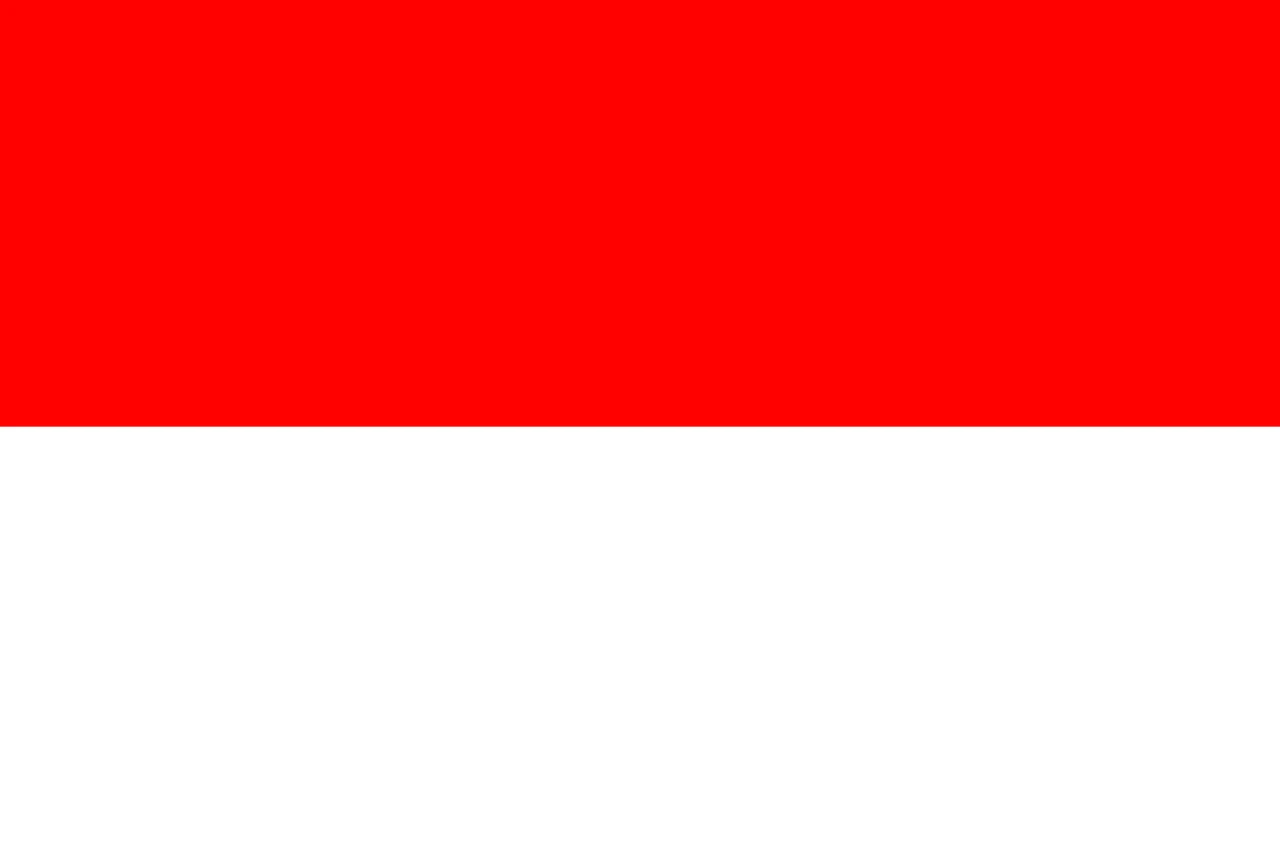
Red and white, the colours of the old duchy of Limburg. The government forbade it, but it was used without permission until the Second World War.
Propuesta
Five stripes with black
The province’s first proposal combined red, white, blue, yellow and black, all the colours of the coat of arms. It was rejected because black did not seem Limburg enough.
Propuesta
The bishop’s cross
Bishop Van Gils proposed a design with a cross. It was not chosen either.
What it means
The colours come from the coat of arms of the province, which brings together those of the old lordships of the area:
Red lion
that of the old duchy of Limburg. The crown and the double tail distinguish it from the Dutch lion.
White
the coats of arms of Limburg and Valkenburg.
Blue
the coat of arms of Guelders. Popularly, the river Meuse.
Yellow
the coats of arms of Horn, Guelders and Jülich.
There is also a reading of the landscape: white for the sand of the north, blue for the river clay and yellow for the loess, the fine soil of the southern hills.
Fun facts
A lion from a duchy that was somewhere else
The old duchy of Limburg, which the lion comes from, had almost no lands inside the present province: it lay mostly in today’s Belgium.
The forbidden flag looked like Monaco’s
The red-and-white flag the government forbade had the same design as the flags of Monaco and Indonesia: a red stripe over a white one.
The yellow came last
In Louis Maris’s drawing the bottom stripe was white. The province added the yellow.
Too much black for Limburg
The five-stripe proposal fell because black was not seen as a colour of the region, although it is on its coat of arms.
Location
Buy the flag
Buy the flag on AmazonAffiliate link: if you buy, Wiki Banderas receives a small commission.
How much have you learnt?
Test what you have read about the flag of Limburg.