Skip to content

Wiki Banderas
Open menu

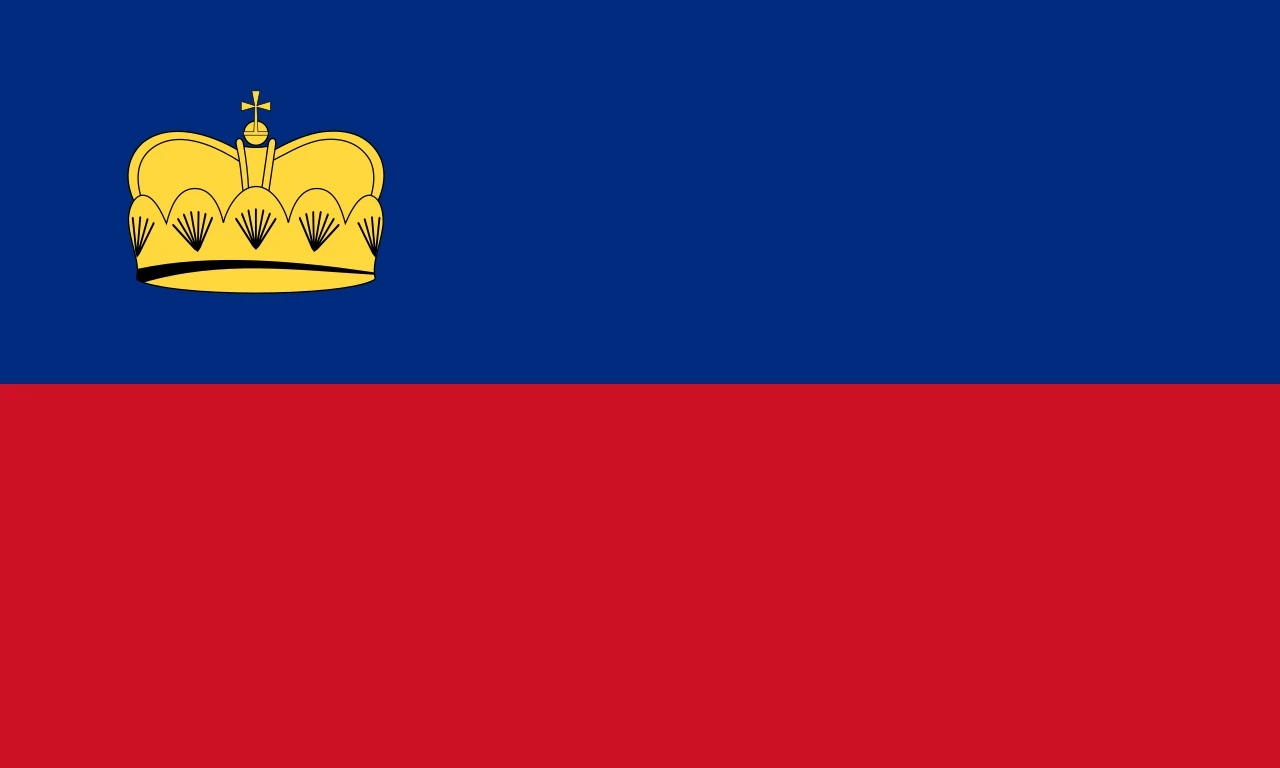
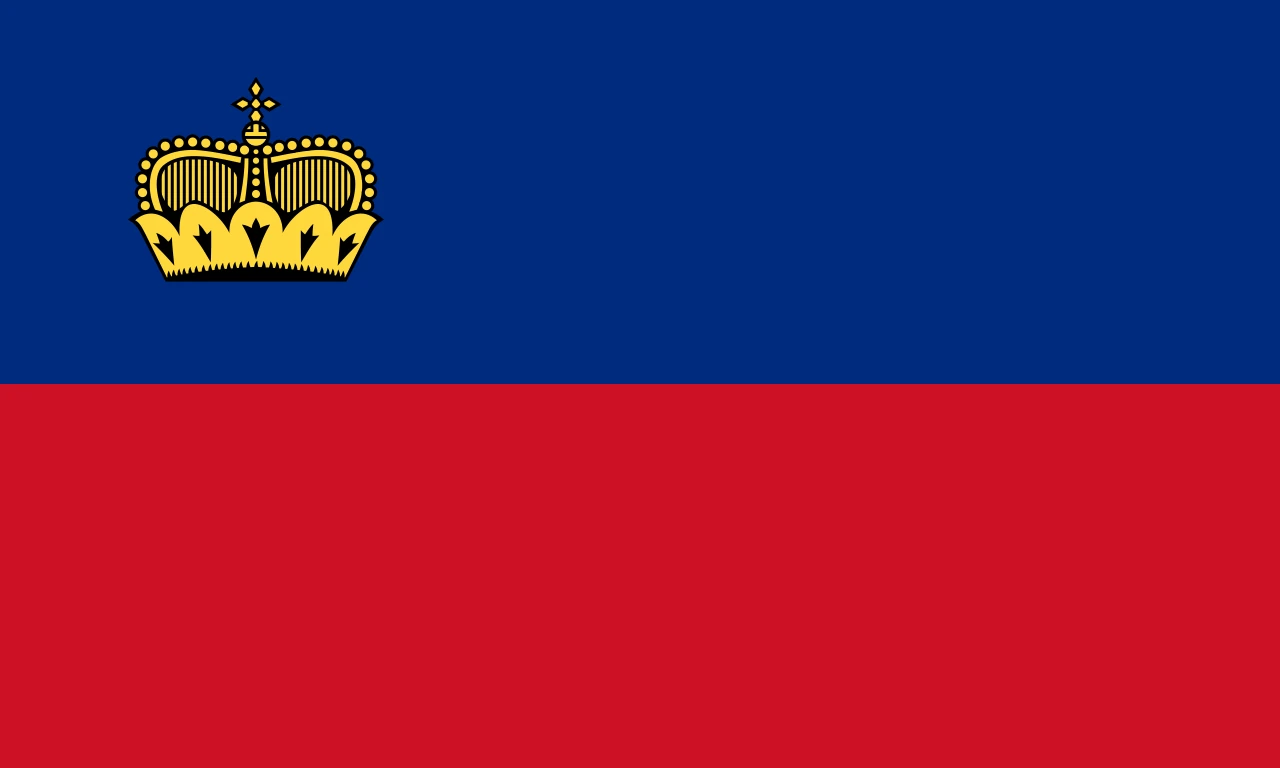
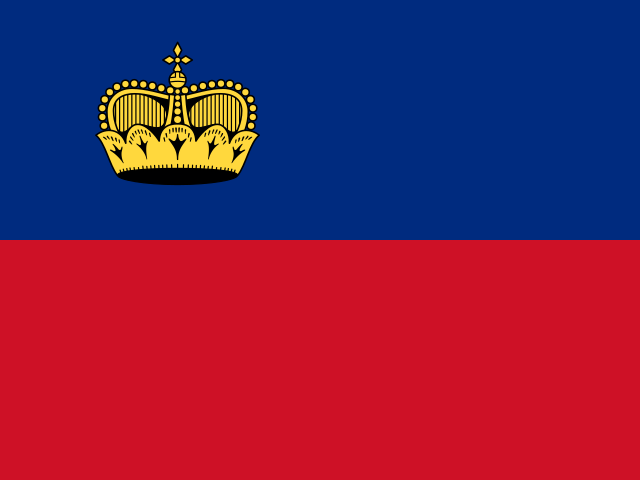
Flag of Liechtenstein

Blue and red with a golden crown, added in 1937 when the country discovered at the Olympic Games that its flag was the same as that of Haiti.

Flag of Liechtenstein
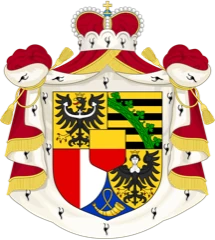
Coat of arms

The flag, in figures

Every fact about the flag, each with what it means.

Proportions
3:55 wide for every 3 high. 24 flags in the catalogue share it.
Properties
Normal flagFIAV symbol: the form of the flag.
Use
Civil, state and military, on land and at seaFIAV symbol: who may fly the flag.
Adopted
198230 June 1982 · 44 years ago
Colours
  • blue
  • red
  • gold
Reference shades: the official one may vary slightly.
Coat of arms
YesIt carries the coat of arms on the cloth.
123

Take a closer look

  1. The two stripes

  2. 1

    The crown

  3. 2

    The blue stripe

  4. 3

    The red stripe

How it is described

The flag in the words of vexillology and heraldry.

Vexillological description

It is a rectangular field with a 3:5 ratio with two stripes and a crown.

Stripes
two equal horizontal ones: blue above and red below.
Crown
golden, that of the prince, in the blue stripe next to the flagpole and not touching the edge.
Detail
the crown was added in 1936, after a referendum confirmed that the principality was still independent.

What it carries

Each element and how many of the 1,390 flags in the catalogue carry it. In yellow, the rarest.

Its history in dates

Every date in its story, at a glance.

  1. 1719

    Liechtenstein is a principality in the Alps, between Switzerland and Austria, born in 1719 when…

  2. 1764

    The blue and red came from elsewhere: they were the colours of the livery, the uniform…

  3. 1852

    From 1852 they were used as the colours of the country

  4. 1921

    The Constitution of 1921 fixed the horizontal stripes, blue above and red below

  5. 1937

    That crown was not there at first: it was added in 1937

  6. 1957

    Its drawing is touched up a little in 1957

  7. 1982

    A law of 30 June 1982 modernises the drawing of the crown

The full story

How it was born, how it has changed and what it means.

The flag of Liechtenstein has two horizontal stripes, blue above and red below, with a golden crown in the upper corner. That crown was not there at first: it was added in 1937, after the country discovered at some Olympic Games that its flag was exactly the same as that of another country.

How it came about

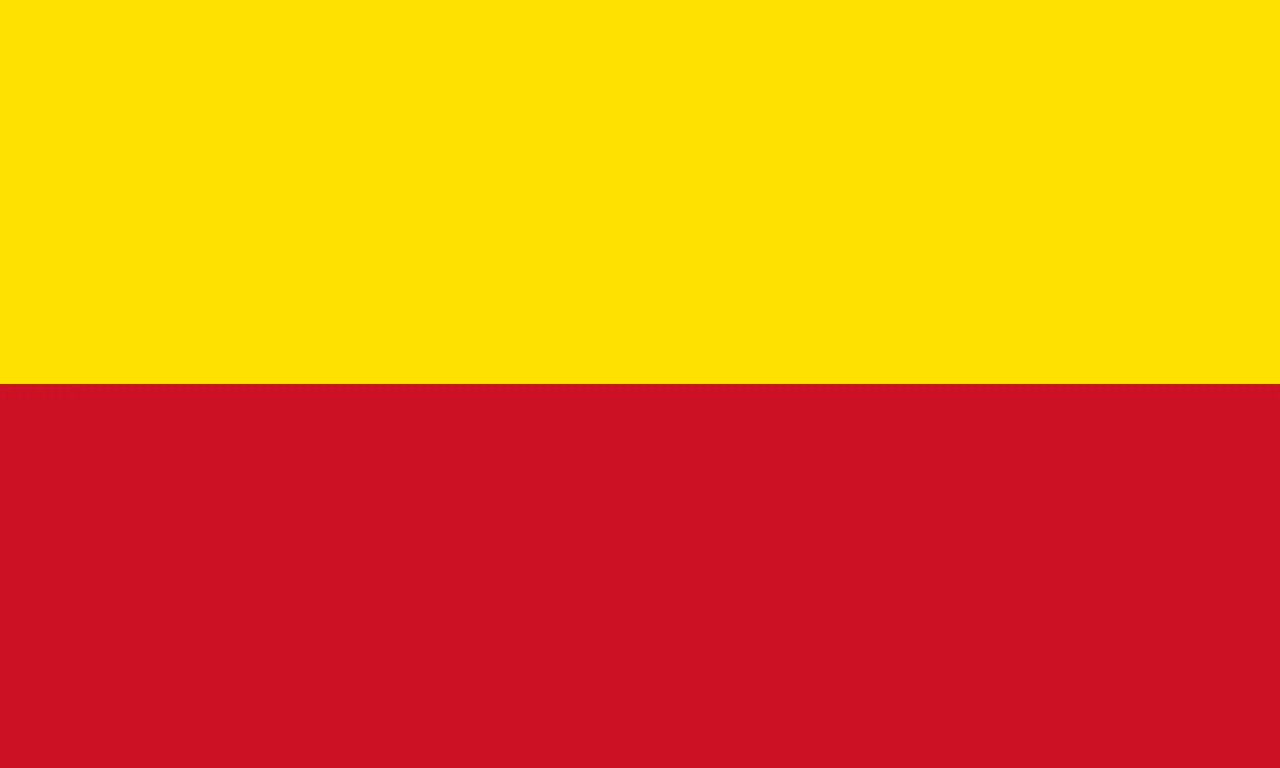
Liechtenstein is a principality in the Alps, between Switzerland and Austria, born in 1719 when two small territories, Vaduz and Schellenberg, were united. At first its flag used the gold and red of the arms of the princes’ family.

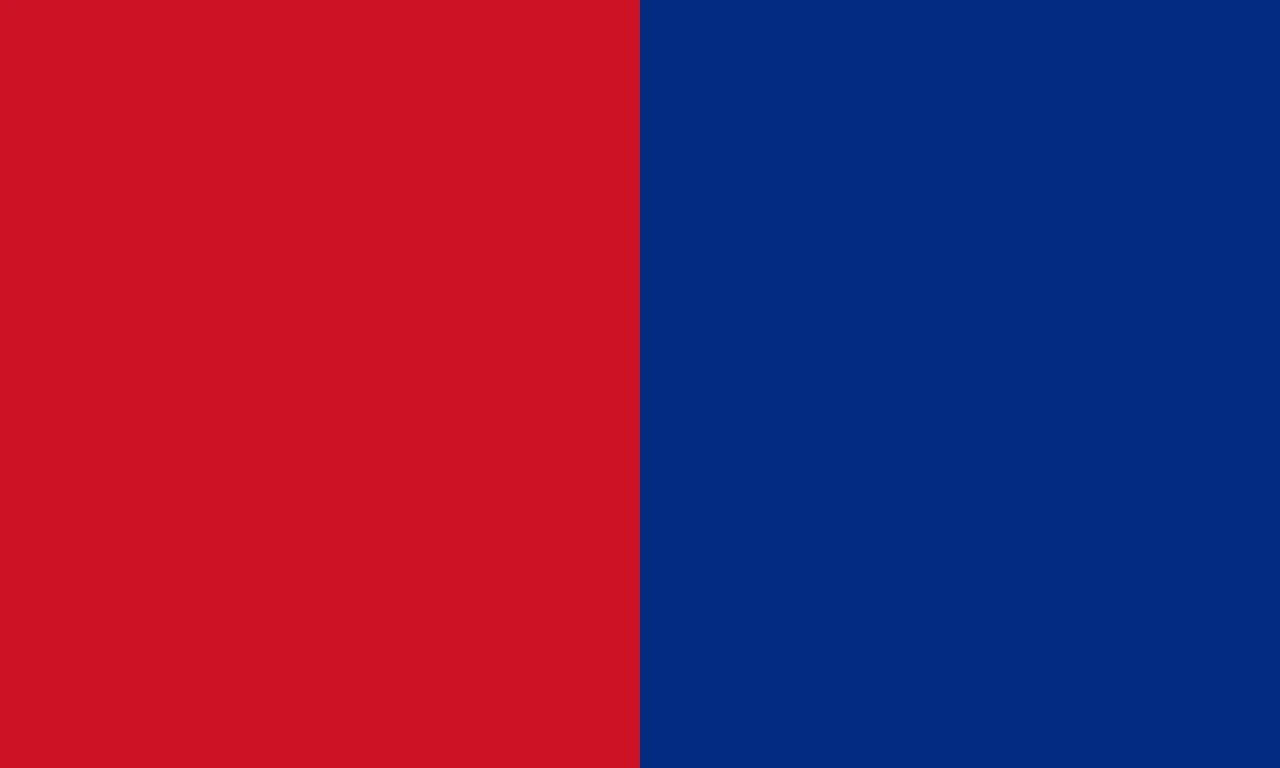
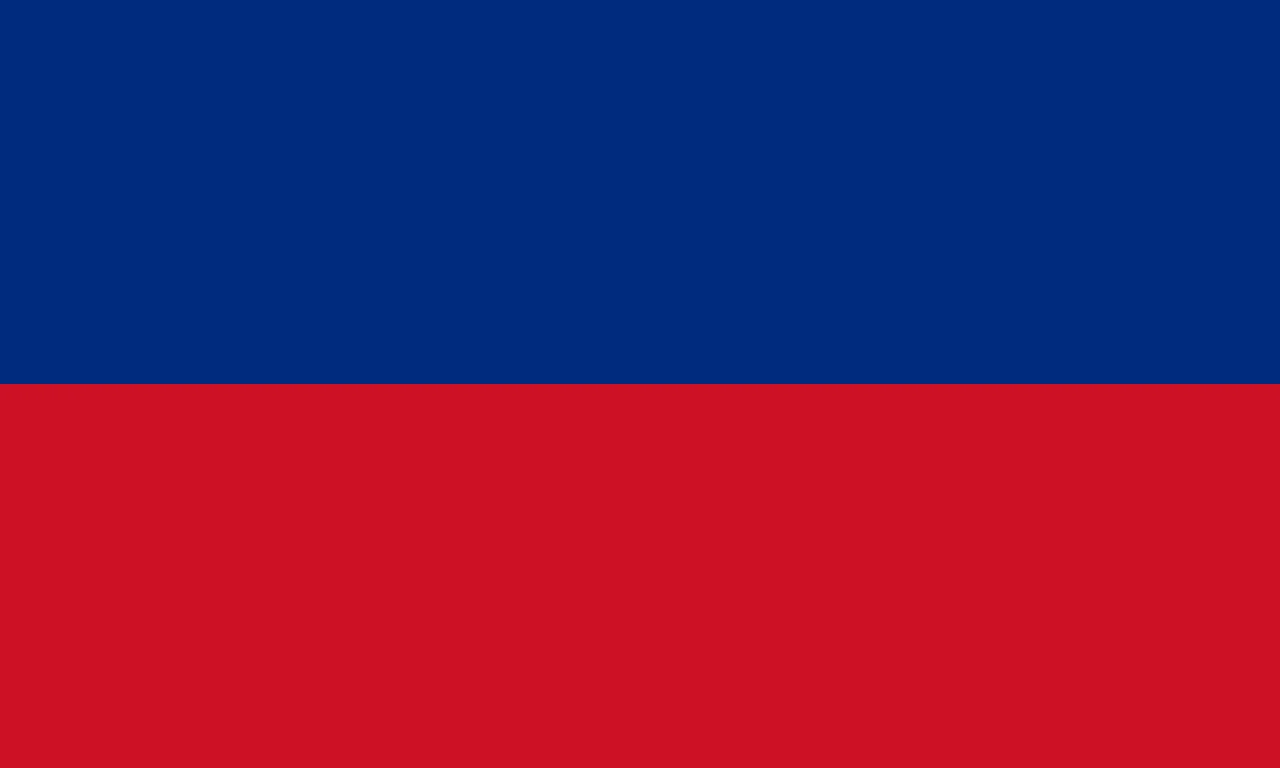
The blue and red came from elsewhere: they were the colours of the livery, the uniform of the prince’s servants, which already appears in documents of 1764. From 1852 they were used as the colours of the country, sometimes in vertical stripes and sometimes horizontal. The Constitution of 1921 fixed the horizontal stripes, blue above and red below.

How it has changed

The flag went from gold and red to blue and red, and afterwards gained a crown.

  1. Flag with two horizontal stripes, yellow and red
    arz · Public domain

    1719-1852

    The gold and red of the arms of the princely family.

  2. Flag with two vertical stripes, red and blue
    arz · Public domain

    1852-1921

    The blue and red arrive. They are often placed in vertical stripes.

  3. Flag with two horizontal stripes, blue and red
    arz · Public domain

    1921-1937

    The Constitution fixes two horizontal stripes, blue and red, with no drawing at all.

  4. Blue and red flag with a golden crown in the corner
    Varios autores (ver el historial del archivo) · Public domain

    1937-1982

    On 24 June 1937 the prince’s crown is added. Its drawing is touched up a little in 1957.

  5. Current flag of Liechtenstein

    1982

    A law of 30 June 1982 modernises the drawing of the crown.

What it means

In 1937, the head of the government, Josef Hoop, explained the colours like this:

  • Blue

    the clear sky.

  • Red

    the embers of the hearth at the evening gatherings.

  • Golden crown

    that the people, the country and the prince’s family are united “in heart and spirit”.

Fun facts

  1. The twin of Haiti

    At the 1936 Berlin Olympic Games, the Liechtenstein delegation realised that its flag was the same as the civil flag of Haiti: blue above and red below. The following year the crown was added to tell them apart.

  2. A crown that does not fall over

    The 1982 law also provides for a long version to hang vertically. In it, the crown is turned so that it stays upright.

  3. A hat more than a crown

    What the flag carries is not exactly a royal crown, but the ceremonial cap of a prince. Some flag books call it that, “prince’s cap”.

Country facts

Where it is and what borders it.

Capital
Vaduz
Area
160 km²
Country
Principality of Liechtenstein
Continent
Europe
Subregion
Western Europe
Independent state
Yes
UN member
Yes
ISO code
LIE · LI

2 neighbouring countries

How much have you learnt?

Test what you have read about the flag of Liechtenstein.

  1. 1. Which one is the flag of Liechtenstein?

  2. 2. Which of these elements appears on the flag?

  3. 3. What are the proportions (height:width) of the flag?

  4. 4. In which year was the current flag adopted?

Sources

Text based on the article “Bandera de Liechtenstein” from the Spanish Wikipedia, published under the licence CC BY-SA 4.0.

Sources consulted:

Credits

Flag image: Mnmazur and others, Wikimedia Commons · Public domain.

More flags

Accessibility preferences

Accessibility statement

Quick profiles

Text and reading

Text size
Default
Line height
Default
Letter spacing
Default
Word spacing
Default

Colour

Motion and orientation

Cursor