Skip to content

Wiki Banderas
Open menu

Flag of Obwalden

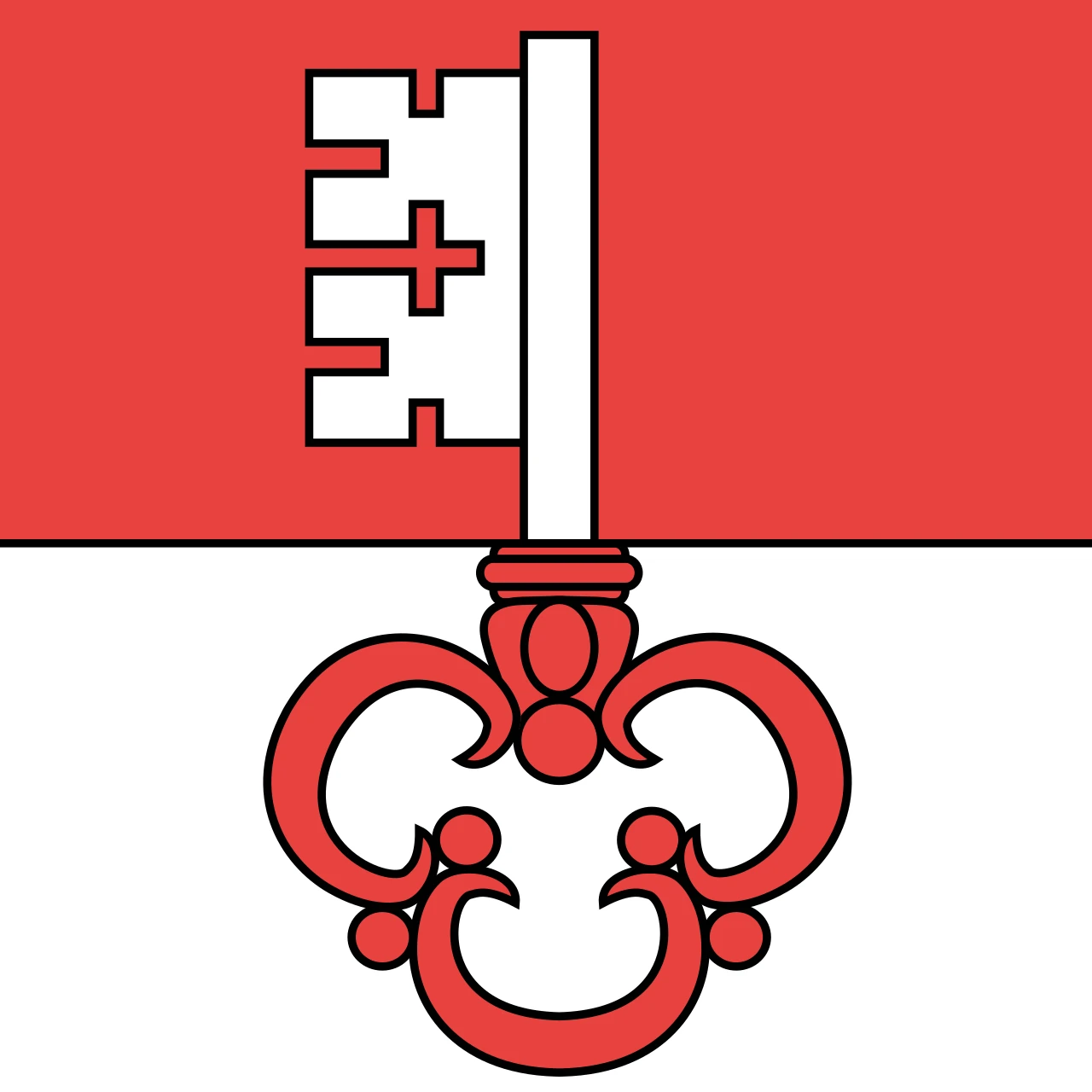
Red above, white below and a key that changes colour: the field of Unterwalden from the thirteenth century, with the key fixed in the official division of 1816.

Flag of Obwalden

The flag, in figures

Every fact about the flag, each with what it means.

Proportions
1:11 wide for every 1 high. 29 flags in the catalogue share it.
Properties
Normal flagFIAV symbol: the form of the flag.
Use
CivilFIAV symbol: who may fly the flag.
Adopted
18168 August 1816 · 210 years ago
Colours
  • Red
  • White
Reference shades: the official one may vary slightly.
12

Take a closer look

  1. The two halves

  2. 1

    The bit

  3. 2

    The ring

How it is described

The flag in the words of vexillology and heraldry.

Vexillological description

It is a square field divided into two horizontal stripes (bands of colour) of the same height: red above and white below. A key (a key) runs from top to bottom through the centre and changes colour in each stripe.

Stripes
two, horizontal, equal.
Key
in the centre, with the part that turns the bolt towards the flagpole (the hoist side).
Changed colour
in each stripe it is seen in the colour opposite the ground.
Colours
red and white.

What it carries

Each element and how many of the 1,390 flags in the catalogue carry it. In yellow, the rarest.

Its history in dates

Every date in its story, at a glance.

  1. 1240

    The key did not come with it: it comes from the old seal of the valley, made around 1240,…

  2. 1512

    Pope Julius II endorsed the story on his standard of 1512

  3. 1816

    the only thing that changed was the division of 1816

The full story

How it was born, how it has changed and what it means.

The flag of Obwalden splits the field in two: red above, white below, and a crossed key that is white on the red and red on the white. Obwalden is the upper half of the old Unterwalden, a half-canton of central Switzerland.

How it came about

The red and white were the field of all Unterwalden from the thirteenth century. The key did not come with it: it comes from the old seal of the valley, made around 1240, and adorned the pediment of the parliament in 1729-1731, but the plain coat of arms went on being used until 1816. About its origin there is a legend: it tells that in the year 398 the warriors of Unterwalden went down to Rome and freed Pope Anastasius I from the Goths of Alaric, and that as a reward they were allowed to bear the key of the arms of the Holy See; Pope Julius II endorsed the story on his standard of 1512. The most reasonable explanation, defended by the heraldist Adolphe Gauthier, is another: the country is under the advocacy of Saint Peter, and the key is his attribute.

How it has changed

The red and white have been kept since the thirteenth century; the only thing that changed was the division of 1816, when the Federal Diet of Zurich fixed a key for Obwalden and a double one for Nidwalden.

What it means

  • Red and white

    the common field of Unterwalden; according to an unconfirmed hypothesis, the red would come from the war standard of the Empire.

  • Key

    attribute of Saint Peter.

Fun facts

  1. It voted against the neighbour for copying its flag

    In 1481, Solothurn wanted to join the Confederation with the same red and white as Unterwalden; the people of Obwalden voted against it, although the admission went ahead.

  2. A seal kept in the governor’s house

    The key comes from the seal made around 1240 for the lower valley. For centuries the Landammann (governor) kept it in his own house; today it is held in the archive of the State of Obwalden.

Localisation

How much have you learnt?

Test what you have read about the flag of Obwalden.

  1. 1. Which one is the flag of Obwalden?

  2. 2. Which of these elements appears on the flag?

  3. 3. What are the proportions (height:width) of the flag?

  4. 4. In which year was the current flag adopted?

Sources

Sources consulted:

Credits

Flag image: Rudolf Münger, Wikimedia Commons · Public domain.

More flags

Accessibility preferences

Accessibility statement

Quick profiles

Text and reading

Text size
Default
Line height
Default
Letter spacing
Default
Word spacing
Default

Colour

Motion and orientation

Cursor