
Skip to content

Wiki Banderas
Open menu

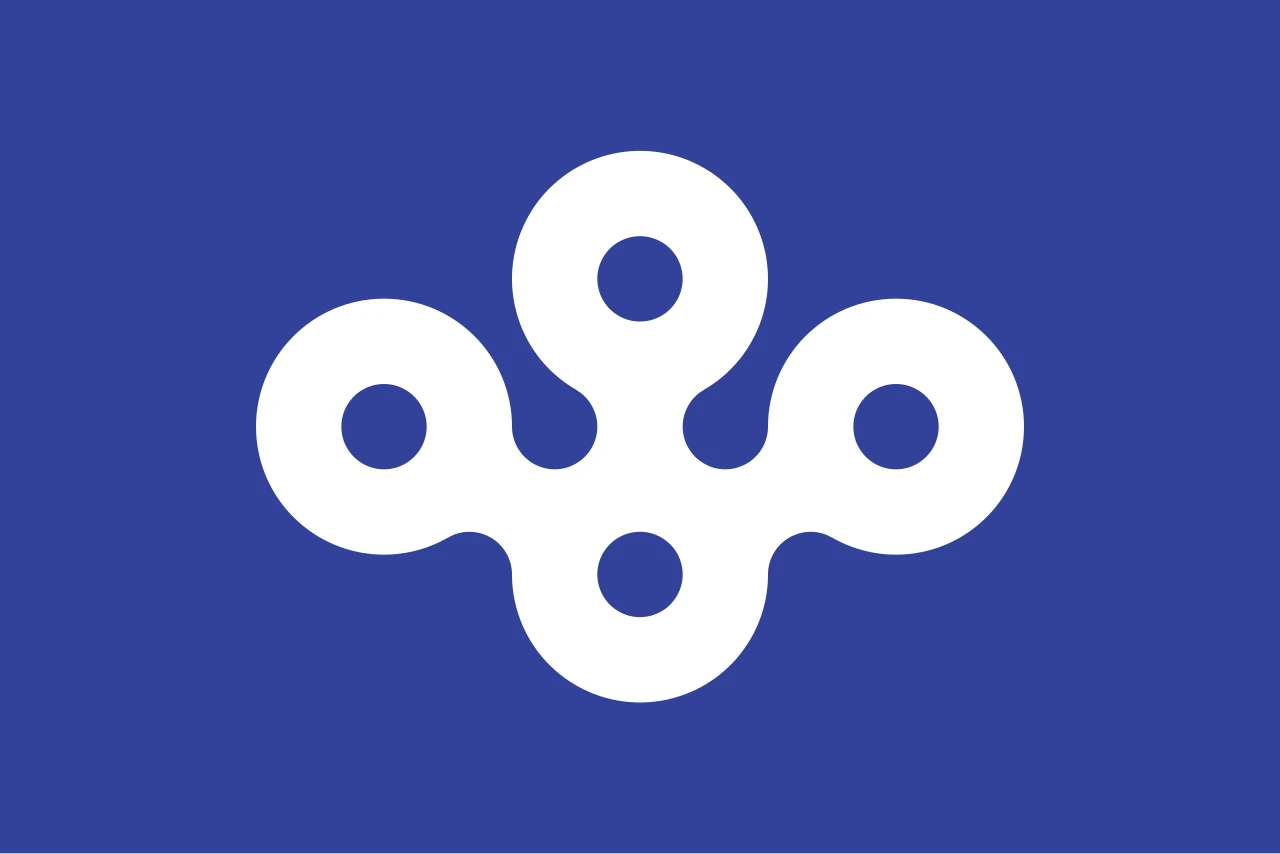
Flag of Osaka

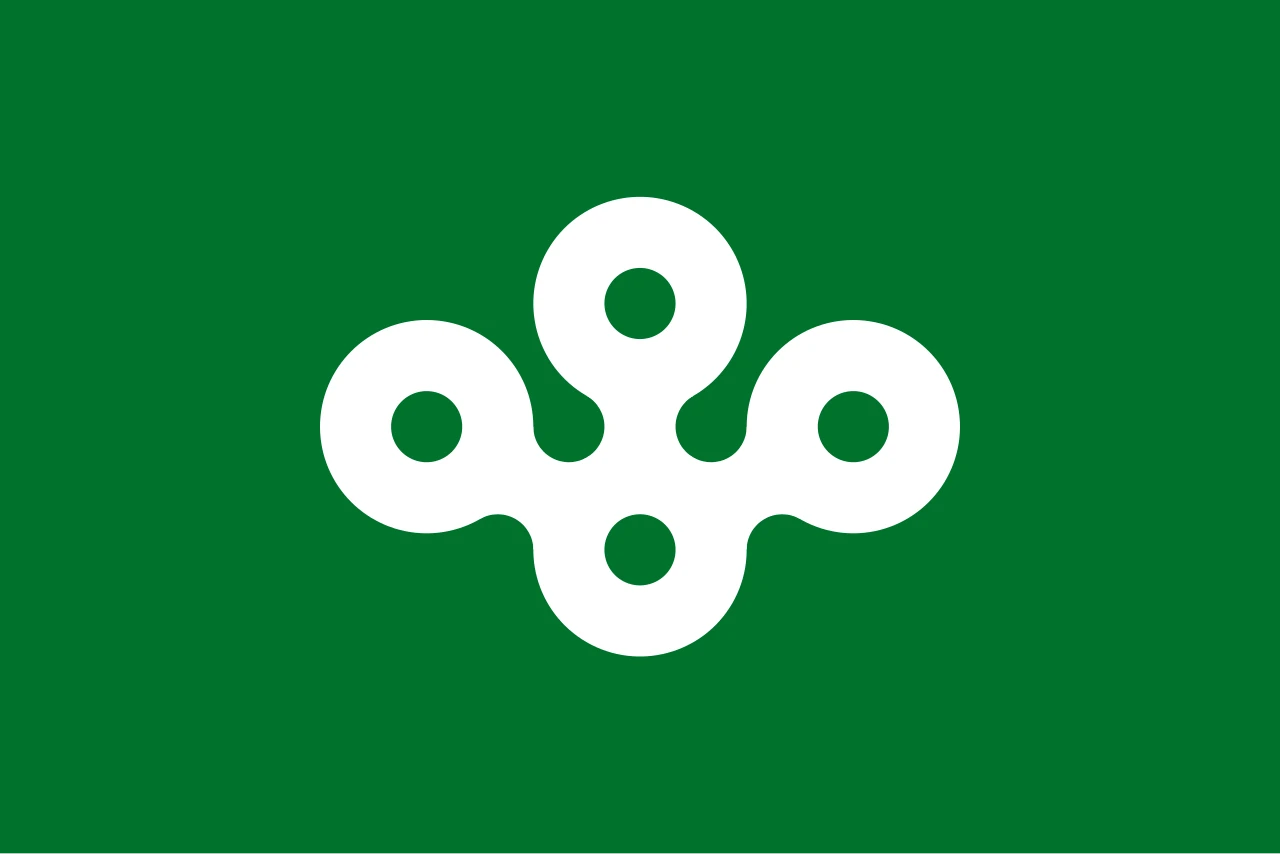
Three gourds form a white O on blue: the emblem of Osaka copies the standard of Hideyoshi and its ground changed from green to blue in 1984.

Flag of Osaka
Coat of arms

The flag, in figures

Every fact about the flag, each with what it means.

Proportions
2:33 wide for every 2 high. 989 flags in the catalogue share it.
Properties
Normal flagFIAV symbol: the form of the flag.
Use
CivilFIAV symbol: who may fly the flag.
Adopted
19841 April 1984 · 42 years ago
Colours
  • blue
  • white
Reference shades: the official one may vary slightly.
Coat of arms
YesIt carries the coat of arms on the cloth.

Take a closer look

  • Field

  • Emblem

  • No coat of arms

How it is described

The flag in the words of vexillology and heraldry.

Vexillological description

It is a rectangular field with a 2:3 ratio in blue. In the centre there is a white emblem, not a coat of arms: an “O” formed by joined round gourds, each with a blue circle in the middle.

Field
blue and plain, with a 2:3 ratio.
Emblem
white, in the centre; an “O” of joined round gourds.
No coat of arms
it bears no arms and no letters.
What it carries

Each element and how many of the 1,390 flags in the catalogue carry it. In yellow, the rarest.

Its history in dates

Every date in its story, at a glance.

  1. 1968

    The flag was approved on 21 June 1968

  2. 1984

    Sixteen years later the prefecture changed the ground: the blue version was made official…

The full story

How it was born, how it has changed and what it means.

The flag of Osaka is blue, with a white “O” in the centre which, looked at slowly, comes apart into three gourds. It is not an ornament: that drawing mixes the initial of the name with the favourite standard of Toyotomi Hideyoshi, the lord who turned Osaka into a great commercial centre in the late sixteenth century.

How it came about

The flag was approved on 21 June 1968, on the centenary of prefectural government. The emblem starts from the sennari hyōtan, Hideyoshi’s gourd: an O divided into three, each branch with an official meaning —hope, harmony and prosperity—. The field was green, because the white of the emblem was to read as infinite possibility and the green as freshness and vitality.

Sixteen years later the prefecture changed the ground: the blue version was made official on 30 March 1984 and came into use on 1 April. The new colour represented cleanliness, freshness and intelligence, and above all recalled that Osaka is the “city of water”: full of rivers, open to two seas and reachable by sea and by sky.

How it has changed

It has changed only once, and it was the colour of the ground, not the drawing.

  1. Flag of Osaka from 1968 to 1984: white gourds on a green ground
    UnreifeKirsche, Mike Rohsopht · Public domain

    1968-1984

    First version, with a green ground, created for the centenary of the prefecture. The emblem was already Hideyoshi’s gourd-O.

  2. Current flag of Osaka: white gourds on a blue ground

    1984

    The field becomes blue, a wink to the city of water; the emblem is not touched and so it remains today.

What it means

  • Three gourds

    the sennari hyōtan standard of Toyotomi Hideyoshi, founder of the great commercial Osaka (official explanation).

  • The O split into three

    the initial of the name; its three branches are hope, harmony and prosperity, according to the prefecture.

  • Blue

    the “city of water” —rivers and two seas— and an international city, clean and intelligent (official explanation).

  • White

    the colour of the emblem; in 1968 it was presented as a symbol of infinite possibility.

Fun facts

  1. Host of two Universal Expos

    Osaka has been Japan’s host for universal expositions: Expo 70, in Suita, was the first in Asia, and Expo 2025, from 13 April to 13 October, drew almost 29 million visitors.

  2. Hideyoshi’s gourd was not a standard

    According to specialists in standards, those of Hideyoshi were an upside-down golden gourd and a war fan; the famous thousand gourds were used, one theory holds, as a naval emblem.

  3. Before, a sporting flag represented it

    Until 1968, at large national events Osaka used a flag with the logo of its 1949 sports association: a running track with the word Osaka in the centre.

Localisation

How much have you learnt?

Test what you have read about the flag of Osaka.

  1. 1. Which one is the flag of Osaka?

  2. 2. Which of these elements appears on the flag?

  3. 3. What are the proportions (height:width) of the flag?

  4. 4. In which year was the current flag adopted?

Sources

Sources consulted:

Credits

Flag image: Shane Markle (OsgoodeLawyer) , Mike Rohsopht, Wikimedia Commons · Public domain.

More flags

Accessibility preferences

Accessibility statement

Quick profiles

Text and reading

Text size
Default
Line height
Default
Letter spacing
Default
Word spacing
Default

Colour

Motion and orientation

Cursor