Skip to content

Wiki Banderas
Open menu

Flag of Commonwealth (1654)

England and Scotland in four quarters: the flag attributed to Cromwell’s republic shows the union of 1654, when there was no king.

Flag of Commonwealth (1654)

The flag, in figures

Every fact about the flag, each with what it means.

Proportions
4:55 wide for every 4 high. 3 flags in the catalogue share it.
Properties
Historical flagFIAV symbol: the form of the flag.
Use
CivilFIAV symbol: who may fly the flag.
Adopted
165412 April 1654 · 372 years ago
Colours
  • white
  • red
  • blue
Reference shades: the official one may vary slightly.
Origin
Union Ordinance of 1654
Out of use since
1660
12

Take a closer look

  1. The four quarters

  2. 1

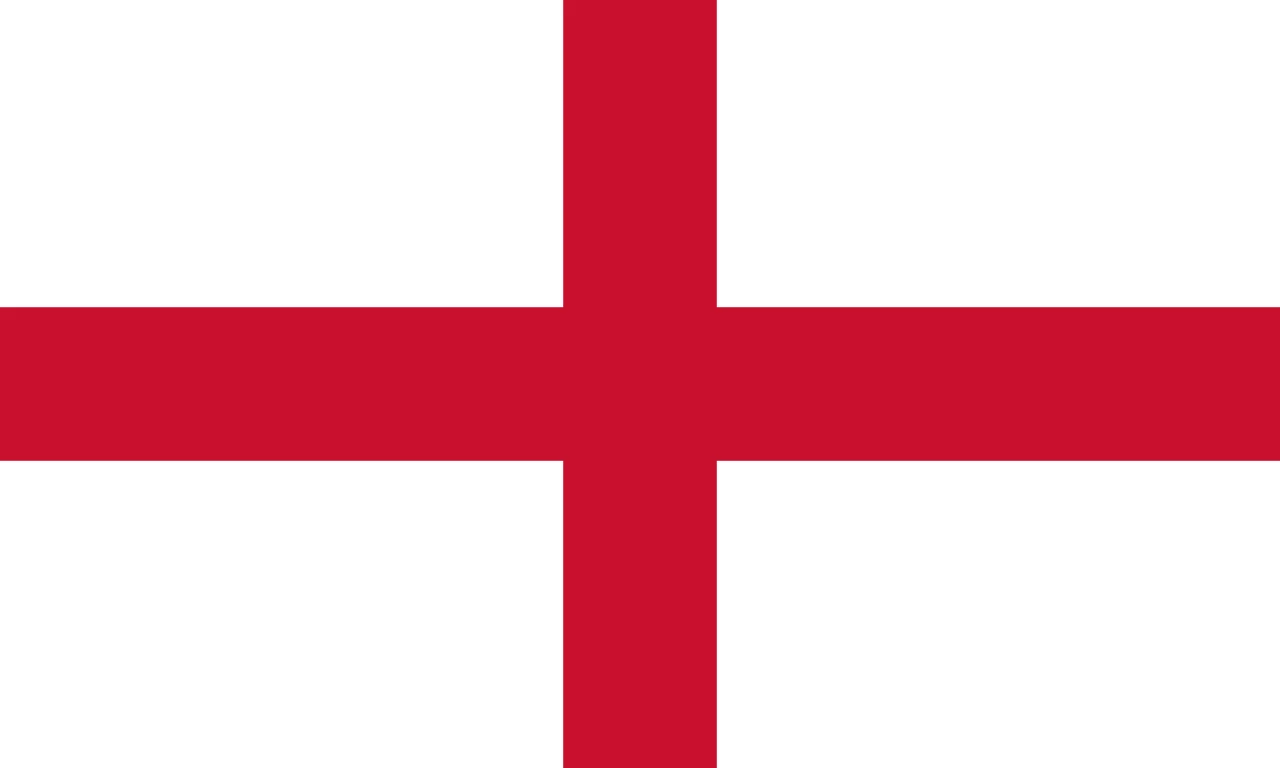
    The cross of St George

  3. 2

    The saltire of St Andrew

How it is described

The flag in the words of vexillology and heraldry.

Vexillological description

It is a rectangular field with a 4:5 ratio divided into four equal quarters.

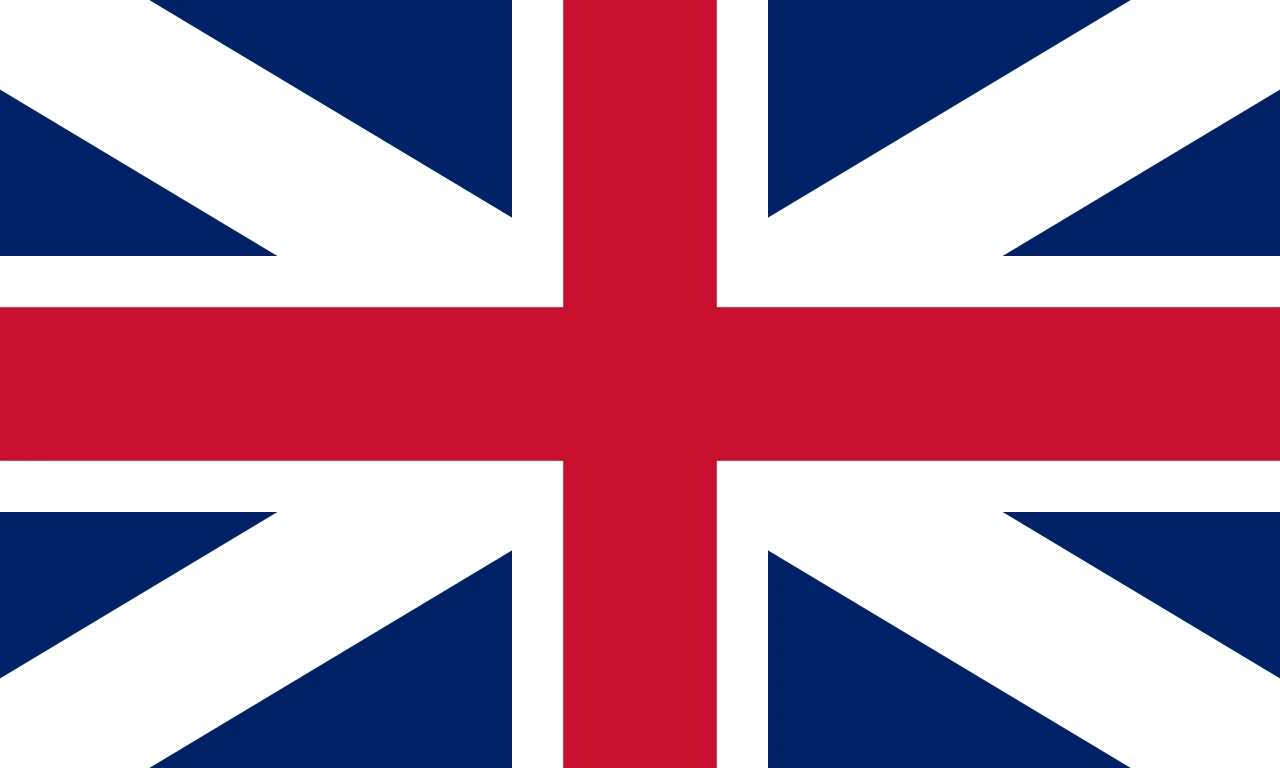
Quarters 1 and 4 (top by the flagpole and bottom on the fly)
white with the red Cross of St George, that of England.
Quarters 2 and 3
blue with the white saltire of St Andrew, that of Scotland; a saltire is a cross in the shape of an X.
What it carries

Each element and how many of the 1,390 flags in the catalogue carry it. In yellow, the rarest.

Its history in dates

Every date in its story, at a glance.

  1. 1606

    The Union flag, which had mixed England and Scotland since 1606

  2. 1649

    It is associated with the Commonwealth, the republic that ruled England between 1649 and 1660,…

  3. 1654

    Scotland, conquered by Cromwell, was joined by law to England with an ordinance of 12 April 1654…

  4. 1658

    Perrin the saltire did not return to the navy’s flags until 1658

  5. 1660

    In 1660 King Charles II returns and the harp disappears

The full story

How it was born, how it has changed and what it means.

This flag brings together in four quarters the Cross of St George of England and the saltire of St Andrew of Scotland. It is associated with the Commonwealth, the republic that ruled England between 1649 and 1660, when there was no king. It is the image many books and websites use for that period, although the documents of the time speak above all of other flags.

How it came about

In 1649 Parliament executed King Charles I and proclaimed the republic, which was eventually led by Oliver Cromwell. The Union flag, which had mixed England and Scotland since 1606, was the symbol of the kings, and the republic withdrew it: on 22 February 1649 it ordered that its ships should carry only the red cross on white.

Scotland, conquered by Cromwell, was joined by law to England with an ordinance of 12 April 1654 that ordered the Scottish saltire to be added to the arms of the republic. The quartered design on this page reflects that union, but according to the historian W. G. Perrin the saltire did not return to the navy’s flags until 1658.

How it has changed

In eleven years of republic the flags changed almost as much as the government.

  1. First Union flag: red Cross of St George over the white saltire of St Andrew on a blue field
    Hoshie · Public domain

    1606-1649

    The first Union flag, of King James I, who reigned in England and Scotland at the same time.

  2. Flag of England: red cross on a white field
    Nicholas Shanks · Public domain

    1649

    With no king, the ships of the republic may only carry the Cross of St George.

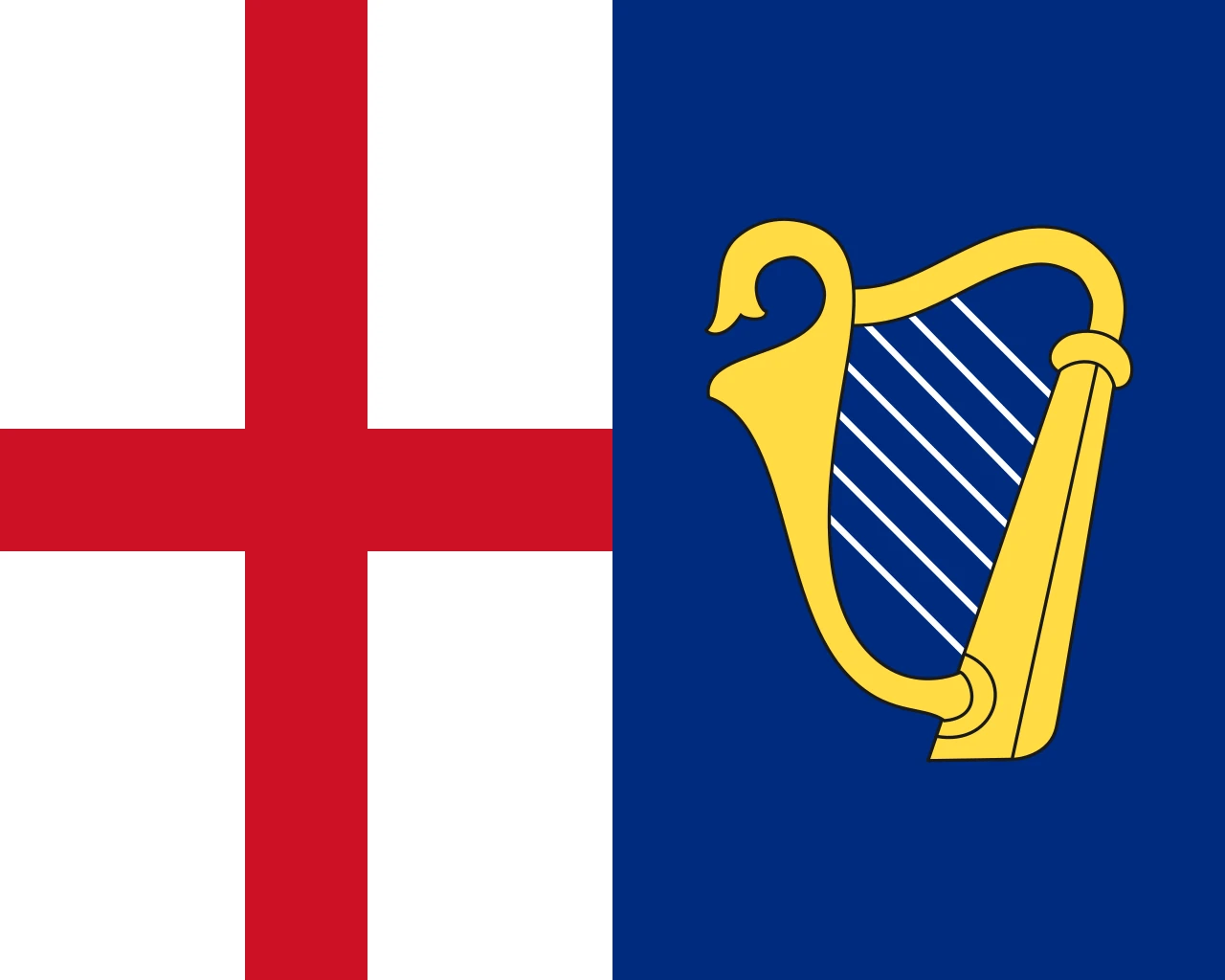
  3. Red flag with two shields: the Cross of St George and the golden harp of Ireland
    Guilherme Paula · Public domain

    1649-1658

    For the admirals, the arms of England and Ireland in two shields on red.

  4. Quartered flag with two crosses of St George and two saltires of St Andrew

    1654

    The quartered design that reflects the union with Scotland of 1654.

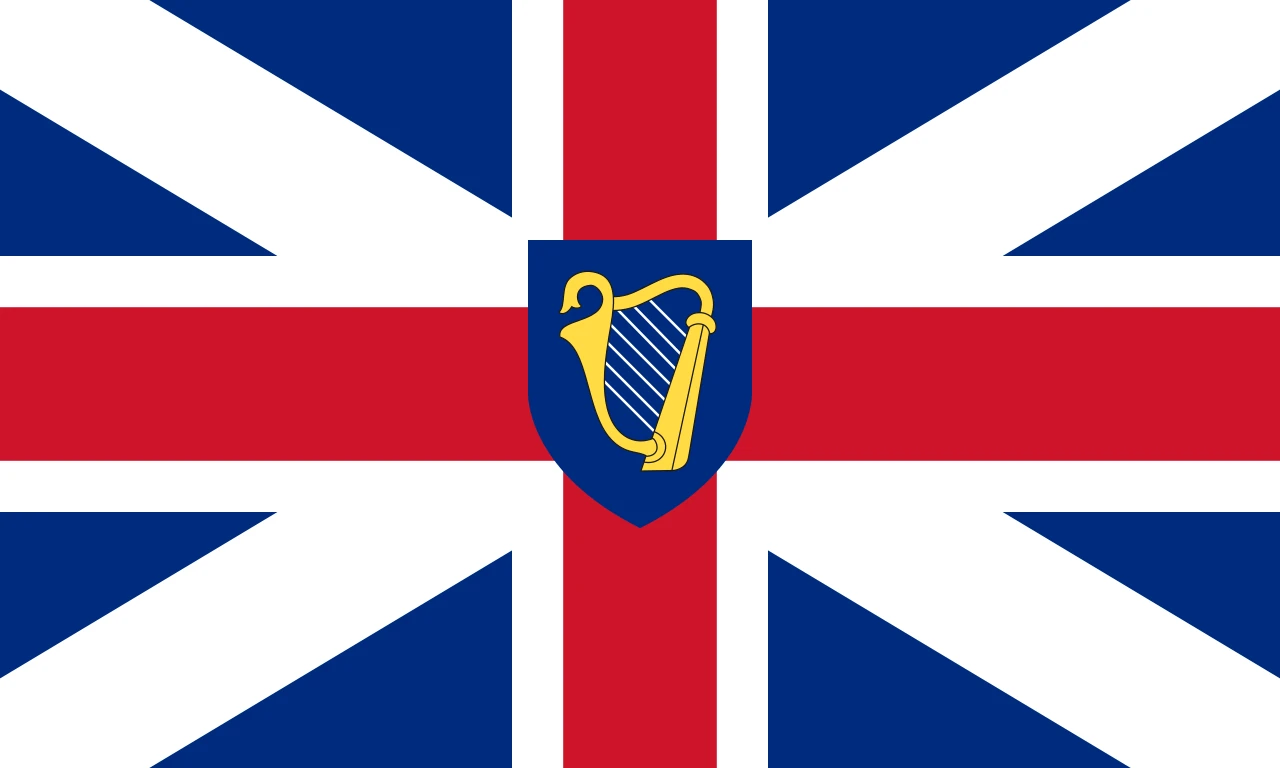
  5. Union flag with a golden harp on a blue field in the centre
    Guilherme Paula · Public domain

    1658-1660

    The Union flag comes back, now with the harp of Ireland in the centre. In 1660 King Charles II returns and the harp disappears.

What it means

  • Red Cross of St George on white

    England.

  • White saltire of St Andrew on blue

    Scotland, joined to the republic in 1654.

  • Four quarters

    the two countries repeated diagonally, as in a coat of arms.

Fun facts

  1. The republic took the flag away from the king

    On 22 February 1649 the Council of State ordered that ships should carry ‘only the red cross on a white flag’. Oliver Cromwell signed the order the next day.

  2. Ireland came in before Scotland

    The Irish harp was already on the admirals’ flags in 1649, years before the Scottish saltire.

  3. A flag that outlived the king

    Almost all the symbols of the republic were destroyed when the monarchy returned in 1660. One naval flag of the Commonwealth was saved and is kept in the National Maritime Museum in Greenwich, London.

Buy the flag

Buy the flag on AmazonAffiliate link: if you buy, Wiki Banderas receives a small commission.

How much have you learnt?

Test what you have read about the flag of Commonwealth.

  1. 1. Which one is the flag of Commonwealth?

  2. 2. Which of these elements appears on the flag?

  3. 3. In which year was the current flag adopted?

Sources

Text based on the article “Flags of the English Interregnum (Wikipedia en inglés)” from the Spanish Wikipedia, published under the licence CC BY-SA 4.0.

Sources consulted:

Credits

Flag image: Richtom80 at English Wikipedia, Wikimedia Commons · CC BY-SA 3.0.

More flags

Accessibility preferences

Accessibility statement

Quick profiles

Text and reading

Text size
Default
Line height
Default
Letter spacing
Default
Word spacing
Default

Colour

Motion and orientation

Cursor