Skip to content

Wiki Banderas
Open menu

Flag of Ticino

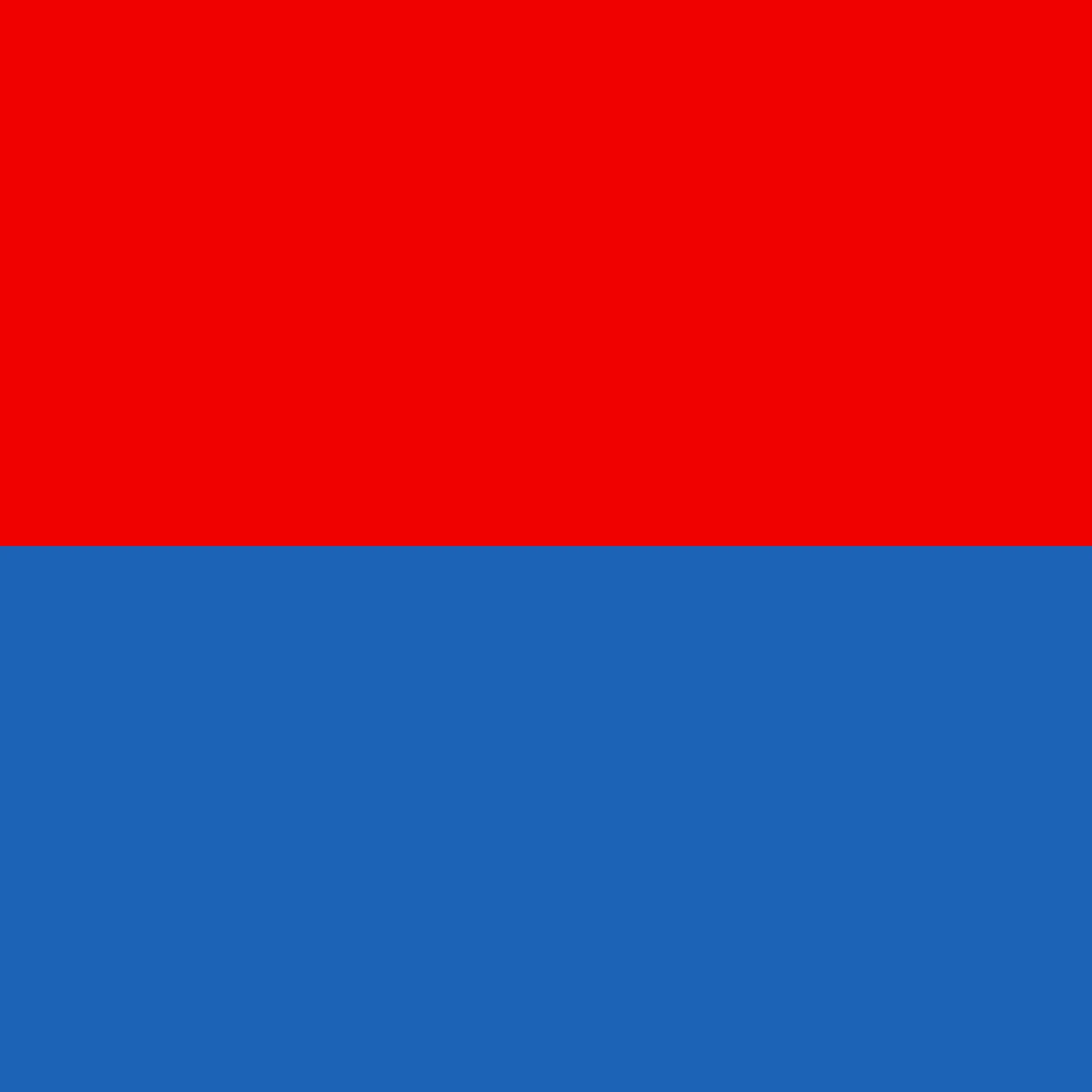
Red over blue: the only Italian-speaking canton fixed the colours in 1803, but the order of the stripes only became clear with the decree of 1930.

Flag of Ticino

The flag, in figures

Every fact about the flag, each with what it means.

Proportions
1:11 wide for every 1 high. 29 flags in the catalogue share it.
Properties
Normal flagFIAV symbol: the form of the flag.
Use
CivilFIAV symbol: who may fly the flag.
Adopted
19306 October 1930 · 96 years ago
Colours
  • Red
  • Blue
Reference shades: the official one may vary slightly.

Take a closer look

  • Field

  • Stripes

  • No charge

  • Sin carga

How it is described

The flag in the words of vexillology and heraldry.

Vexillological description

It is a square field, with a 1:1 ratio, with two horizontal stripes of the same width: red above and blue below.

Field
square (1:1), like the other Swiss cantonal flags.
Stripes
two bands of the same width; a stripe is a strip of colour. Red above, blue below.
No charge
only the two colours, with no arms, figures or inscriptions; the charge is a figure painted on the field.
Sin carga
solo los dos colores, sin escudo, figuras ni inscripciones; carga es una figura pintada sobre el paño.

What it carries

Each element and how many of the 1,390 flags in the catalogue carry it. In yellow, the rarest.

Its history in dates

Every date in its story, at a glance.

  1. 1440

    The southern lands were conquered by the founding cantons, which ruled these valleys between 1440…

  2. 1798

    In 1798, with the Helvetic Republic

  3. 1803

    It looks like a modernist design, but it was born with the canton itself in 1803, when Ticino…

  4. 1804

    September 1804 settled on red above

  5. 1809

    The military flag of 1809 already used red over blue with golden mottos

The full story

How it was born, how it has changed and what it means.

The flag of Ticino is a field divided in two: red above and blue below. It looks like a modernist design, but it was born with the canton itself in 1803, when Ticino did not yet exist as a state. It is the only canton in Switzerland with an Italian-speaking population.

How it came about

The southern lands were conquered by the founding cantons, which ruled these valleys between 1440 and 1512. In 1798, with the Helvetic Republic, Lugano and Bellinzona were organised as separate cantons, and in 1803 they were merged into the new canton of Ticino. On 26 May 1803 the Grand Council decreed that the colours of the canton would be red and blue, without saying how to place them. Since the arms of the main cities were mostly red, red won the day, but for more than a century nobody knew whether the division was vertical or horizontal.

How it has changed

September 1804 settled on red above, a decree of 1922 repeated the rule without fixing the loose drawings, and the resolution of 6 October 1930 put things in order once and for all: square field, red and blue in horizontal stripes, the reverse of the arms, which are borne red and blue vertically. The military flag of 1809 already used red over blue with golden mottos.

What it means

  • Red and blue: the meaning was lost. The most plausible theory makes them come from the colours of the districts that formed the canton; other readings point to the colours of Paris, in gratitude to the France that gave Ticino its sovereignty.

Fun facts

  1. Arms and flag do not match

    The arms carry the red and blue vertically, with red on the heraldic right; the flag has them horizontally. They are the same colours turned ninety degrees, and confusing one with the other is a classic.

  2. Two hundred years of disorder

    The order of 1803 did not fix the placement and the one of 1922 was still vague; it was not until 1930 that a cantonal decree said once and for all how each colour goes.

  3. Before red and blue, the cross

    The bailiffs of the sixteenth century in these lands flew a white cross on a red ground, the sign of lordship by the old cantons; today’s red and blue is an invention of the Napoleonic era.

Localisation

How much have you learnt?

Test what you have read about the flag of Ticino.

  1. 1. Which one is the flag of Ticino?

  2. 2. What are the proportions (height:width) of the flag?

  3. 3. In which year was the current flag adopted?

Sources

Sources consulted:

Credits

Flag image: Cantone Ticino, Wikimedia Commons · Public domain.

More flags

Accessibility preferences

Accessibility statement

Quick profiles

Text and reading

Text size
Default
Line height
Default
Letter spacing
Default
Word spacing
Default

Colour

Motion and orientation

Cursor