Skip to content

Wiki Banderas
Open menu

Flag of Uri

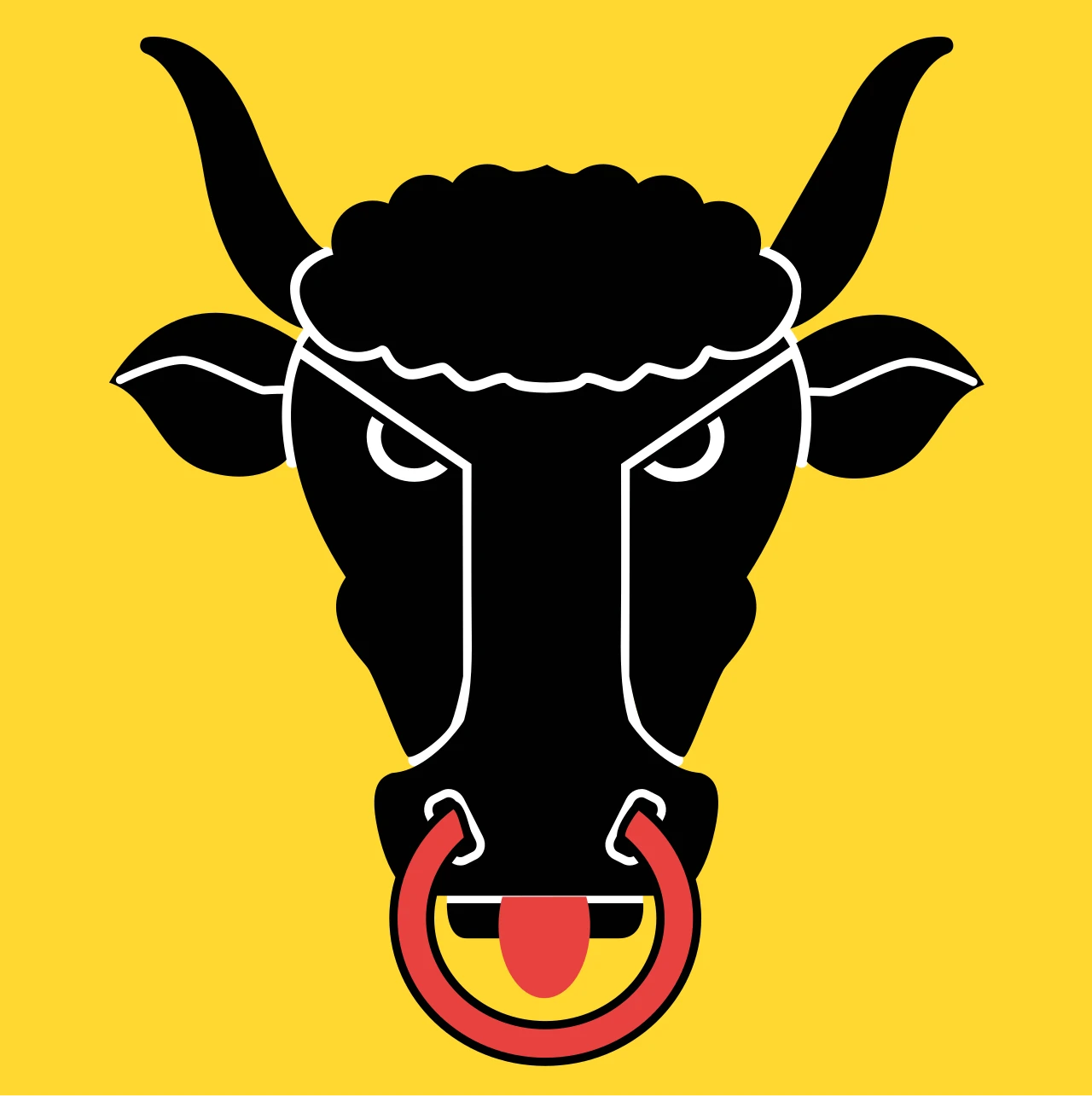
Black bull’s head with red tongue and ring on gold: the seal of free Uri of 1231 turned into a standard since Morgarten, 1315.

Flag of Uri

The flag, in figures

Every fact about the flag, each with what it means.

Proportions
1:11 wide for every 1 high. 29 flags in the catalogue share it.
Properties
Normal flagFIAV symbol: the form of the flag.
Use
CivilFIAV symbol: who may fly the flag.
Colours
  • Yellow
  • Black
  • Red
Reference shades: the official one may vary slightly.
12

Take a closer look

  1. The yellow cloth

  2. 1

    The bull's head

  3. 2

    The red ring

How it is described

The flag in the words of vexillology and heraldry.

Vexillological description

It is a square field, with a 1:1 ratio, yellow, with a black bull’s head in the centre, facing forward and with a red nose ring.

Field
square (1:1), like the Swiss cantonal flags; yellow and plain.
Charge
the black bull’s head, facing forward and without a neck; the charge is the figure painted on the field.
Details
red tongue and nose ring.
Detalles
lengua y anillo de la nariz rojos.
What it carries

Each element and how many of the 1,390 flags in the catalogue carry it. In yellow, the rarest.

Its history in dates

Every date in its story, at a glance.

  1. 1231

    King Henry (VII) granted Uri imperial freedom in 1231: the valley governed itself…

  2. 1315

    The oldest seal, from the mid-thirteenth century, already bears the bull’s head, and the oldest…

  3. 1948

    In 1948 the federal government fixed a realistic bull

The full story

How it was born, how it has changed and what it means.

The flag of Uri is a black bull’s head, facing forward, with its tongue out and a ring in its nose, on a yellow ground. The animal is an aurochs, the wild bull now extinct: the people of Uri call it Uristier, a play on their own name.

How it came about

King Henry (VII) granted Uri imperial freedom in 1231: the valley governed itself and had to defend itself, with a standard of its own. The oldest seal, from the mid-thirteenth century, already bears the bull’s head, and the oldest surviving standard is that of Morgarten, 1315, still in the town hall of Altdorf. Legend has it that the nose ring was put there by the Pope as a military prize; what is certain is that the ring recalls the domesticated aurochs.

How it has changed

The medieval design has not been touched; what changes is the style. In 1948 the federal government fixed a realistic bull, later it was simplified for registration plates and around 1990 the present slender line appeared, inspired by the standards of 1315.

What it means

  • Aurochs (Uristier)

    a canting animal for the name of the valley; the neighbours used to mock by saying the ring proved how hard the people of Uri were to tame.

  • Red ring and tongue

    in the old standards the ring was sometimes gold, and according to legend it was an honour granted by the Pope.

  • Gold and black

    they have been explained as the colours of the imperial eagle, the seal of the freedom of 1231.

Fun facts

  1. Trials for mocking the ring

    In the sixteenth and seventeenth centuries the people of Uri brought before the courts Zurichers who claimed the ring was a sign of defeat before the Grey League: the mockery was unfounded, the ring was already on the thirteenth-century seal.

  2. Everyone draws their bull as they like

    Uri has no official description of its flag with the rank of law, only the one in the federal armorial. In 2020 the cantonal chancellery summed it up like this: anyone may stamp the bull they please, as long as it carries a ring on a yellow ground.

  3. The Pope’s standard that came home

    The standard gifted by Julius II in 1512 was used in the assembly of the valley until 1798; the French took it to Bern and in 1802 it returned to Altdorf with honours.

Localisation

How much have you learnt?

Test what you have read about the flag of Uri.

  1. 1. Which one is the flag of Uri?

  2. 2. Which of these elements appears on the flag?

  3. 3. What are the proportions (height:width) of the flag?

More flags

Accessibility preferences

Accessibility statement

Quick profiles

Text and reading

Text size
Default
Line height
Default
Letter spacing
Default
Word spacing
Default

Colour

Motion and orientation

Cursor