Every fact about the flag, each with what it means.
Proportions
15:2222 wide for every 15 high. 3 flags in the catalogue share it.
Properties
Normal flagFIAV symbol: the form of the flag.
Use
CivilFIAV symbol: who may fly the flag.
Adopted
185131 October 1851 · 175 years ago
Colours
Red
Yellow
Green
Reference shades: the official one may vary slightly.
Coat of arms
YesIt carries the coat of arms on the cloth.
Nickname
La Tricolor
Designer
Manuel Isidoro Belzu
Take a closer look
The three stripes
1
The red stripe
2
The green stripe
How it is described
The flag in the words of vexillology and heraldry.
Vexillological description
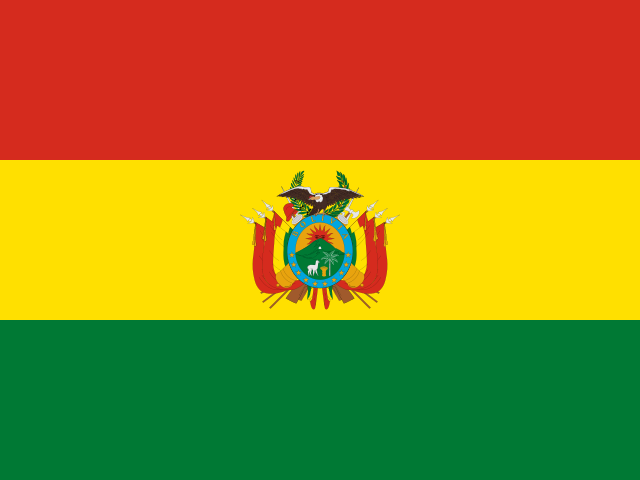
It is a field with a 15:22 ratio with three horizontal stripes of the same width: red at the top, yellow in the middle and green at the bottom.
The stripes
the 1851 law fixed the three colours; an 1888 decree settled the red-yellow-green order and that the stripes would all be the same size.
No figures
the one seen here is the civil version, the one any citizen may use. The state flag also carries the national coat of arms in the centre, over the yellow stripe.
What it carries
Each element and how many of the 1,390 flags in the catalogue carry it. In yellow, the rarest.
Bolivia declared its independence on 6 August 1825
1851
The definitive one arrived in 1851
1888
A law of 31 October that year fixed the three current colours, and in 1888 a decree ordered…
2009
It is one of the few countries with two national flags: since 2009 it is accompanied by the Wiphala
The full story
How it was born, how it has changed and what it means.
The flag of Bolivia, called ‘la Tricolor’, has three equal horizontal stripes: red, yellow and green. The one used by the state also carries the coat of arms in the centre; the citizens’ version goes without it. It is one of the few countries with two national flags: since 2009 it is accompanied by the Wiphala, the emblem of coloured squares of the Andean indigenous peoples.
How it came about
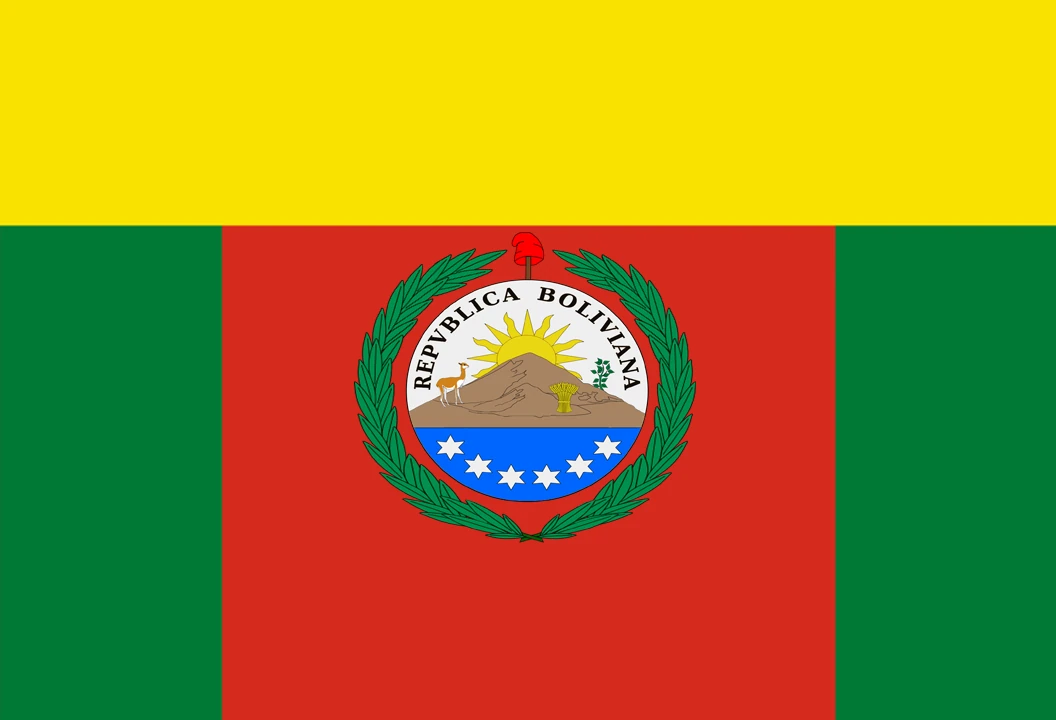
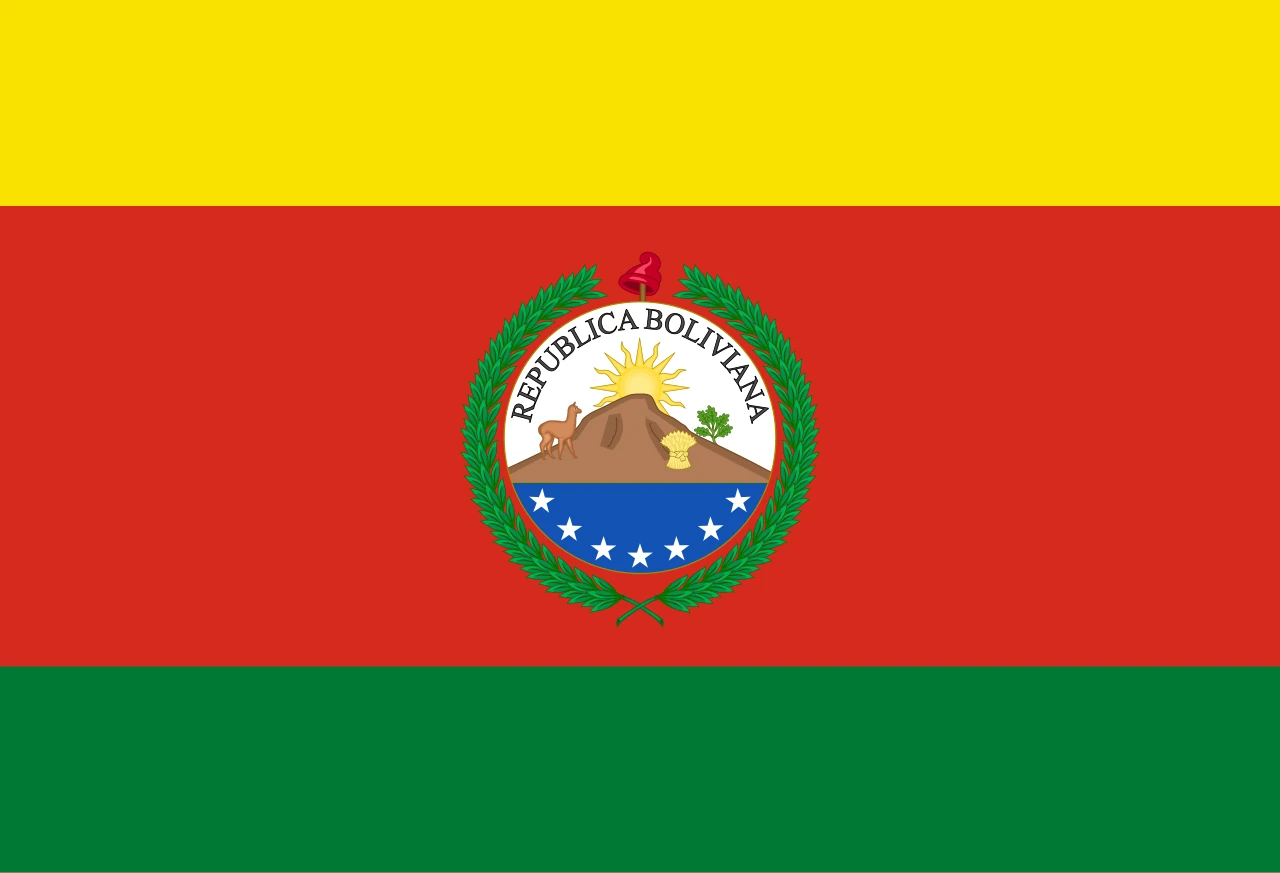
Bolivia declared its independence on 6 August 1825. Eleven days later, the assembly of the new country, called the Republic of Bolivar in honour of the liberator Simón Bolívar, approved its first flag: green and red with golden stars.
In the following years the flag was changed several times. The definitive one arrived in 1851, during the government of president Manuel Isidoro Belzu. A law of 31 October that year fixed the three current colours, and in 1888 a decree ordered the three stripes to be the same size and in this order: red at the top, yellow in the middle and green at the bottom.
How it has changed
In its first 26 years Bolivia had four different flags.
The three horizontal stripes appear, but with yellow on top and red in the middle.
1851
With Belzu the current order is adopted: red, yellow and green.
What it means
An 1888 decree explained the colours for the first time, and a 2009 decree revised them:
Red
the blood of the heroes who fought for the birth and defence of the country.
Yellow
the wealth and the natural resources.
Green
the richness of nature and hope.
Coat of arms
only on the state flag. It shows the hill of Potosí, famous for its silver, an alpaca and the sun.
Fun facts
A rainbow on the road
According to tradition, in 1851 Belzu was travelling on horseback towards Oruro when he saw a rainbow in which red, yellow and green stood out, and he decided that those would be the colours of the flag. It is a popular tale, with no documents to prove it.
A navy without a sea
Bolivia lost its coastline in the War of the Pacific, in 1879-1884, but keeps a navy that sails on Lake Titicaca and the rivers. Its flag carries a large star that symbolises the lost sea.
Two flags at once
Since the 2009 Constitution, at official events the Tricolor flies alongside the Wiphala, which is placed to its left.
Buy the flag
Buy the flag on AmazonAffiliate link: if you buy, Wiki Banderas receives a small commission.




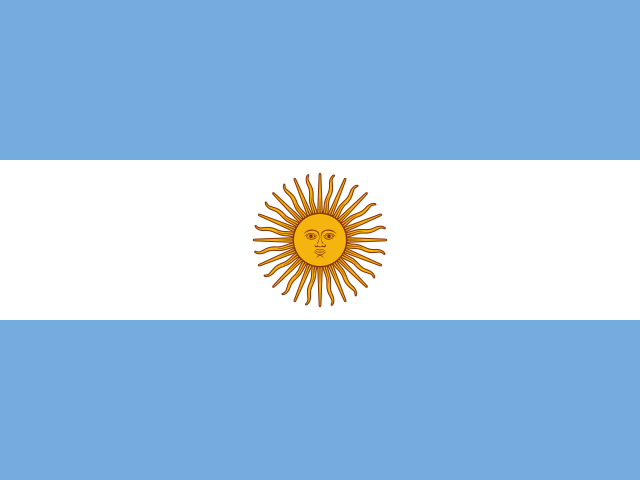 Argentina
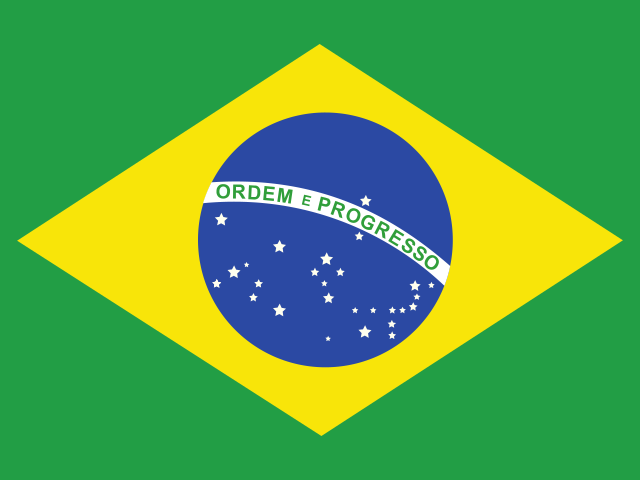 Brazil
 Chile
 Paraguay
 Peru