Every fact about the flag, each with what it means.
Proportions
5:88 wide for every 5 high. 9 flags in the catalogue share it.
Properties
Normal flagFIAV symbol: the form of the flag.
Use
Civil, military and governmental, for land and sea useFIAV symbol: who may fly the flag.
Adopted
181825 February 1818 · 208 years ago
Colours
White
Sky blue
Yellow
Reference shades: the official one may vary slightly.
Coat of arms
YesIt carries the coat of arms on the cloth.
Designer
Manuel Belgrano
Take a closer look
The three stripes
1
The Sun of May
2
The sky-blue stripe
How it is described
The flag in the words of vexillology and heraldry.
Vexillological description
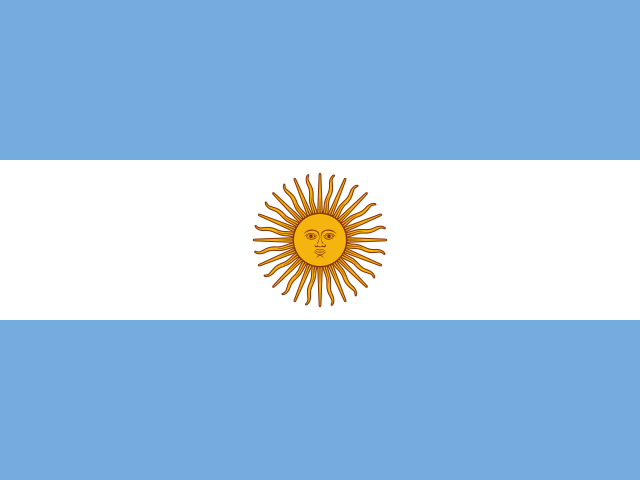
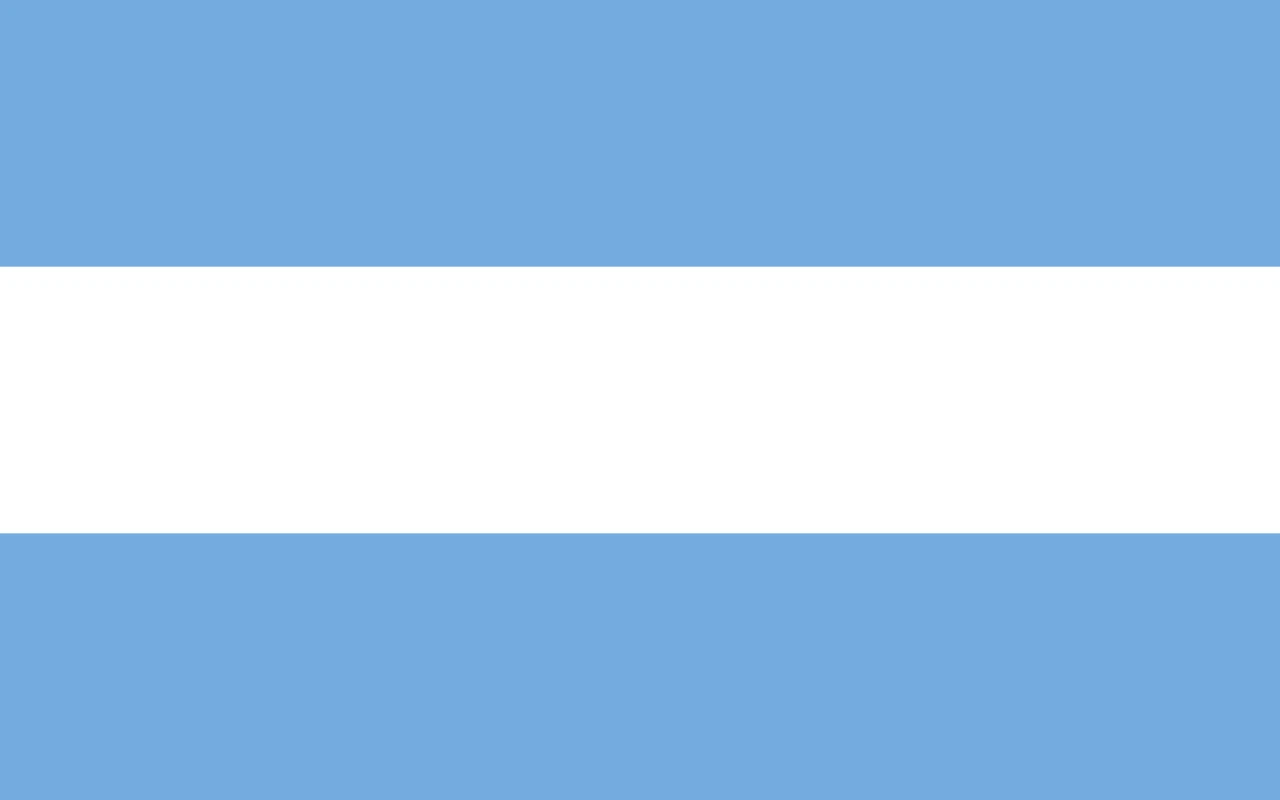
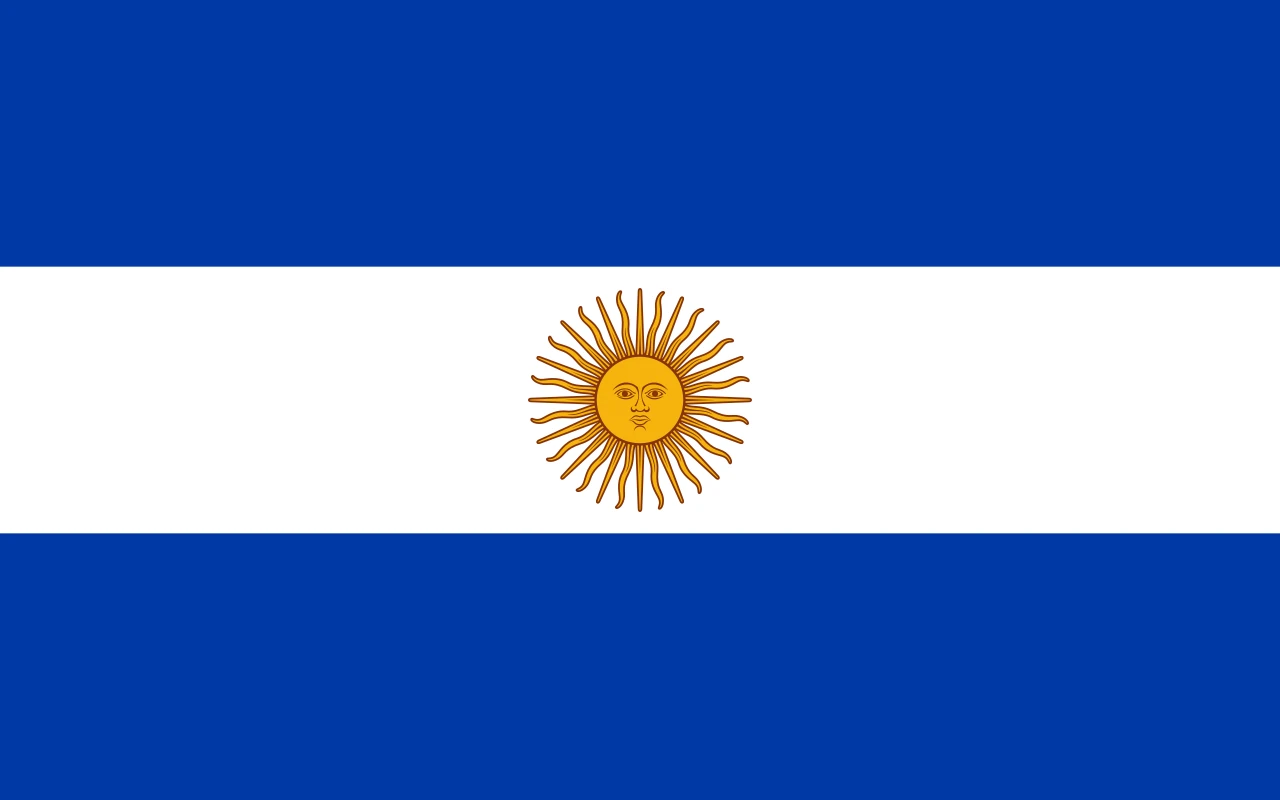
It is a field with a 5:8 ratio with three equal horizontal stripes: light blue, white and light blue. In the centre of the white one is the Sun of May.
Stripes
each one takes up a third of the height. The official light blue was fixed in 2010 by the IRAM standard (the Argentine technical standard), which also regulates the yellow of the sun and the brown of its features.
Sun of May
a yellow sun with a human face and rays that alternate between straight and wavy; with the rays in place, it measures almost as much as the height of the central stripe.
Official use
the version with the sun is the Official Flag of the Nation since the 1985 decree that recognised citizens’ right to use it; before that it was the property of the government and the army.
What it carries
Each element and how many of the 1,390 flags in the catalogue carry it. In yellow, the rarest.
In May 1810, Buenos Aires formed its own government and started the road to independence from Spain
1812
On 27 February 1812, on the banks of the Paraná river
1816
In 1816 the Congress of Tucumán finally approved it as the flag of the country
2010
In 2010 a decree fixes its exact colours
The full story
How it was born, how it has changed and what it means.
The flag of Argentina has three horizontal stripes of the same size, light blue, white and light blue, and in the centre a yellow sun with a face, the Sun of May. It is one of the oldest flags in South America and its history is full of acts of disobedience.
How it came about
In May 1810, Buenos Aires formed its own government and started the road to independence from Spain. Supporters of the revolution wore cockades, ribbon badges in light blue and white.
General Manuel Belgrano asked for those colours to be used by his soldiers, so that they would not be confused with the Spanish army, which used red. On 27 February 1812, on the banks of the Paraná river, next to what is now the city of Rosario, he hoisted for the first time a light blue and white flag of his own making. The government did not like it: it still did not want to declare independence and ordered him to keep it hidden. In 1816 the Congress of Tucumán finally approved it as the flag of the country.
How it has changed
The colours have stayed, but the flag has gone through several shapes.
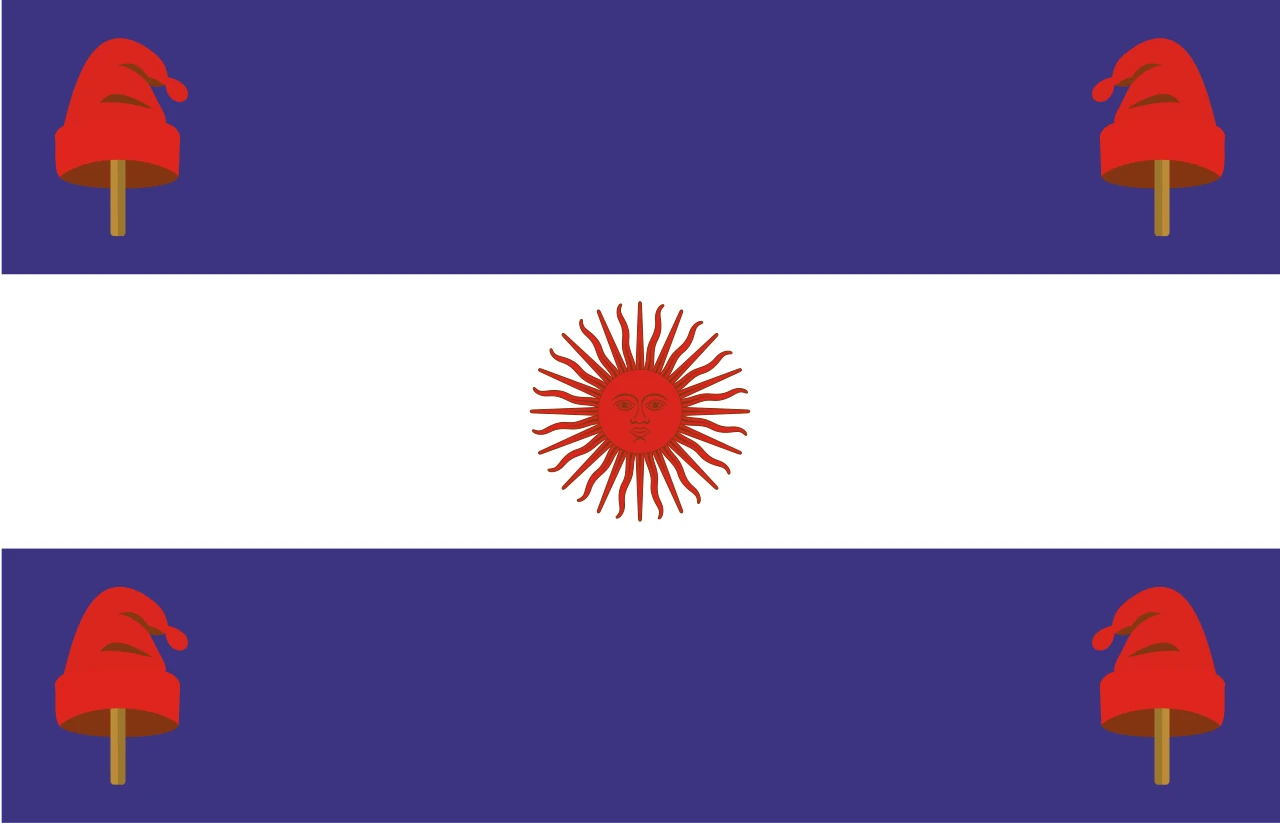
Under the governor Juan Manuel de Rosas the blue is darkened, the sun turns red and four red caps of liberty appear.
1985
The version with the sun becomes the only flag, for the State and for all citizens. In 2010 a decree fixes its exact colours.
What it means
The meaning of the colours is debated:
Light blue and white
they come from the 1810 cockade. Some link them to the colours of the Spanish royal House of Bourbon or to the mantle of the Virgin; the popular reading speaks of the sky and the clouds. There is no proof of any of them.
Sun of May
it recalls the May Revolution of 1810. According to tradition, on 25 May that year the sun rose between the clouds over Buenos Aires.
Fun facts
A disobedient flag
The government ordered Belgrano to hide his flag, but the order did not reach him in time. In May 1812 he brought it out again in Jujuy and received a written reprimand.
It is celebrated on the day its creator died
Flag Day in Argentina is 20 June, the day Manuel Belgrano died in 1820, and not the day of its first hoisting.
The sun, only for the State
Between 1944 and 1985 citizens could not use the flag with the sun: it was only for the government. Private individuals had to make do with the version without it.
A sun taken from a coin
The Sun of May on the flag was drawn from the one that appeared on the first Argentine coins, minted in 1813.
Buy the flag
Buy the flag on AmazonAffiliate link: if you buy, Wiki Banderas receives a small commission.
Buy the flag on AmazonAffiliate link: if you buy, Wiki Banderas receives a small commission.
Buy the flag on AmazonAffiliate link: if you buy, Wiki Banderas receives a small commission.
Buy the flag on AmazonAffiliate link: if you buy, Wiki Banderas receives a small commission.





 Bolivia
 Brazil
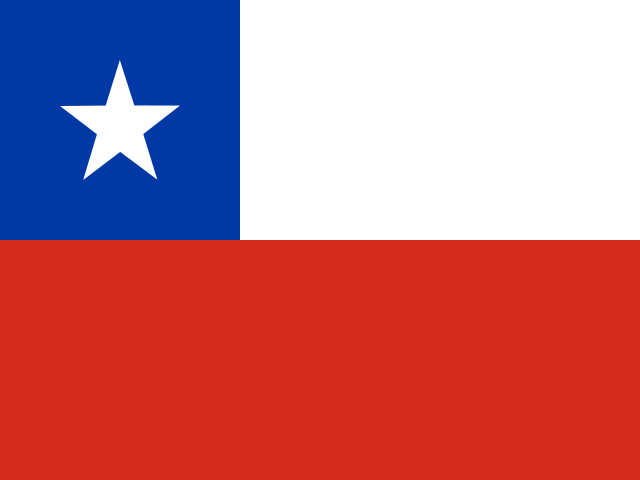 Chile
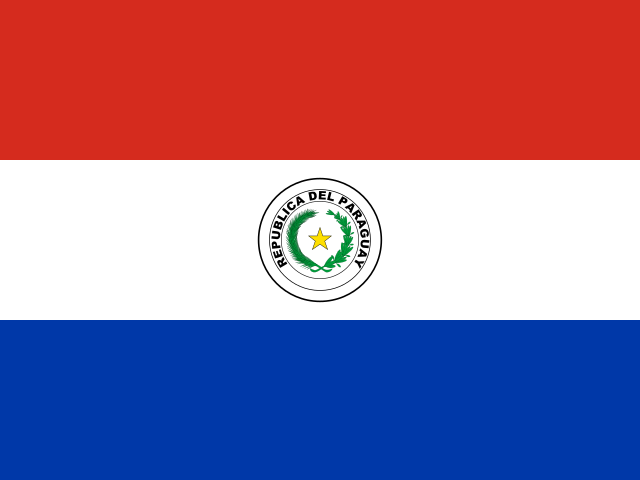 Paraguay
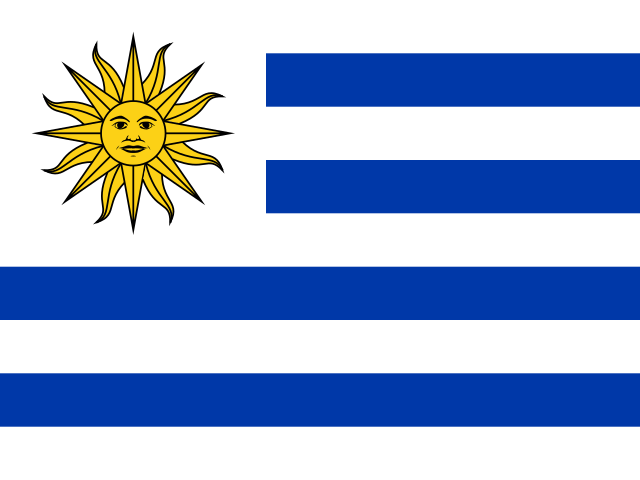 Uruguay