Every fact about the flag, each with what it means.
Proportions
7:1010 wide for every 7 high. 14 flags in the catalogue share it.
Properties
Normal flagFIAV symbol: the form of the flag.
Use
CivilFIAV symbol: who may fly the flag.
Adopted
199211 May 1992 · 34 years ago
Colours
green
yellow
blue
white
Reference shades: the official one may vary slightly.
Coat of arms
YesIt carries the coat of arms on the cloth.
Take a closer look
The green cloth
1
The yellow rhombus
2
The blue circle
3
The banner with the motto
How it is described
The flag in the words of vexillology and heraldry.
Vexillological description
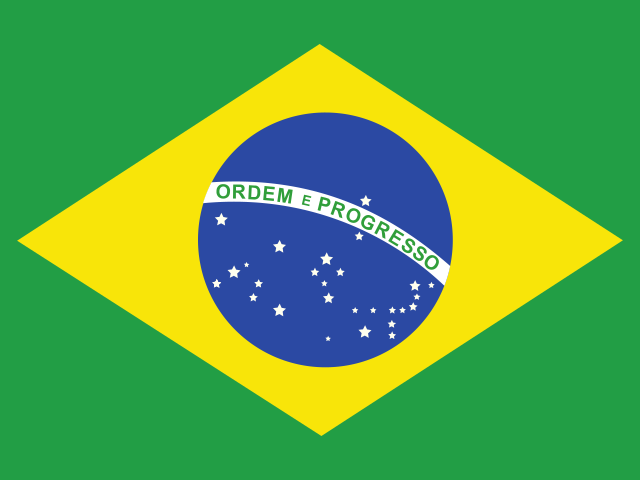
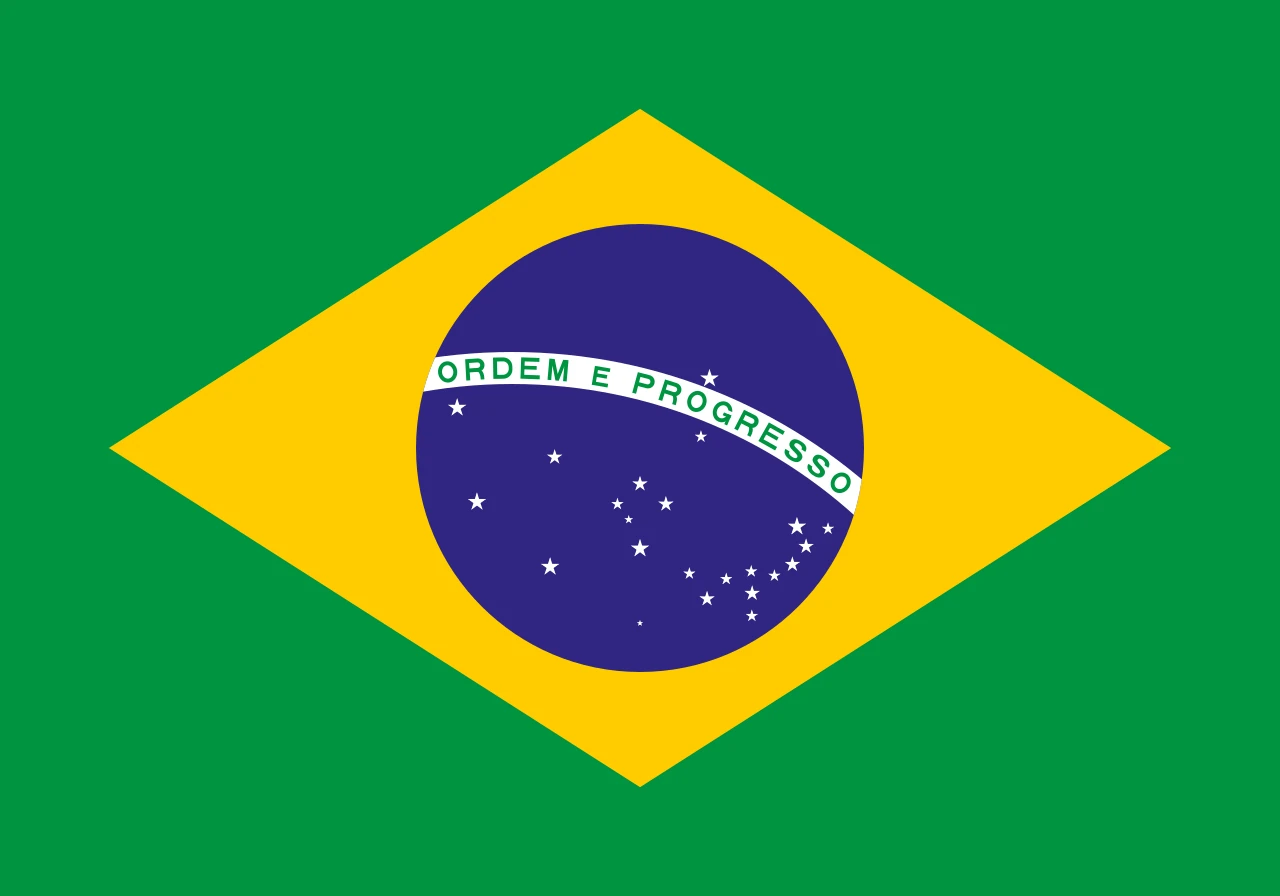
It is a rectangular field with a 7:10 ratio, green, with a yellow lozenge, a blue circle with 27 stars inside it and a white band with the motto. The law that defines it, no. 5.700 of 1971, measures everything with a module: the width divided into 14 equal parts.
Field (the cloth)
green, with no stripes or borders.
Lozenge
yellow, with its points less than two modules from the edge.
Circle
blue, centred on the lozenge, with a radius of 3.5 modules, containing 27 white stars of five different sizes.
Band
white, a crescent crossed by the diagonal of the lozenge, half a module wide, with ‘Ordem e Progresso’ in green letters.
What it carries
Each element and how many of the 1,390 flags in the catalogue carry it. In yellow, the rarest.
Brazil became independent from Portugal in 1822 and turned into an empire
1889
On 15 November 1889 a military coup ended the monarchy
1980
A law adds four stars for the states created in the 1980s
The full story
How it was born, how it has changed and what it means.
The flag of Brazil is easy to recognise: a green rectangle, a yellow lozenge and, in the centre, a blue circle full of stars. That circle is a real patch of sky: the one that was over Rio de Janeiro on the day the republic was born.
How it came about
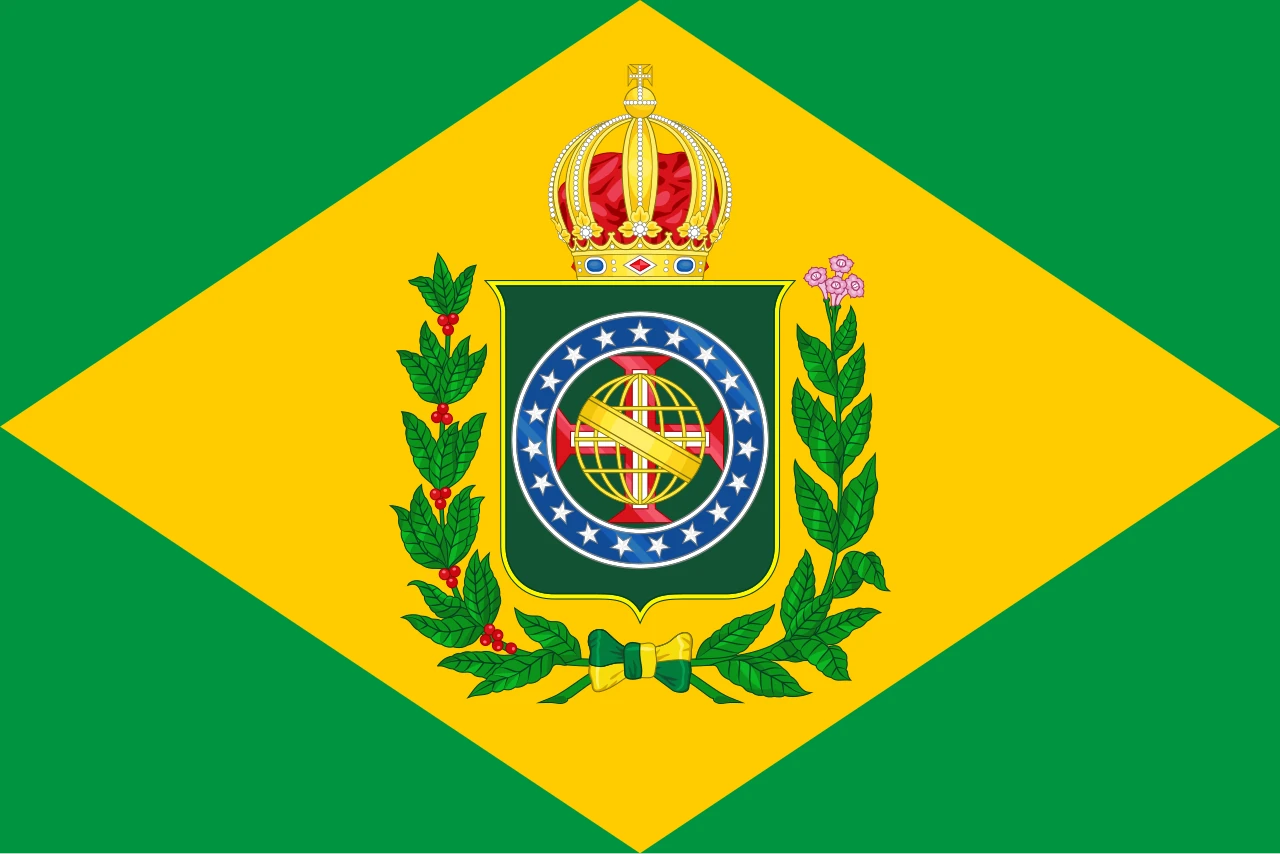
Brazil became independent from Portugal in 1822 and turned into an empire. The French painter Jean-Baptiste Debret drew its flag: green field, yellow lozenge and the emperor’s coat of arms in the centre.
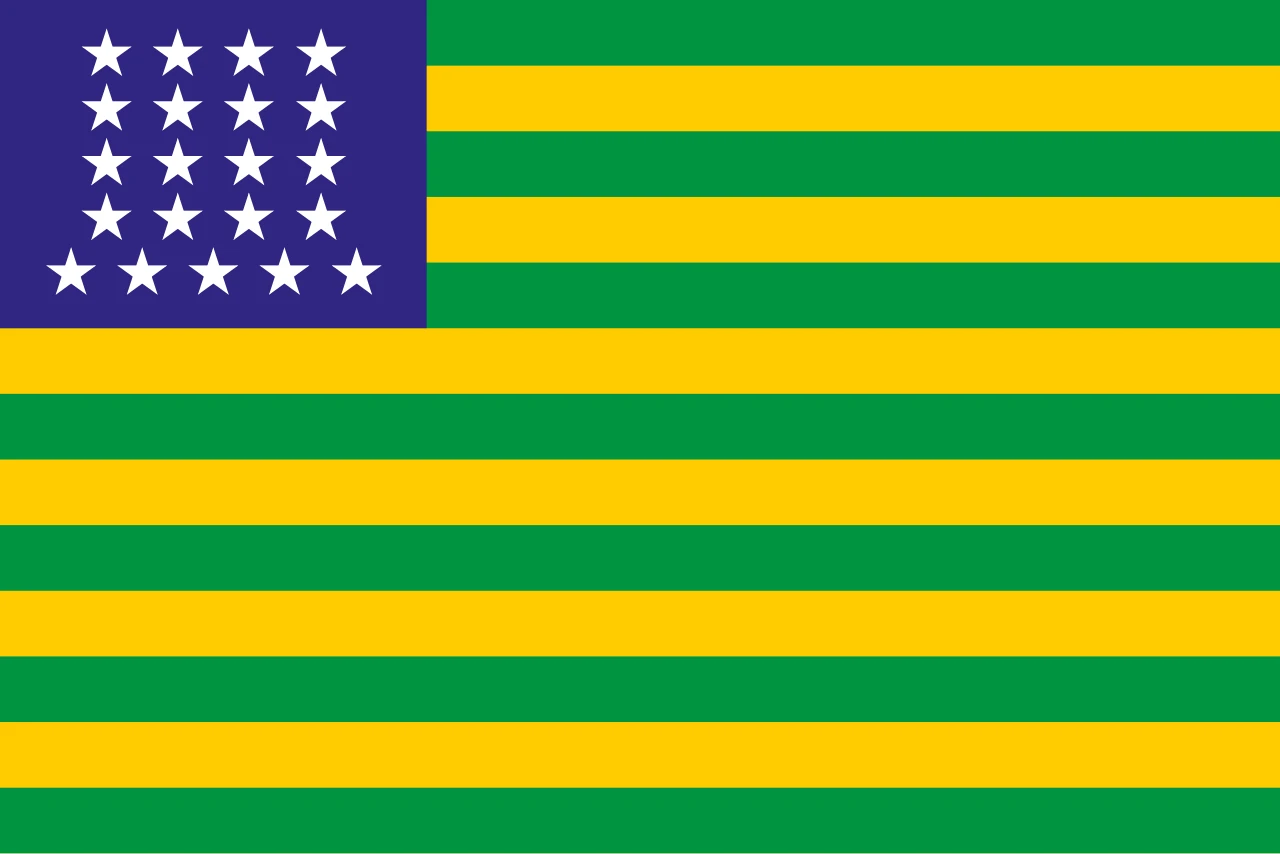
On 15 November 1889 a military coup ended the monarchy. The republic needed a flag without a crown. Raimundo Teixeira Mendes, leader of the followers of positivism, a philosophical current very influential in Brazil, proposed keeping the green and the yellow and replacing the coat of arms with a starry sky. The painter Décio Villares made the drawing. The government adopted it on 19 November 1889, four days after the coup.
How it has changed
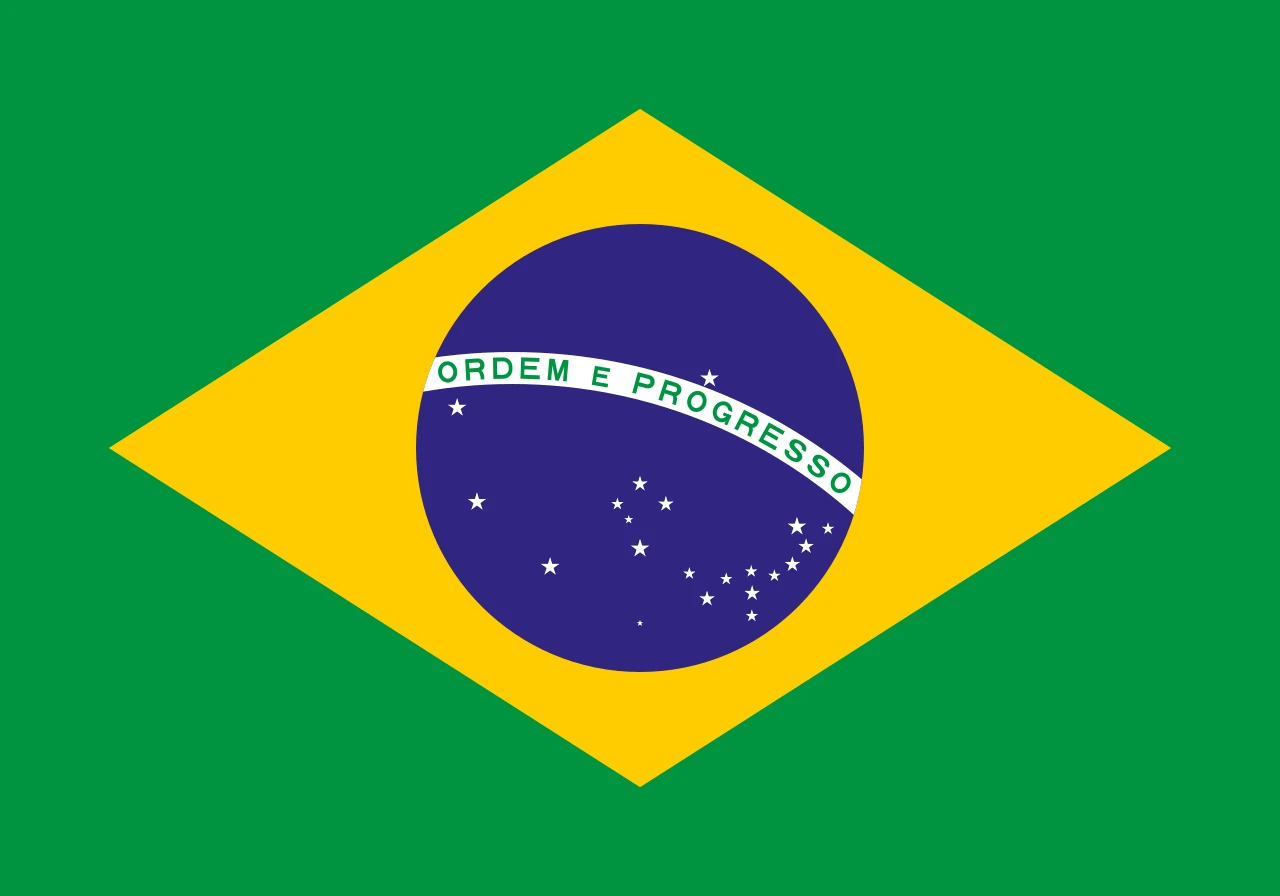
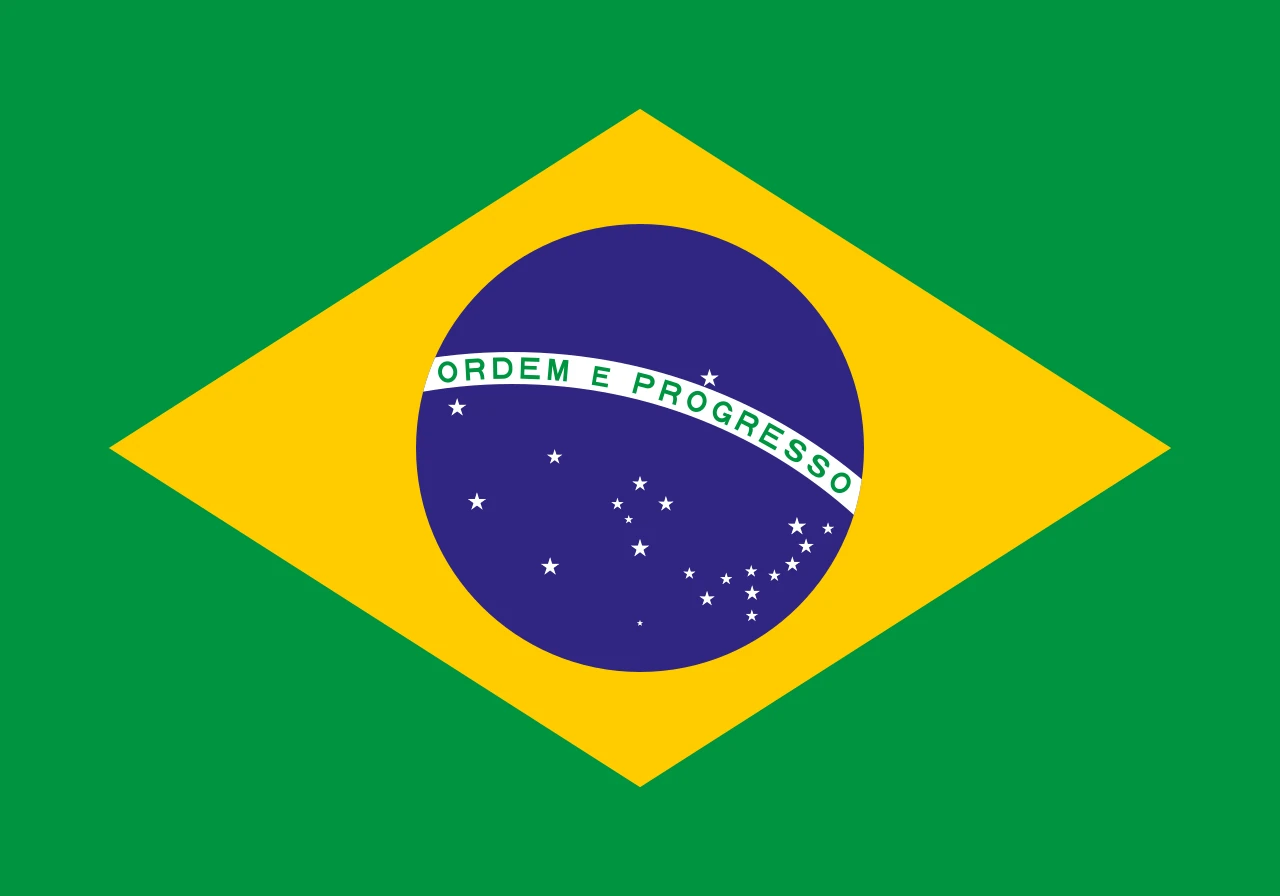
The 1889 design is still in force, but its sky has kept gaining stars every time Brazil has created new states.
For four days a striped provisional flag is used. The new president, Deodoro da Fonseca, rejects it because it looks too much like the United States one.
Star number 23 arrives, that of the state of Acre.
1992
A law adds four stars for the states created in the 1980s. Since then there are 27.
What it means
The colours come from the Empire and the sky, from the republic:
Green
the family of the first emperor, Pedro I, the House of Braganza. It is popularly said to be the forests, but that is not official.
Yellow
the family of the empress Maria Leopoldina, the Habsburgs. Popularly, gold.
Blue circle
the sky of Rio de Janeiro on 15 November 1889, the day the republic was proclaimed.
27 stars
the 26 states and the Federal District, where the capital, Brasilia, is.
Ordem e Progresso
‘Order and progress’, a motto inspired by the French philosopher Auguste Comte, father of positivism.
Fun facts
The sky seen from outside
The stars are drawn as someone placed outside the sky would see them, looking towards Rio de Janeiro. That is why the constellations appear the wrong way round, like in a mirror.
A single star above the motto
It is Spica, which stands for the state of Pará. It sits above the white band to remind that part of Brazil lies in the northern hemisphere.
The motto is missing love
Comte’s phrase said ‘love as principle, order as basis and progress as end’. On the flag only order and progress were kept. In 2003 and in 2021 it was proposed to add ‘Love’, but it did not go ahead.
Old flags are burned on Flag Day
Worn-out flags are handed over to a barracks and burned in a ceremony on every 19 November.
Buy the flag
Buy the flag on AmazonAffiliate link: if you buy, Wiki Banderas receives a small commission.
Buy the flag on AmazonAffiliate link: if you buy, Wiki Banderas receives a small commission.




 Argentina
 Bolivia
 Colombia
 French Guiana
 Guyana
 Paraguay
 Peru
 Suriname
 Uruguay
 Venezuela