Skip to content

Wiki Banderas
Open menu

Flag of Appenzell Innerrhoden

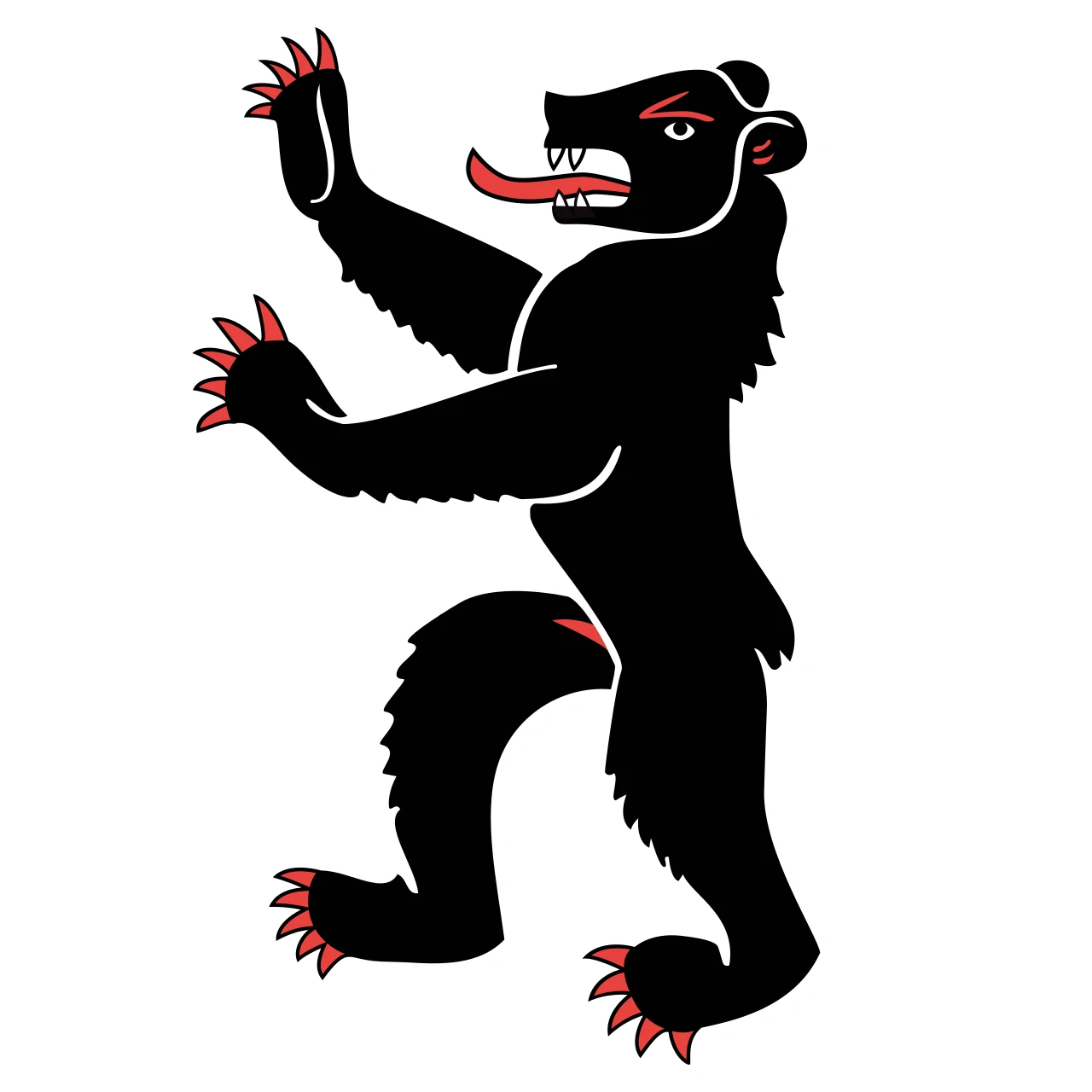
A black bear rampant, with red claws and tongue on a white field: the medieval war flag that the Catholic half of Appenzell kept in 1597.

Flag of Appenzell Innerrhoden
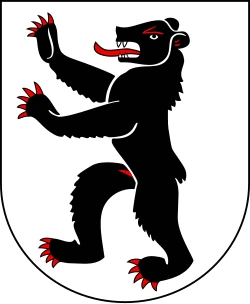
Coat of arms

The flag, in figures

Every fact about the flag, each with what it means.

Proportions
1:11 wide for every 1 high. 29 flags in the catalogue share it.
Properties
Normal flagFIAV symbol: the form of the flag.
Use
CivilFIAV symbol: who may fly the flag.
Colours
  • White
  • Black
Reference shades: the official one may vary slightly.
Coat of arms
YesIt carries the coat of arms on the cloth.

Take a closer look

  • Field

  • Bear

  • No letters

How it is described

The flag in the words of vexillology and heraldry.

Vexillological description

It is a square flag —a 1:1 ratio, like all the Swiss cantonal flags— on a white field, with a black bear rampant and nothing else.

Field
white and plain, as wide as it is high.
Bear
black and rampant on its hind legs, taking up almost the whole height.
No letters
unlike the one of Ausserrhoden, it carries no initial.

What it carries

Each element and how many of the 1,390 flags in the catalogue carry it. In yellow, the rarest.

Its history in dates

Every date in its story, at a glance.

  1. 1403

    The bear was the emblem of the Abbey of St Gall, lord of Appenzell until 1403

  2. 1597

    A black bear rampant on a white field, with no ornaments: the flag of Appenzell Innerrhoden…

The full story

How it was born, how it has changed and what it means.

A black bear rampant on a white field, with no ornaments: the flag of Appenzell Innerrhoden is the coat of arms of all of Appenzell before the split, which the Catholic half kept intact in 1597.

How it came about

The bear was the emblem of the Abbey of St Gall, lord of Appenzell until 1403. According to Flags of the World, when the valley became independent it changed the abbot’s golden ground to white and drew the bear with red claws and erect penis, a challenge turned into a flag. In 1597 the religious reform split the country: the inner Rhoden, Catholic, kept the old war flag, and the outer ones added some letters.

How it has changed

It has not changed since 1597: it is still a medieval armorial banner, with no modern rule governing it.

What it means

  • Rampant bear

    the animal of the Abbey of St Gall, ancient lord of the valley.

  • White field

    it replaced the abbot’s gold when they broke away from him.

  • Red claws and tongue

    the bear, always male; a symbol of strength and courage.

Fun facts

  1. The bear that brought firewood

    According to the legend, the Irish monk Gall found a hungry bear and gave it bread: the animal, grateful, brought him firewood for his hut, and the monastery of St Gall grew up around it.

  2. The bear on four legs

    The earlier flag of Appenzell, documented from 1377, showed a bear on four legs on a honeycomb ground.

  3. A canton, half a seat

    As a half-canton, Innerrhoden sends a single representative to the Council of Cantons instead of two, even though it governs like an entire canton.

Location

How much have you learnt?

Test what you have read about the flag of Appenzell Innerrhoden.

  1. 1. Which one is the flag of Appenzell Innerrhoden?

  2. 2. Which of these elements appears on the flag?

  3. 3. What are the proportions (height:width) of the flag?

Sources

Sources consulted:

Credits

Flag image: Autor desconocido, Wikimedia Commons · Public domain.

More flags

Accessibility preferences

Accessibility statement

Quick profiles

Text and reading

Text size
Default
Line height
Default
Letter spacing
Default
Word spacing
Default

Colour

Motion and orientation

Cursor