Skip to content

Wiki Banderas
Open menu

Flag of Bufali

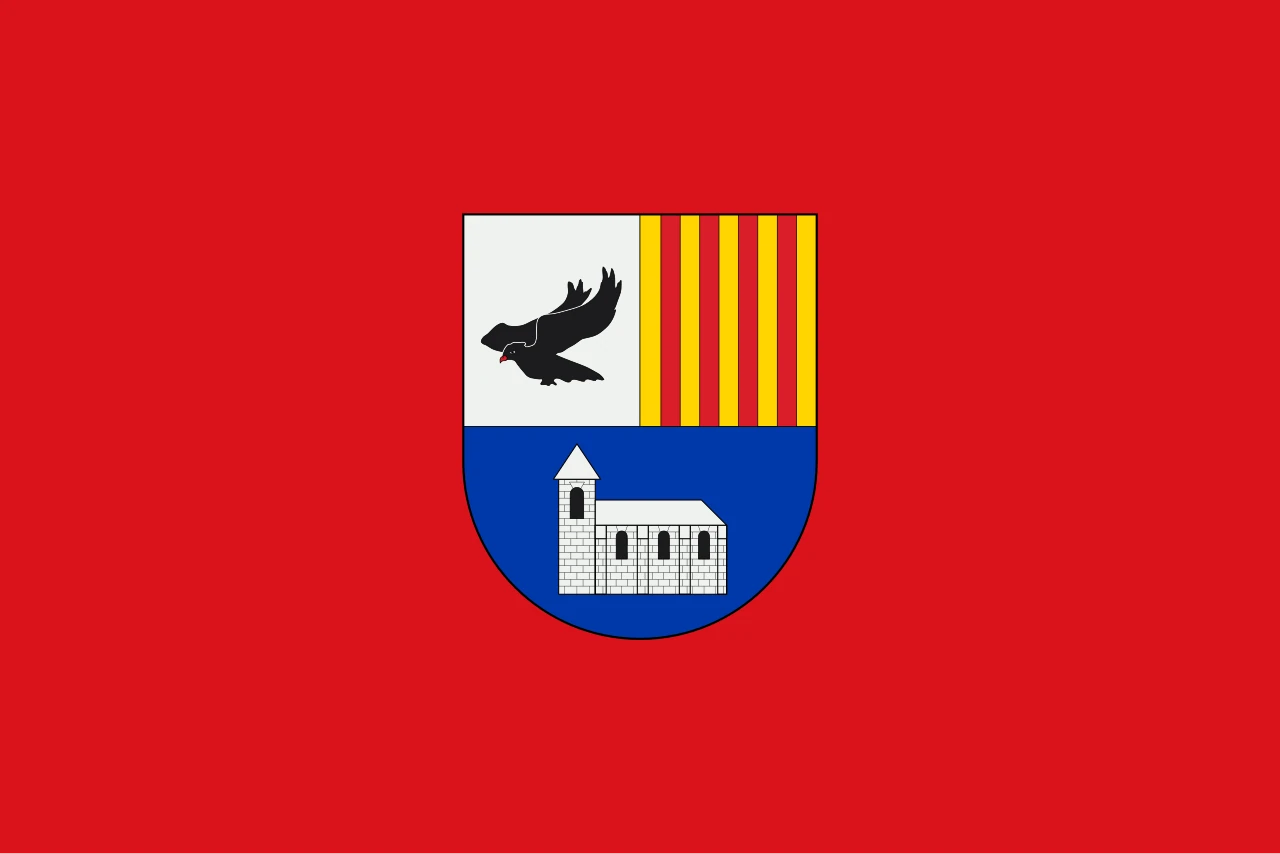
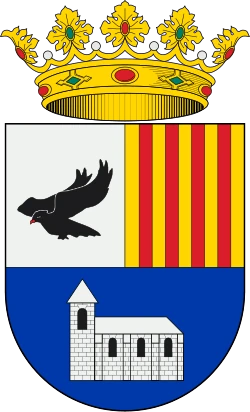
Red with the coat of arms of the municipality in the centre and without a crown: a kite, the bars of Aragon and a church.

Flag of Bufali
Coat of arms

The flag, in figures

Every fact about the flag, each with what it means.

Proportions
2:33 wide for every 2 high. 989 flags in the catalogue share it.
Properties
Normal flagFIAV symbol: the form of the flag.
Use
CivilFIAV symbol: who may fly the flag.
Adopted
201630 November 2016 · 10 years ago
Colours
  • red
  • blue
  • white
  • yellow
  • black
Reference shades: the official one may vary slightly.
Coat of arms
YesIt carries the coat of arms on the cloth.
123

Take a closer look

  1. The red cloth

  2. 1

    The kite

  3. 2

    The bars of Aragon

  4. 3

    The church

How it is described

The flag in the words of vexillology and heraldry.

Vexillological description

It is a rectangular field with a 2:3 ratio, red, with the coat of arms of the municipality in the centre, larger than usual and without the crown that tops it on the official coat of arms.

Field
red, a single colour, with no stripes or divisions.
Coat of arms
Iberian in shape, in the centre. At the top, divided: on the left, a black kite flying over silver; on the right, four red bars on gold. Below, on a blue ground, a white church with the joints and the windows in black.
What it carries

Each element and how many of the 1,390 flags in the catalogue carry it. In yellow, the rarest.

Its history in dates

Every date in its story, at a glance.

  1. 1574

    Below, on a blue ground, the white church of the parish of Our Lady of Loreto, which stopped…

  2. 1993

    Its coat of arms was approved by resolution of 26 January 1993

  3. 2016

    It has not changed: it is the flag approved in 2016

The full story

How it was born, how it has changed and what it means.

The flag of Bufali is a red field with the coat of arms of the municipality in the centre, and nothing else: the coat of arms appears without the crown that does top it on the official arms. The rule itself says so, “desproveït de timbre o corona”. It is the only flag of the Valencian Country, of those we have seen, that goes without a crown.

How it came about

Bufali is a municipality in the Vall d’Albaida. Its coat of arms was approved by resolution of 26 January 1993, published in DOGV number 1,976, and its flag by resolution of 30 November 2016, published in DOGV number 7,938, of 16 December of that year.

The coat of arms is Iberian —rounded at the bottom —and divided in two. At the top is the part of the Milà d’Aragó, marquises of Albaida and lords of the village: a black kite flying over silver, next to the four red bars of Aragon on gold. Below, on a blue ground, the white church of the parish of Our Lady of Loreto, which stopped depending on Montaverner in 1574.

How it has changed

It has not changed: it is the flag approved in 2016.

What it means

  • Red

    the background of the field, in a single colour.

  • Black kite

    in the upper left part of the coat of arms, alluding to the Milà d’Aragó, lords of the municipality.

  • Four red bars

    those of Aragon, in the upper right part.

  • White church

    below, the parish of Loreto, with the joints and the windows in black.
Fun facts

  1. A flag with the coat of arms and no crown

    The official coat of arms of Bufali is topped by an open royal crown. The flag is not: the 2016 description says the coat of arms is extended “stripped of crest or crown”. It is a rare detail, because what is normal on Valencian municipal flags is to carry the coat of arms as it is, crown included.

  2. A kite, not an eagle

    The bird on the coat of arms is not an eagle: it is a kite, a smaller bird of prey which in heraldry usually appears flying with its wings open, as here. The arms of the family that put it on the shield —the Milà d’Aragó, marquises of Albaida —had it that way.

  3. The church that became independent in 1574

    At the bottom of the coat of arms is the parish of Our Lady of Loreto, the church of the village. It is not there out of devotion: it is there because in 1574 it stopped depending on the parish of Montaverner, and the coat of arms remembers it. It is a specific date hidden in a small drawing.

  4. The bars of Aragon, for the third time

    The four red bars on gold are those of Aragon, and they appear again here as in Borriana and in the Valencian senyera. When a coat of arms includes them, it is rarely by chance: the rule is that the municipality was under the Crown of Aragon, and that reference is meant to be written down.

How much have you learnt?

Test what you have read about the flag of Bufali.

  1. 1. Which one is the flag of Bufali?

  2. 2. Which of these elements appears on the flag?

  3. 3. What are the proportions (height:width) of the flag?

  4. 4. In which year was the current flag adopted?

Sources

Sources consulted:

  • Resolución de 30 de noviembre de 2016, por la que se aprueba la bandera (DOGV núm. 7.938, 16-12-2016, p. 34.753)
  • Resolución de 26 de enero de 1993, blasón del escudo (DOGV núm. 1.976, 3-03-1993)
  • Generalitat Valenciana, Escuts i banderes dels municipis de la Comunitat Valenciana (2003), p. 90
  • Wikidata, Q32859619

Credits

Flag image: Macondo, Wikimedia Commons · CC BY-SA 4.0.

More flags

Accessibility preferences

Accessibility statement

Quick profiles

Text and reading

Text size
Default
Line height
Default
Letter spacing
Default
Word spacing
Default

Colour

Motion and orientation

Cursor