Skip to content

Wiki Banderas
Open menu

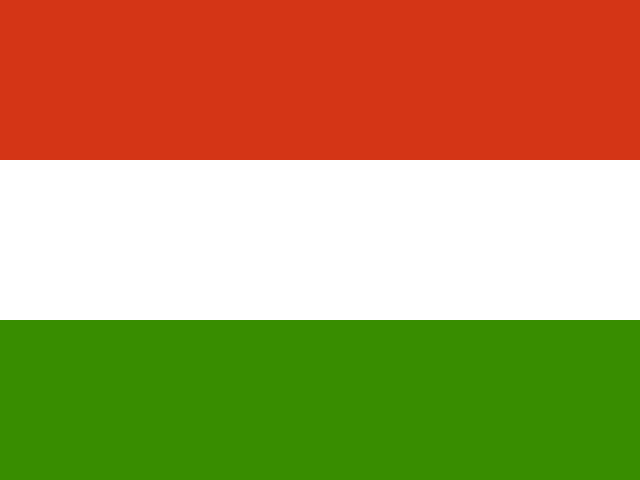
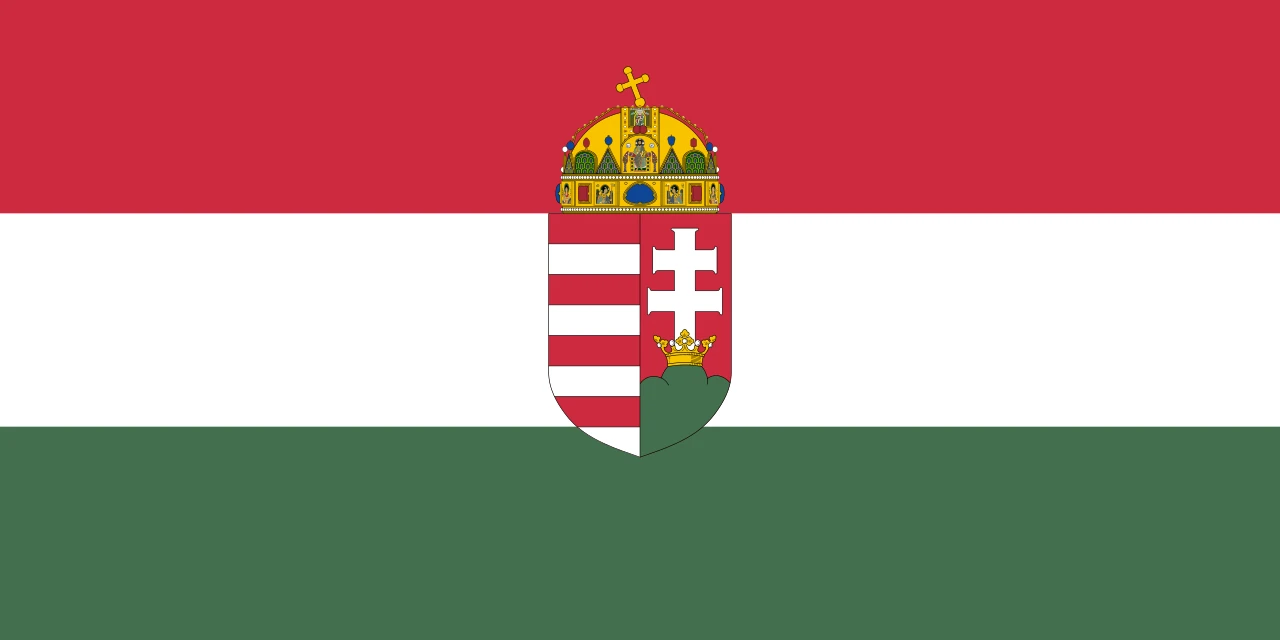
Flag of Hungary

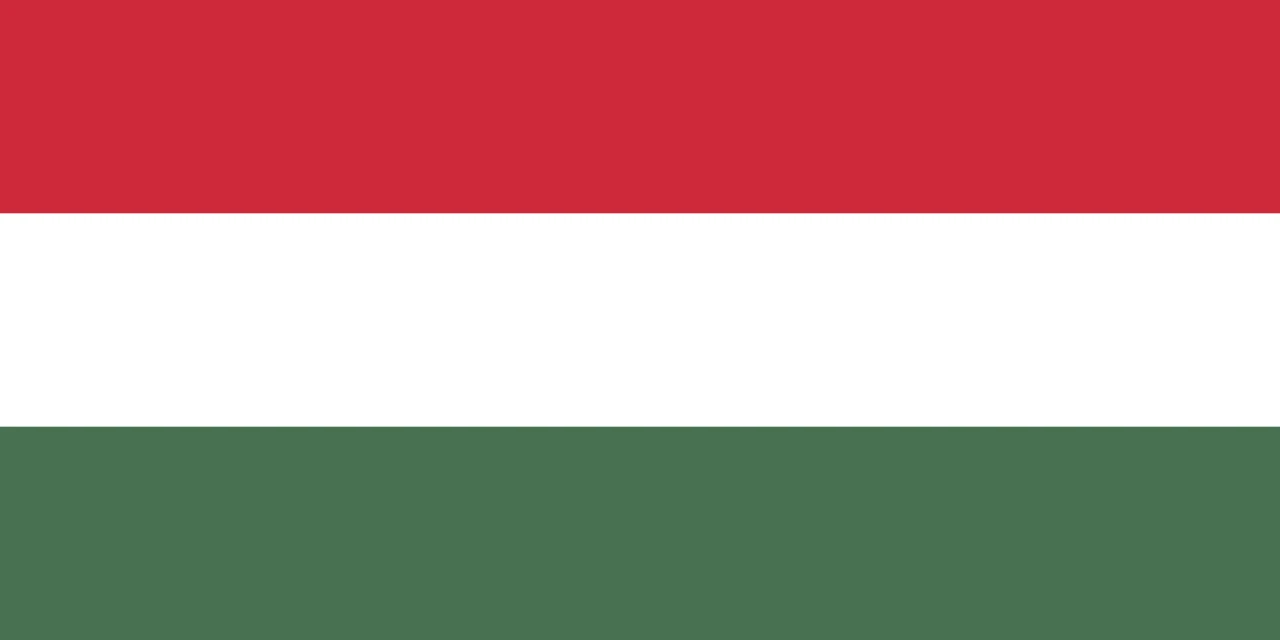
Three stripes in red, white and green that Hungary adopted in 1848, and whose coat of arms changed with every regime until it was left off in 1957.

Flag of Hungary
Coat of arms

The flag, in figures

Every fact about the flag, each with what it means.

Proportions
1:22 wide for every 1 high. 49 flags in the catalogue share it.
Properties
Normal flagFIAV symbol: the form of the flag.
Use
Civil and stateFIAV symbol: who may fly the flag.
Adopted
195723 May 1957 · 69 years ago
Colours
  • red
  • white
  • green
Reference shades: the official one may vary slightly.
Coat of arms
YesIt carries the coat of arms on the cloth.
123

Take a closer look

  1. The three stripes

  2. 1

    The red stripe

  3. 2

    The white stripe

  4. 3

    The green stripe

How it is described

The flag in the words of vexillology and heraldry.

Vexillological description

It is a rectangular field with a 1:2 ratio and three equal horizontal stripes.

Stripes
from top to bottom, red, white and green, of the same thickness.
Civil flag
with no drawing at all.
State flag
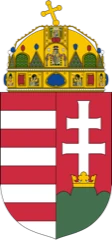
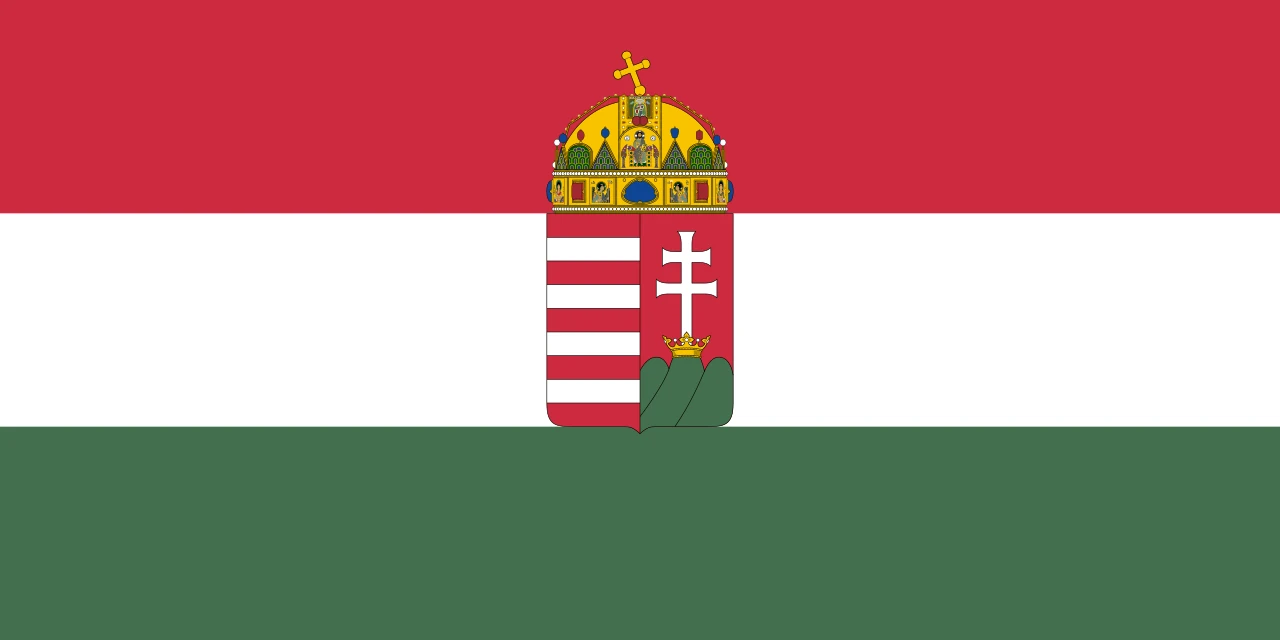
it carries the coat of arms in the centre: on a divided field, a white stripe to the right and a patriarchal cross to the left resting on three green hills, with the Holy Crown of Hungary, in gold, over it all.
What it carries

Each element and how many of the 1,390 flags in the catalogue carry it. In yellow, the rarest.

Its history in dates

Every date in its story, at a glance.

  1. 1848

    In 1848 the Hungarians rebelled against Austrian rule

  2. 2011

    The Constitution of 2011 gives an official meaning to each colour

The full story

How it was born, how it has changed and what it means.

The flag of Hungary has three horizontal stripes of the same size: red, white and green. Its colours are those of Italy, but placed horizontally. It is much longer than most: its length is twice its height.

How it came about

The colours come from the old Hungarian coat of arms. One half has red and white stripes; the other, a white cross on a red ground, driven into some green hills. By the early seventeenth century the three colours already appeared together on the silk cords hanging from the seals of the kings.

The three-stripe shape came later, copying the idea of the flag of the French Revolution. In 1848 the Hungarians rebelled against Austrian rule, and a law of that year made the red, white and green tricolour the national flag.

How it has changed

The stripes have not changed since 1848. What went on changing was the coat of arms in the centre, depending on who was in power.

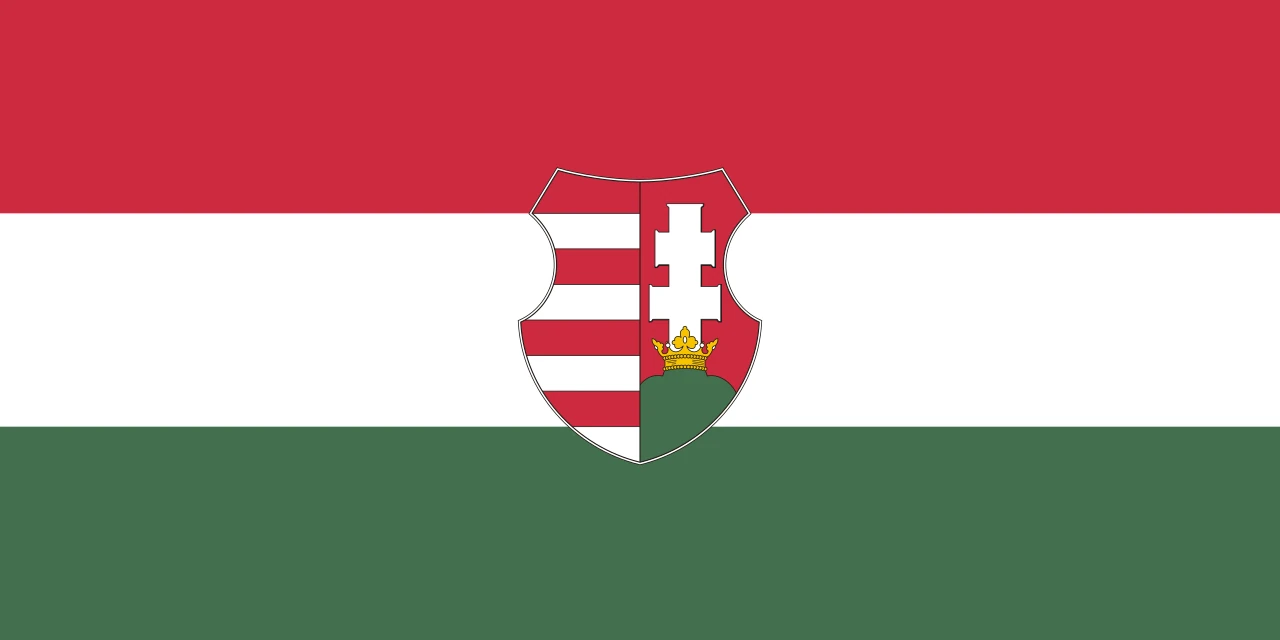
  1. Red, white and green flag with the crowned coat of arms in the centre
    Thommy · Public domain

    1848

    The tricolour becomes official, often with the coat of arms of the kingdom and its crown.

  2. Red, white and green flag with the coat of arms under the Crown of St Stephen
    User:Zscout370, colour correction: User:R-41, current version: Thommy · Public domain

    1915-1946

    The coat of arms carries the Holy Crown above it, that of St Stephen, the first king of Hungary.

  3. Red, white and green flag with a crownless coat of arms
    Thommy · Public domain

    1946-1949

    Hungary becomes a republic and the coat of arms loses its crown.

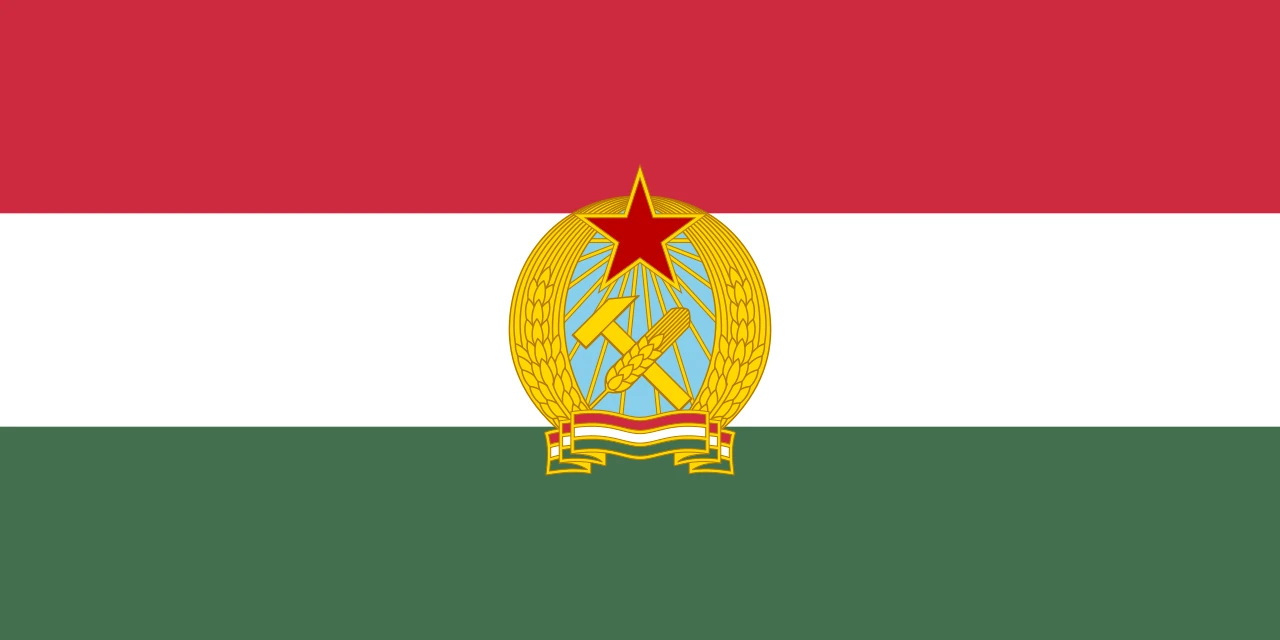
  4. Red, white and green flag with a communist coat of arms of hammer, ear of wheat and red star
    Thommy · Public domain

    1949-1956

    The communist government imposes a Soviet-style coat of arms, with hammer, ear of wheat and red star.

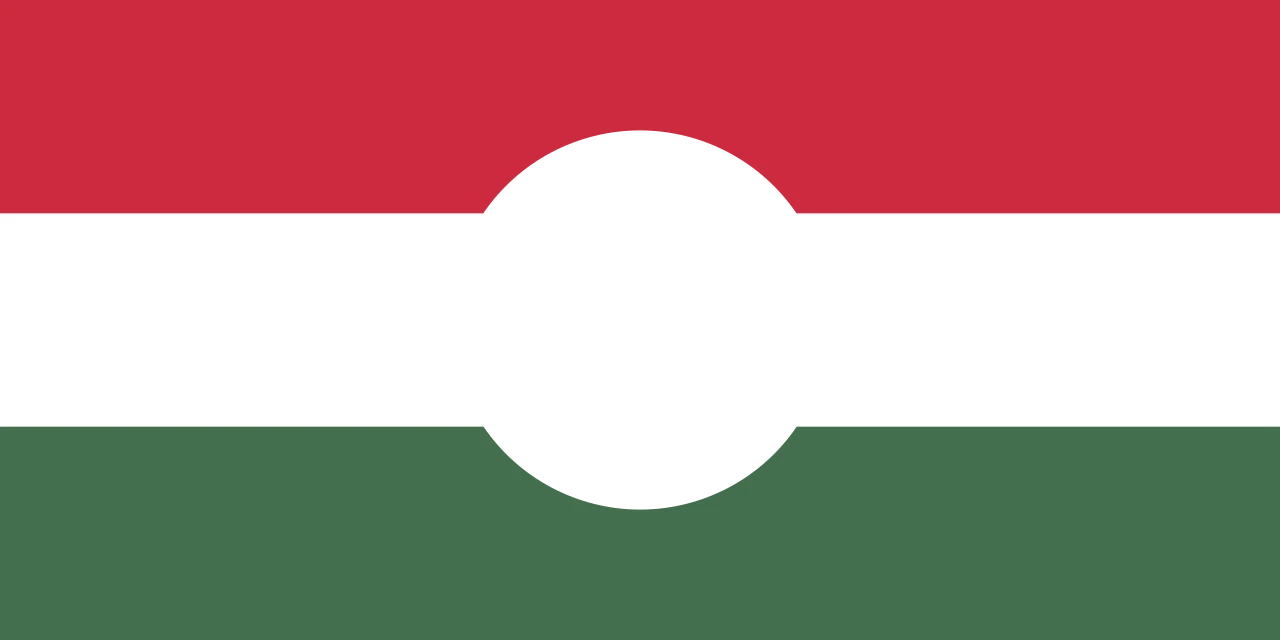
  5. Red, white and green flag with a round hole in the centre
    Thommy · Public domain

    1956

    During the revolution against the regime, people cut the communist coat of arms out of their flags and left a hole.

  6. Current flag of Hungary

    1957

    After crushing the revolution, the new government leaves the flag without a coat of arms. It has stayed that way until today.

What it means

The Constitution of 2011 gives an official meaning to each colour. It is a nineteenth-century idea the law has made its own:

  • Red

    strength.

  • White

    fidelity.

  • Green

    hope.

Fun facts

  1. The hole flag

    In 1956 the demonstrators cut the communist coat of arms out of their flags. That holed flag became the great symbol of the revolution.

  2. Mourning in black

    On days of mourning, instead of lowering the flag to half mast, the Hungarian tradition is to hang black flags on the buildings.

  3. Mandatory cleaning

    A rule of 2000 requires flags on public buildings to be washed at least every three months and replaced with new ones every year.

Country facts

Where it is and what borders it.

Capital
Budapest
Area
93,028 km²
Country
Hungary
Continent
Europe
Subregion
Central Europe
Independent state
Yes
UN member
Yes
ISO code
HUN · HU

How much have you learnt?

Test what you have read about the flag of Hungary.

  1. 1. Which one is the flag of Hungary?

  2. 2. What are the proportions (height:width) of the flag?

  3. 3. In which year was the current flag adopted?

More flags

Accessibility preferences

Accessibility statement

Quick profiles

Text and reading

Text size
Default
Line height
Default
Letter spacing
Default
Word spacing
Default

Colour

Motion and orientation

Cursor