Every fact about the flag, each with what it means.
Proportions
2:33 wide for every 2 high. 989 flags in the catalogue share it.
Properties
Normal flagFIAV symbol: the form of the flag.
Use
Civil and stateFIAV symbol: who may fly the flag.
Adopted
19904 April 1990 · 36 years ago
Colours
red
white
Reference shades: the official one may vary slightly.
Coat of arms
YesIt carries the coat of arms on the cloth.
Origin
Flag of China
Take a closer look
The red cloth
1
The bauhinia flower
2
The five red stars
How it is described
The flag in the words of vexillology and heraldry.
Vexillological description
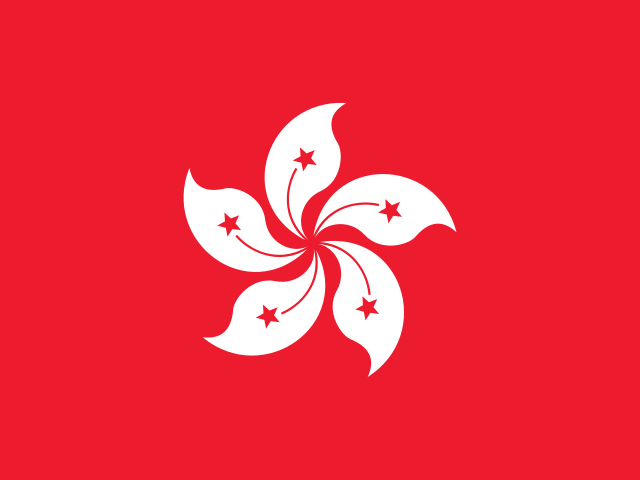
It is a rectangular field with a 2:3 ratio, red, with a white five-petalled flower in the centre. The official description is given by the Hong Kong Basic Law, which also fixes the exact measurements.
Field (the cloth)
red, the same red as the Chinese national flag, plain and without borders.
Flower
a bauhinia (the flower that grows in Hong Kong) with five white petals, with a stamen ending in a red star on each petal. Its outer circle measures three fifths of the height of the flag.
Position
centred on the field, with the petals spread evenly around the centre.
What it carries
Each element and how many of the 1,390 flags in the catalogue carry it. In yellow, the rarest.
During the Japanese occupation, from 1941 to 1945, it is not used
1984
In 1984 the United Kingdom and China signed an agreement: the territory would pass to China…
1987
Between 1987 and 1988 a competition was called, which received 7,147 entries
1990
The National People’s Congress of China approved it on 4 April 1990
1997
It was hoisted for the first time on 1 July 1997, at the handover ceremony
The full story
How it was born, how it has changed and what it means.
The flag of Hong Kong shows a white five-petalled flower on a red field. The flower is a bauhinia, a tree that only exists thanks to gardeners. It is the flag of a Special Administrative Region of China: a territory that is part of the country, but with a system of its own for laws and government.
How it came about
Hong Kong was a British colony from the 19th century. In 1984 the United Kingdom and China signed an agreement: the territory would pass to China in 1997 under the principle of ‘one country, two systems’. A new flag was needed.
Between 1987 and 1988 a competition was called, which received 7,147 entries. The finalists did not convince the Chinese government, and the architect Tao Ho, who sat on the jury, submitted a design of his own. The idea came to him while looking at a bauhinia in a garden: he was struck by the symmetry of its five petals, which seem to turn around the centre. The National People’s Congress of China approved it on 4 April 1990. It was hoisted for the first time on 1 July 1997, at the handover ceremony.
How it has changed
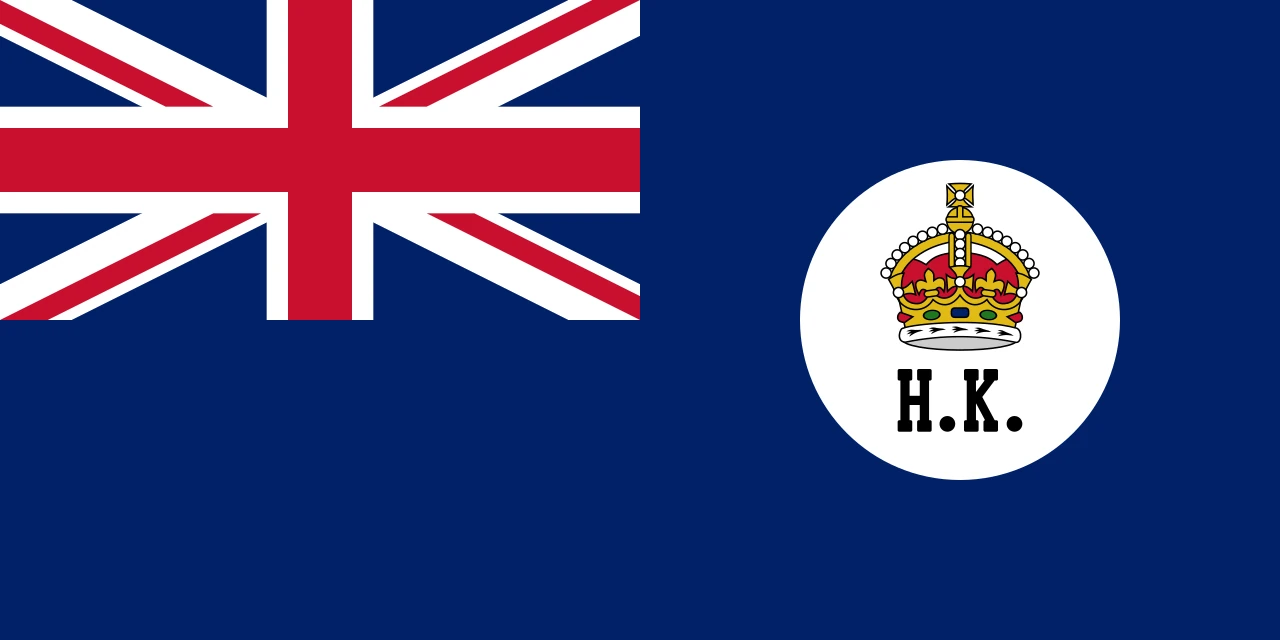
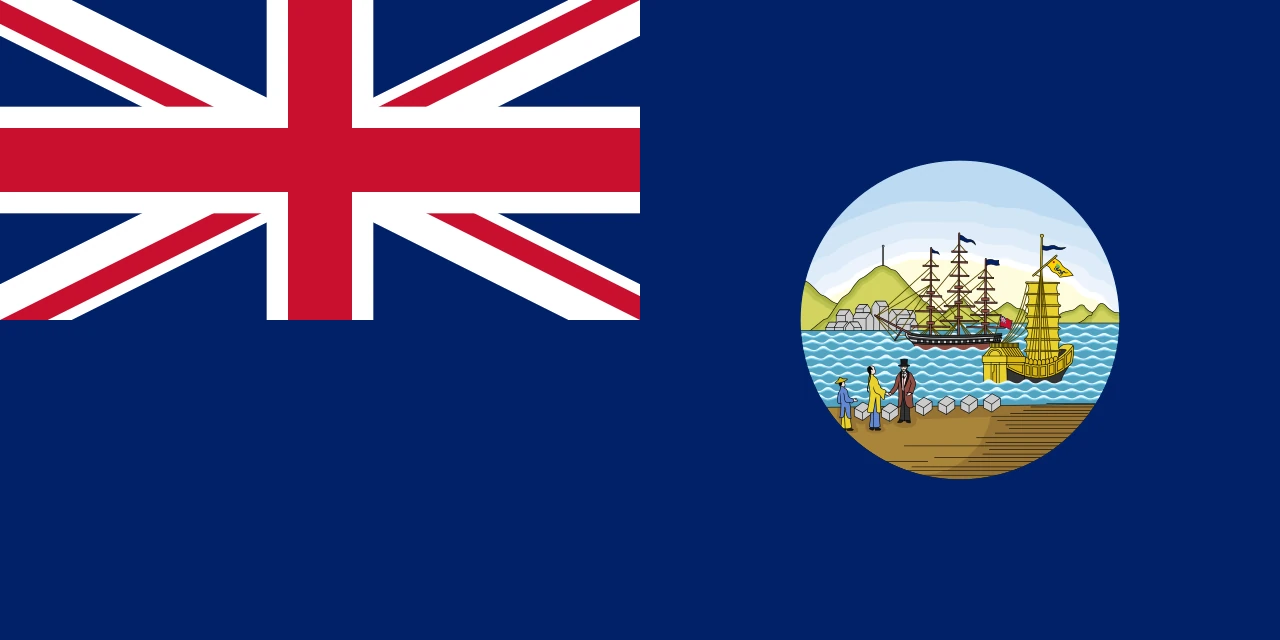
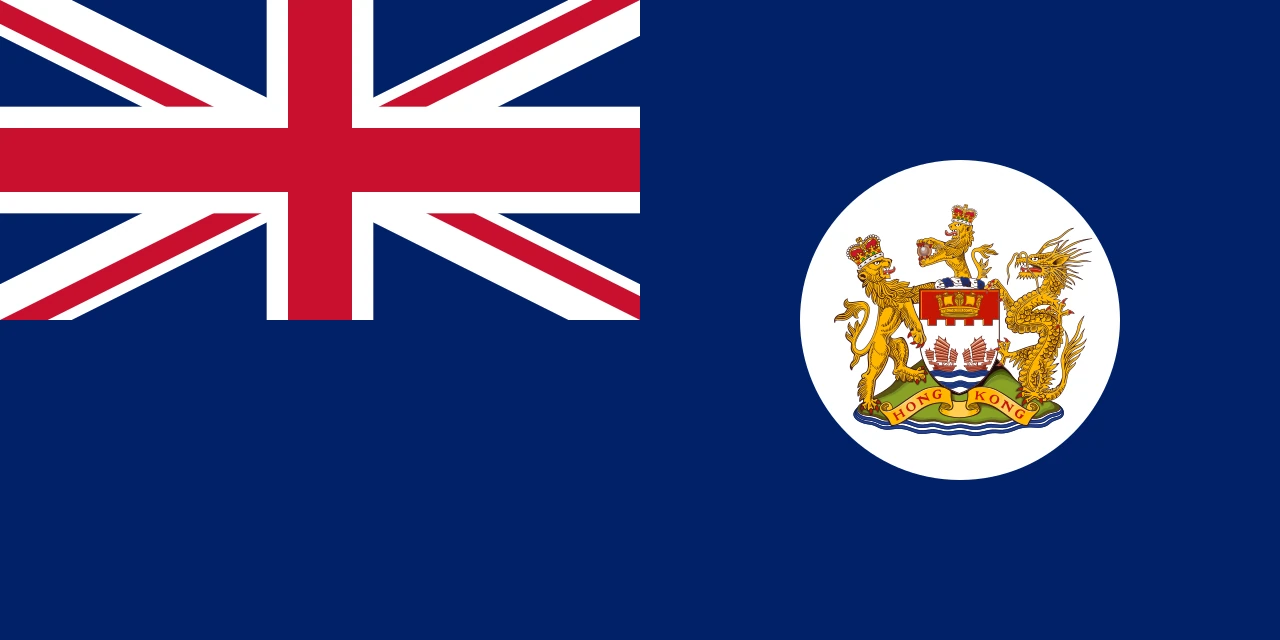
During the British period Hong Kong used the blue colonial flag, with the flag of the United Kingdom in the corner and an emblem of its own in a circle.
The circle comes to show a scene of the harbour, with merchants on the quay and ships. During the Japanese occupation, from 1941 to 1945, it is not used.
The emblem is replaced by the coat of arms of Hong Kong, with a lion and a dragon.
1997
With the handover to China the bauhinia flag is raised, approved back in 1990.
What it means
According to the official explanation:
Red field
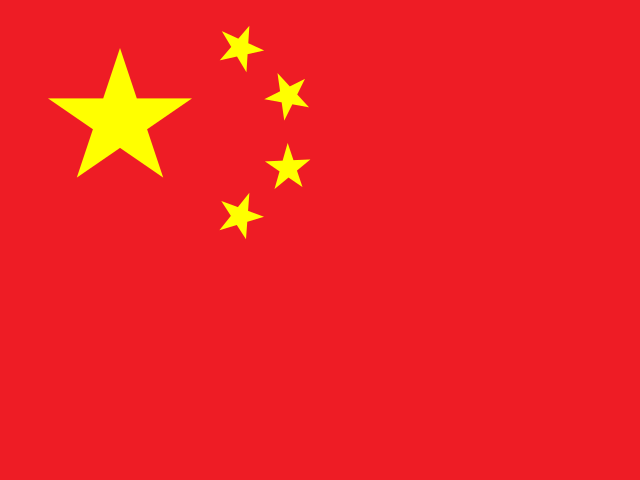
it is the same red as the flag of China and represents the country.
White bauhinia
Hong Kong.
Red and white together
the principle ‘one country, two systems’.
Five red stars in the petals
they recall those of the Chinese flag and, according to the official explanation, the affection of Hong Kong’s inhabitants for the country.
Fun facts
All bauhinias are clones
This tree is a hybrid that does not produce fertile seeds. Every specimen comes from grafts of a single tree, found around 1880 near Pok Fu Lam, on Hong Kong Island.
A flower named after a governor
Its scientific name, Bauhinia blakeana, recalls Henry Blake, British governor of Hong Kong, and his wife, who supported the city’s botanical garden.
Always behind the Chinese flag
When they fly together, the flag of China must be larger, take the most prominent place and be hoisted first.
A giant golden bauhinia
At Golden Bauhinia Square, where the handover ceremony was held, there is a golden sculpture of the flower six metres tall.
Buy the flag
Buy the flag on AmazonAffiliate link: if you buy, Wiki Banderas receives a small commission.
Buy the flag on AmazonAffiliate link: if you buy, Wiki Banderas receives a small commission.




 People's Republic of China