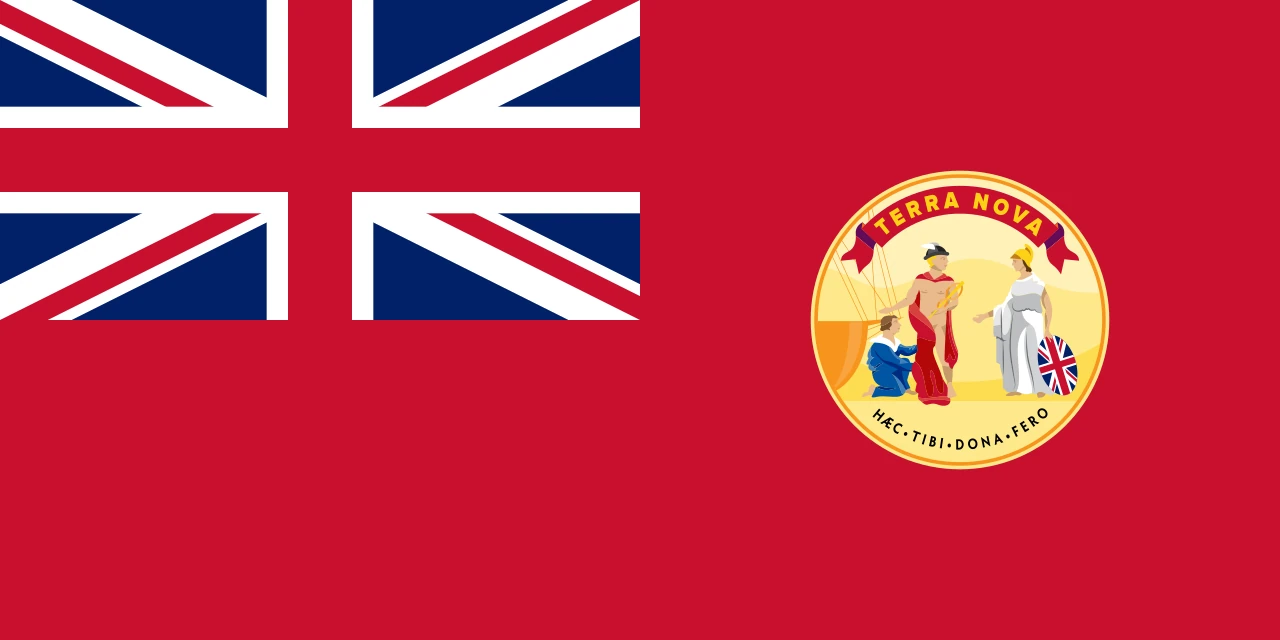
Newfoundland was a British colony and later a nearly self-governing dominion, with a flag…
1980
In 1980 the government wanted a flag of its own and chose that of the painter Christopher Pratt
2005
It is very popular, but in 2005 only 25% of Newfoundlanders wanted it made official
The full story
How it was born, how it has changed and what it means.
Newfoundland and Labrador is the easternmost province of Canada: the island of Newfoundland and, across the strait, the mainland region of Labrador. Its flag looks like a Union Jack cut in half, but the other half hides a golden arrow and a drawing inspired by the indigenous peoples.
How it came about
Newfoundland was a British colony and later a nearly self-governing dominion, with a flag of its own, until it joined Canada in 1949. For thirty more years it went on using the Union Jack.
In 1980 the government wanted a flag of its own and chose that of the painter Christopher Pratt. Pratt took inspiration from engravings of some pendants of the Beothuk and Innu, indigenous peoples of the area, which he saw in the provincial museum. The Assembly approved it on 28 May 1980 and it was hoisted in June, around Discovery Day.
How it has changed
Before the current one, Newfoundland used British flags.
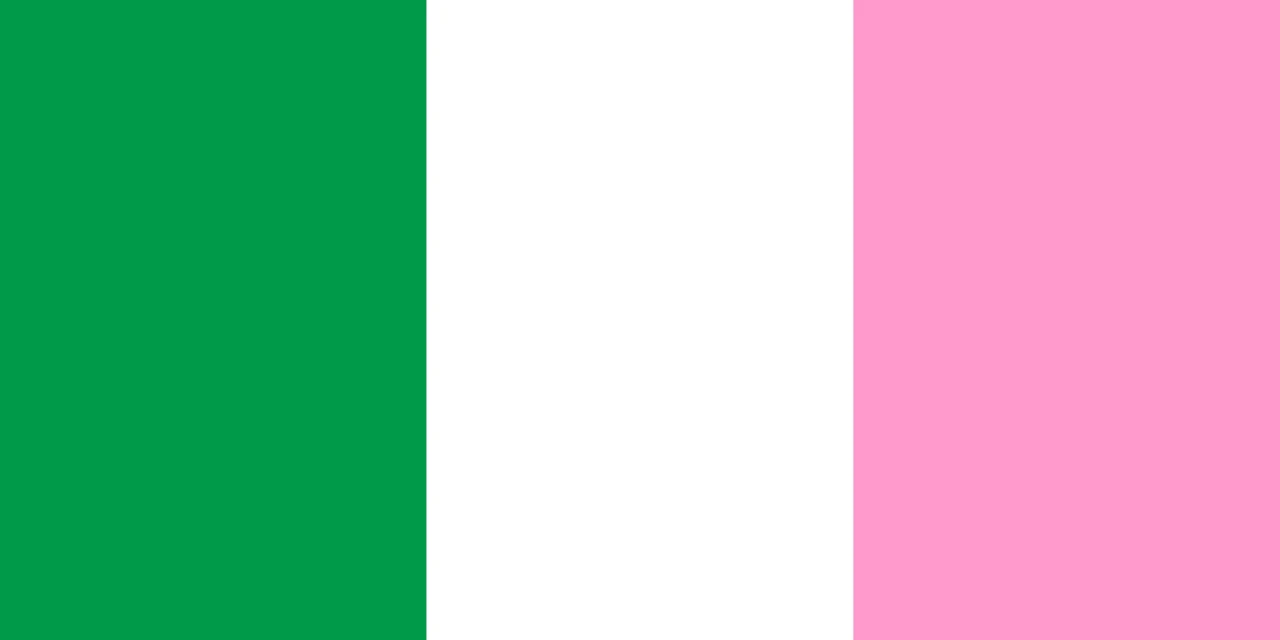
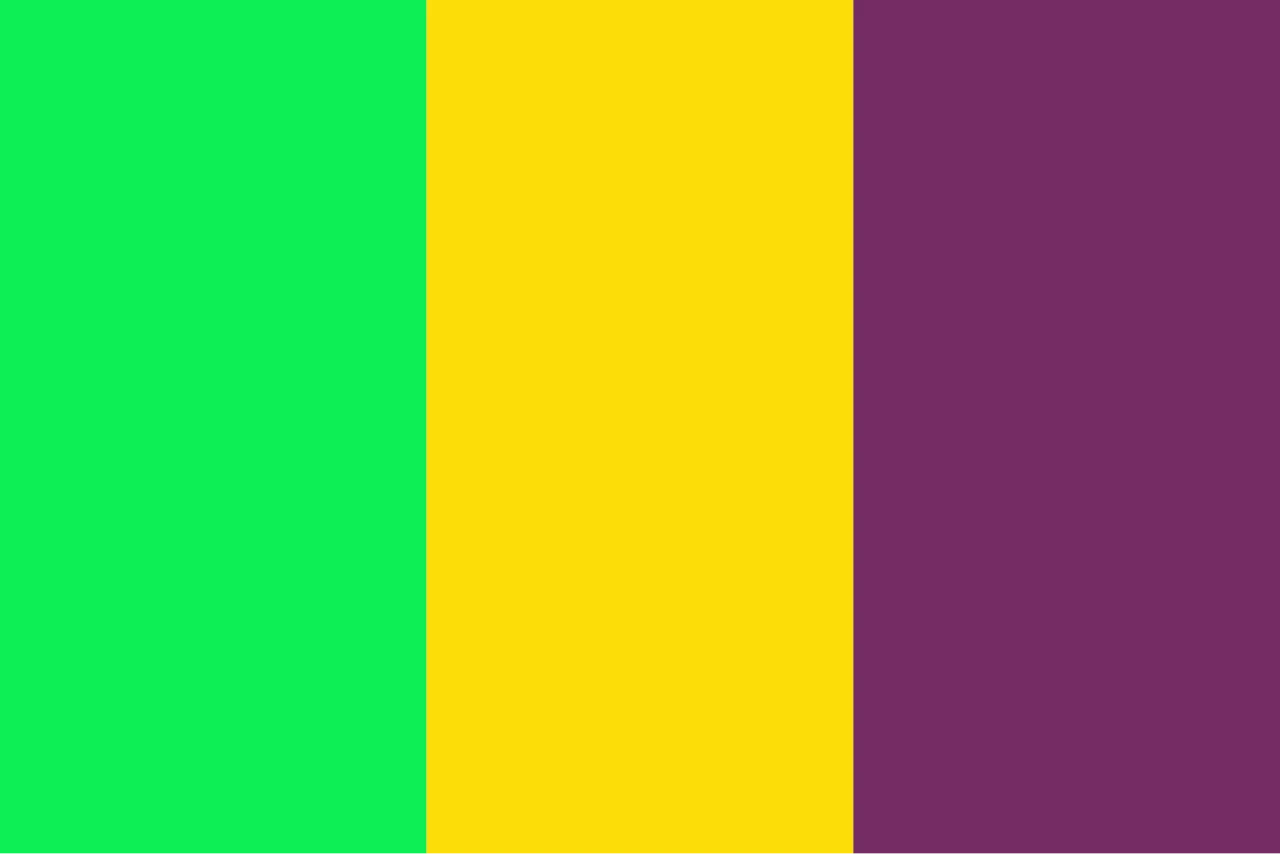
It was born in the late 19th century in a Catholic fishermen’s association in St John’s. It is very popular, but in 2005 only 25% of Newfoundlanders wanted it made official.
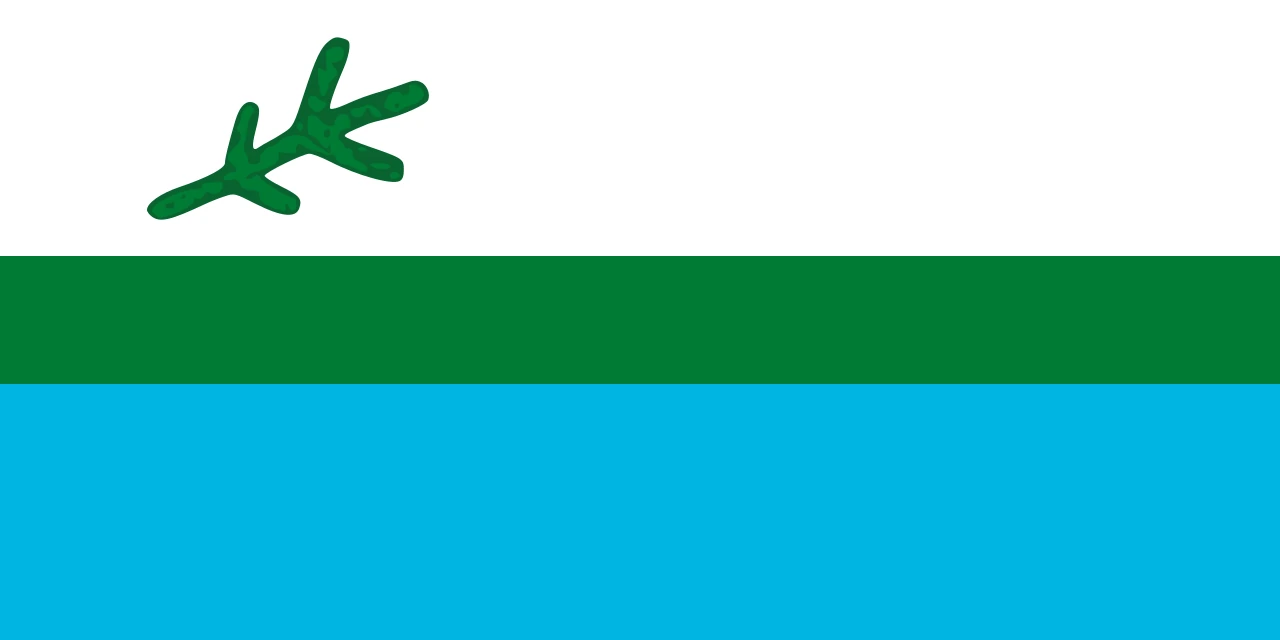
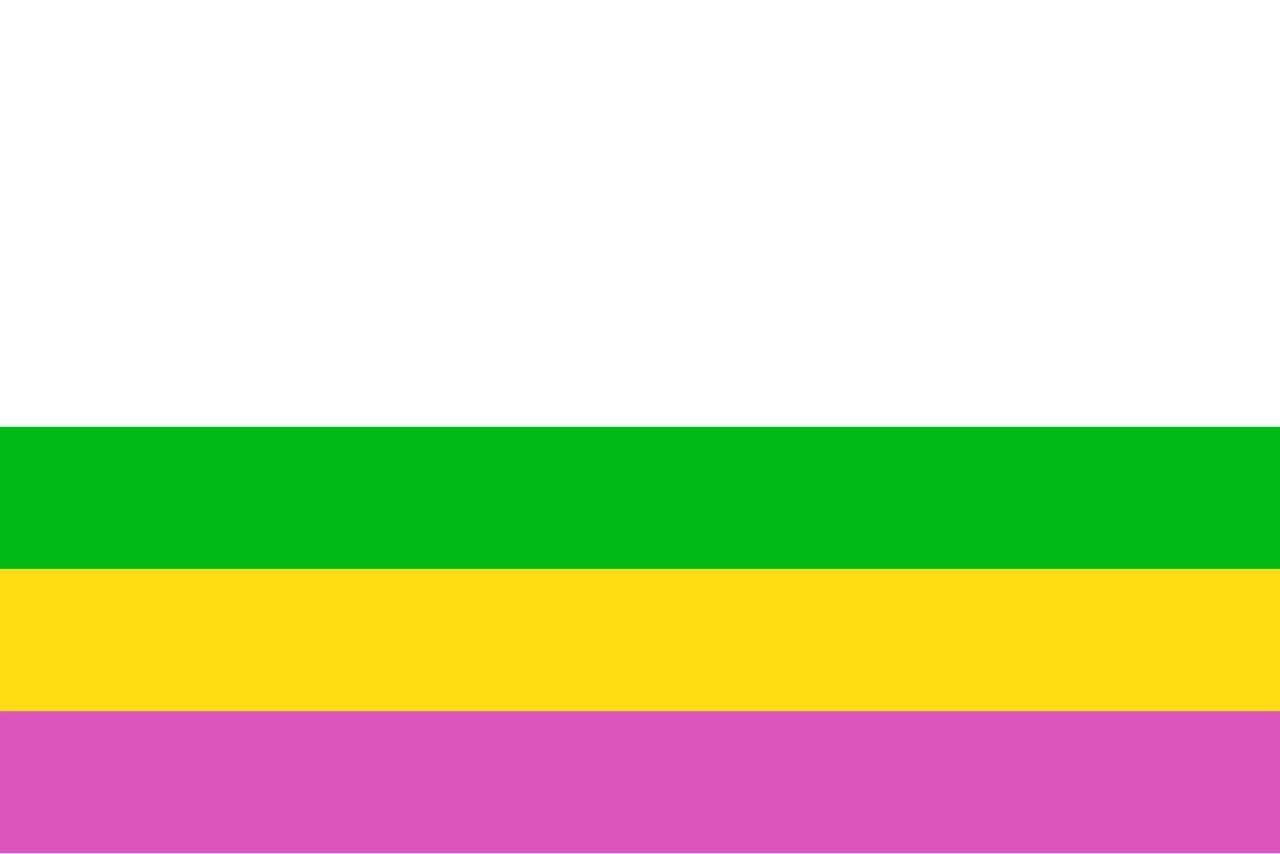
Michael Martin created it for the mainland part: snow, land and water, with a spruce branch whose three little branches are the Innu, the Inuit and the European settlers.
What it means
Every colour and shape has an official meaning:
Blue
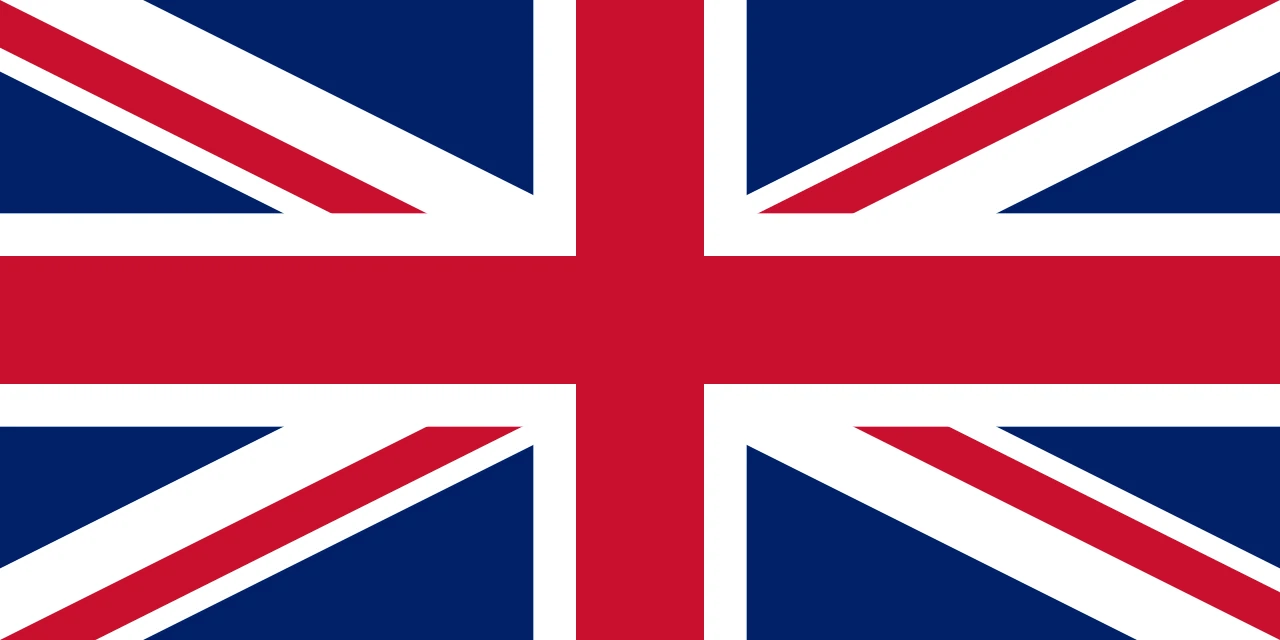
the sea, the lakes and the rivers. Its drawing recalls the Union Jack and the ties with the British islands.
White
the snow and the ice.
Red
human effort.
Gold
the people’s confidence in themselves and in the future.
Two triangles
the two parts of the province, the mainland and the island.
Arrow
according to Pratt, it points towards a better future. Together with the triangles it forms a trident, for the fishing.
Fun facts
Hung vertically, the arrow is a sword
The official description says that, when the flag hangs like a banner, the arrow looks like a sword remembering the war veterans.
A hidden maple leaf
According to the same description, in the centre you can also see the outline of a maple leaf, as well as a Christian cross and a triumphant figure.
The bishop’s legend is false
It is said that Bishop Fleming invented the tricolour in 1843 to make peace between Catholic and Protestant fishermen. There is no proof: the story became popular in a Church newsletter in 1976.
The Union Jack has not gone away
The provincial Royal Canadian Legion still flies the Union Jack alongside the provincial flag and that of Canada. It is the flag of the United Kingdom, the same one that appears in the corner of Australia.
Location
Buy the flag
Buy the flag on AmazonAffiliate link: if you buy, Wiki Banderas receives a small commission.
Buy the flag on AmazonAffiliate link: if you buy, Wiki Banderas receives a small commission.
How much have you learnt?
Test what you have read about the flag of Newfoundland and Labrador.
Flag image: Original 2005 upload was created by Robert Crosbie and uploaded by Kooma. Entire flag redrawn/recoded from scratch by MapGrid in 2019. Colors changed by Great Brightstar in 2019., Wikimedia Commons · Public domain.