In 1831, in the midst of the rebellion against Russia
1919
The law that approved it is of 1 August 1919
The full story
How it was born, how it has changed and what it means.
The flag of Poland is among the simplest in the world: two horizontal stripes of the same size, white above and red below. The Poles simply call it biało-czerwona, “the white and red”. Behind those two colours lie almost eight hundred years of history.
How it came about
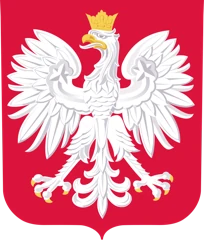
The colours come from the coat of arms of the country. From the thirteenth century, the Polish kings used a white eagle on a red ground. When Poland and Lithuania were united into a single state, the Lithuanian coat of arms was also white on red: a white knight galloping on a red ground.
For centuries, Polish soldiers wore cockades (round ribbons pinned to the hat) of different colours. In 1831, in the midst of the rebellion against Russia, the Polish Parliament decided that the national colours would be white and red. But Poland disappeared from the map, partitioned among its neighbours, and had no official flag of its own until it regained independence. The law that approved it is of 1 August 1919.
How it has changed
The drawing has never changed. What has changed is the shade of the red.
1831
The Parliament chooses white and red as the national colours, without saying which red exactly.
1919
Poland approves its flag: white above, red below. The law does not fix the shade either, and each manufacturer uses their own.
A decree chooses vermilion, a red that leans towards orange.
1980
A new law defines the colour with scientific measurements and the red becomes darker once more, almost crimson.
What it means
The two colours repeat, in stripes, those of the national coat of arms:
White
the white eagle of the Polish coat of arms.
Red
the red ground on which the eagle flies.
That is why the white always goes on top: in Polish heraldry, the colour of the figure matters more than that of the ground and occupies the place of honour.
Fun facts
It has its own day
Since 2004, 2 May is Flag Day. The date recalls that on 2 May 1945 some Polish soldiers placed their flag at the top of the Victory Column in Berlin.
Its reversed twins
Indonesia and Monaco have red and white flags, but with the red on top. If the Polish flag is hung upside down, it is confused with them.
It travelled to space twice
The astronaut Mirosław Hermaszewski carried a Polish flag sewn onto his suit in 1978. In 2025, Sławosz Uznański-Wiśniewski took that same patch to the International Space Station.






 Belarus
 Czech Republic
 Germany
 Lithuania
 Russia
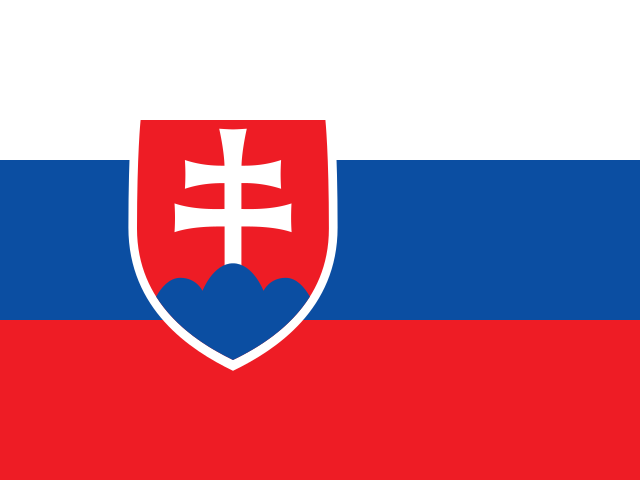 Slovakia
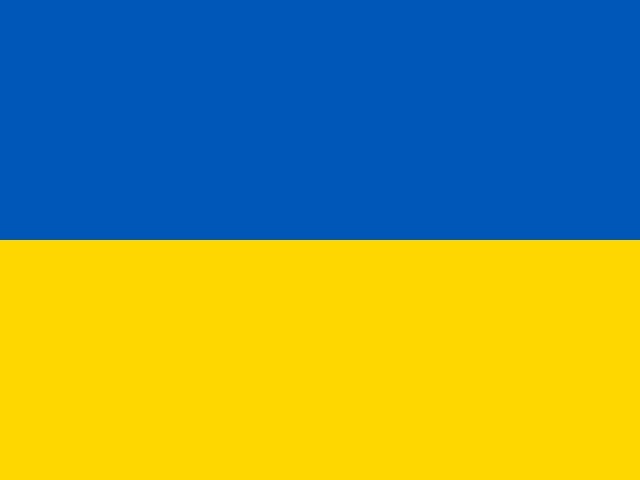 Ukraine