Skip to content

Wiki Banderas
Open menu

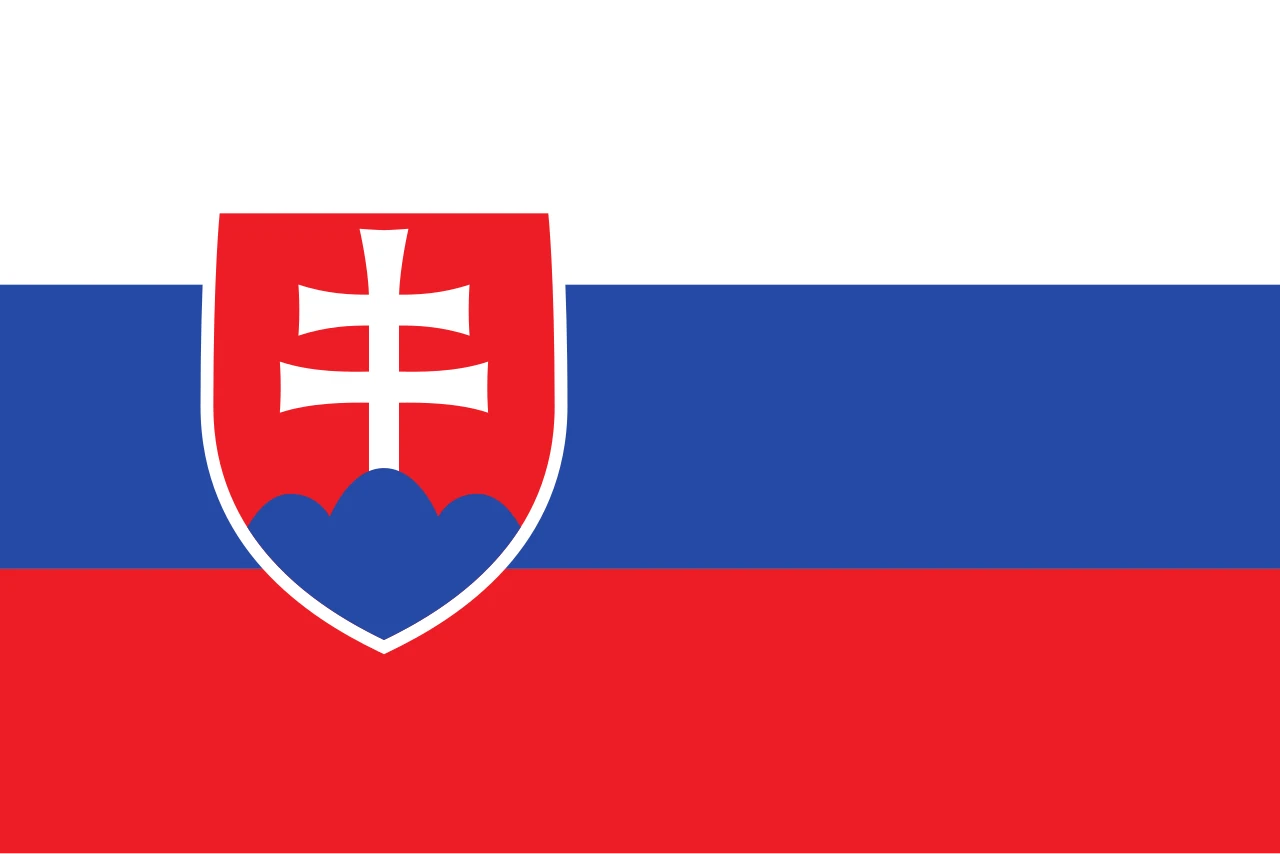
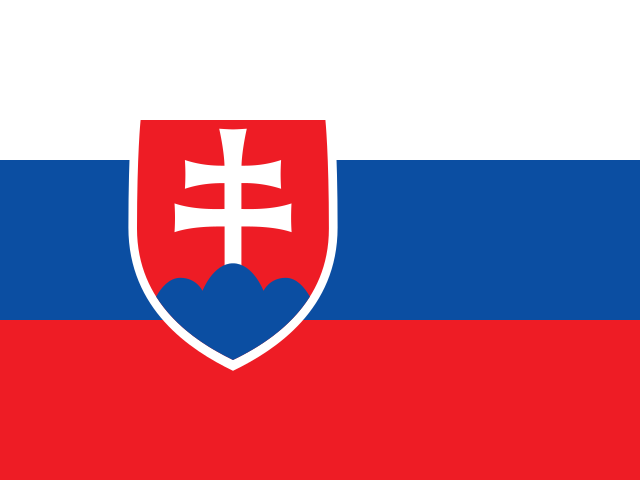
Flag of Slovakia

White, blue and red tricolour of the Slavic peoples, with a double cross on three mountains on the coat of arms so it cannot be confused with the Russian one.

Flag of Slovakia
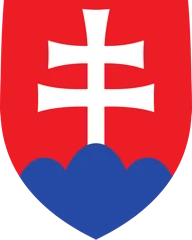
Coat of arms

The flag, in figures

Every fact about the flag, each with what it means.

Proportions
2:33 wide for every 2 high. 989 flags in the catalogue share it.
Properties
Normal flagFIAV symbol: the form of the flag.
Use
Civil, state and militaryFIAV symbol: who may fly the flag.
Adopted
19923 September 1992 · 34 years ago
Colours
  • white
  • blue
  • red
Reference shades: the official one may vary slightly.
Coat of arms
YesIt carries the coat of arms on the cloth.
123

Take a closer look

  1. The three stripes

  2. 1

    The coat of arms

  3. 2

    The double cross

  4. 3

    The three mountains

How it is described

The flag in the words of vexillology and heraldry.

Vexillological description

It is a rectangular field with a 2:3 ratio with a coat of arms towards the middle of the flagpole side.

Stripes
three equal horizontal ones: white on top, blue in the middle and red below.
Coat of arms
on a red ground, with a white patriarchal cross (a cross with two crossbars) resting on three blue hills. It runs from the middle of the white stripe to the middle of the blue one.
Position
its centre is a third of the length of the field from the flagpole.
Its history in dates

Every date in its story, at a glance.

  1. 1848

    In 1848 Slovakia was part of the Kingdom of Hungary and the Slovaks were asking for more rights

  2. 1920

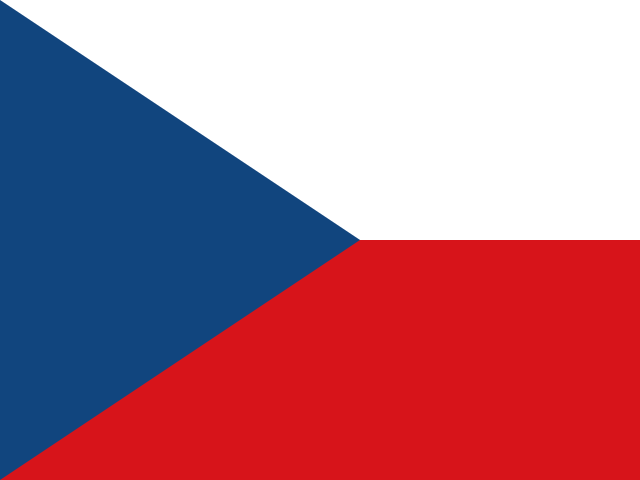
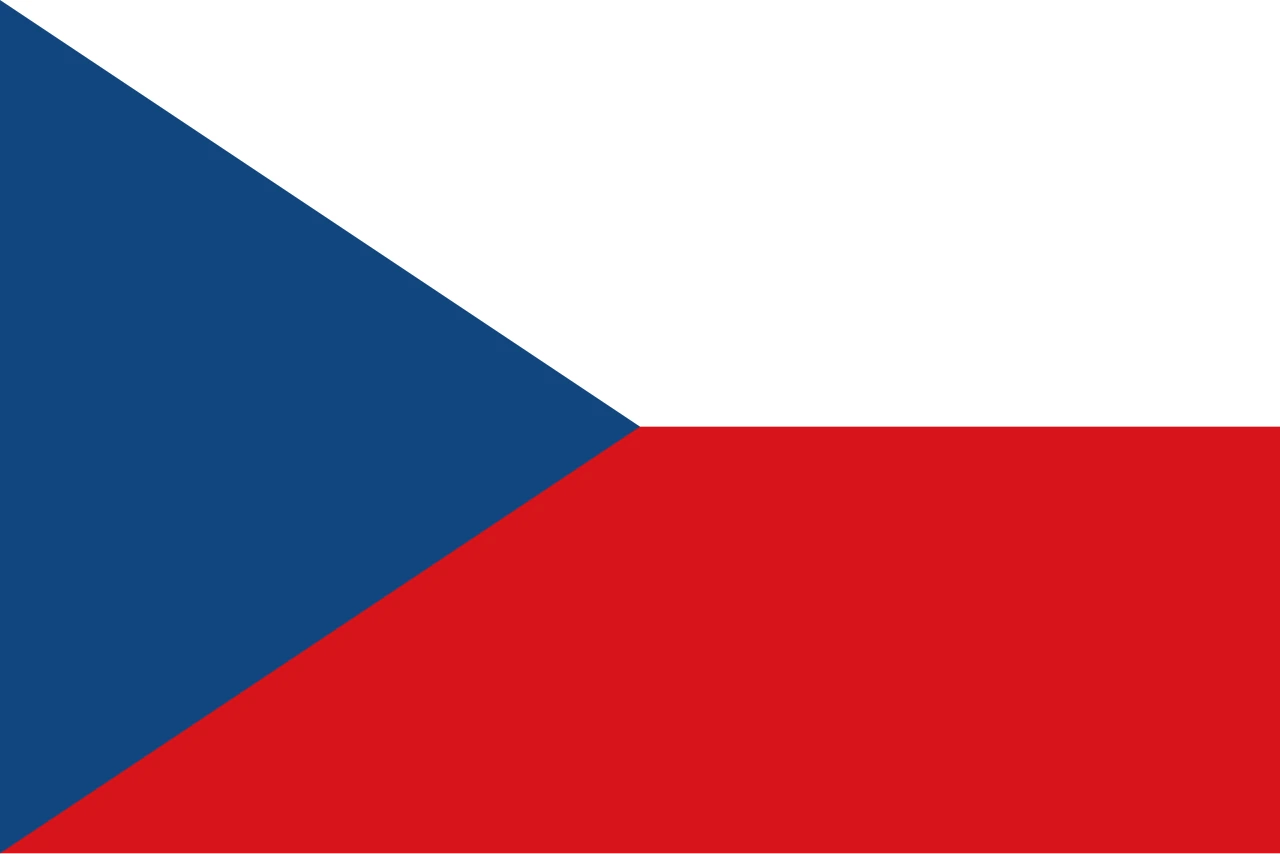
    Slovakia joins the Czechs in Czechoslovakia, which from 1920 uses that flag

  3. 1993

    Months later, on 1 January 1993, Slovakia becomes an independent country

The full story

How it was born, how it has changed and what it means.

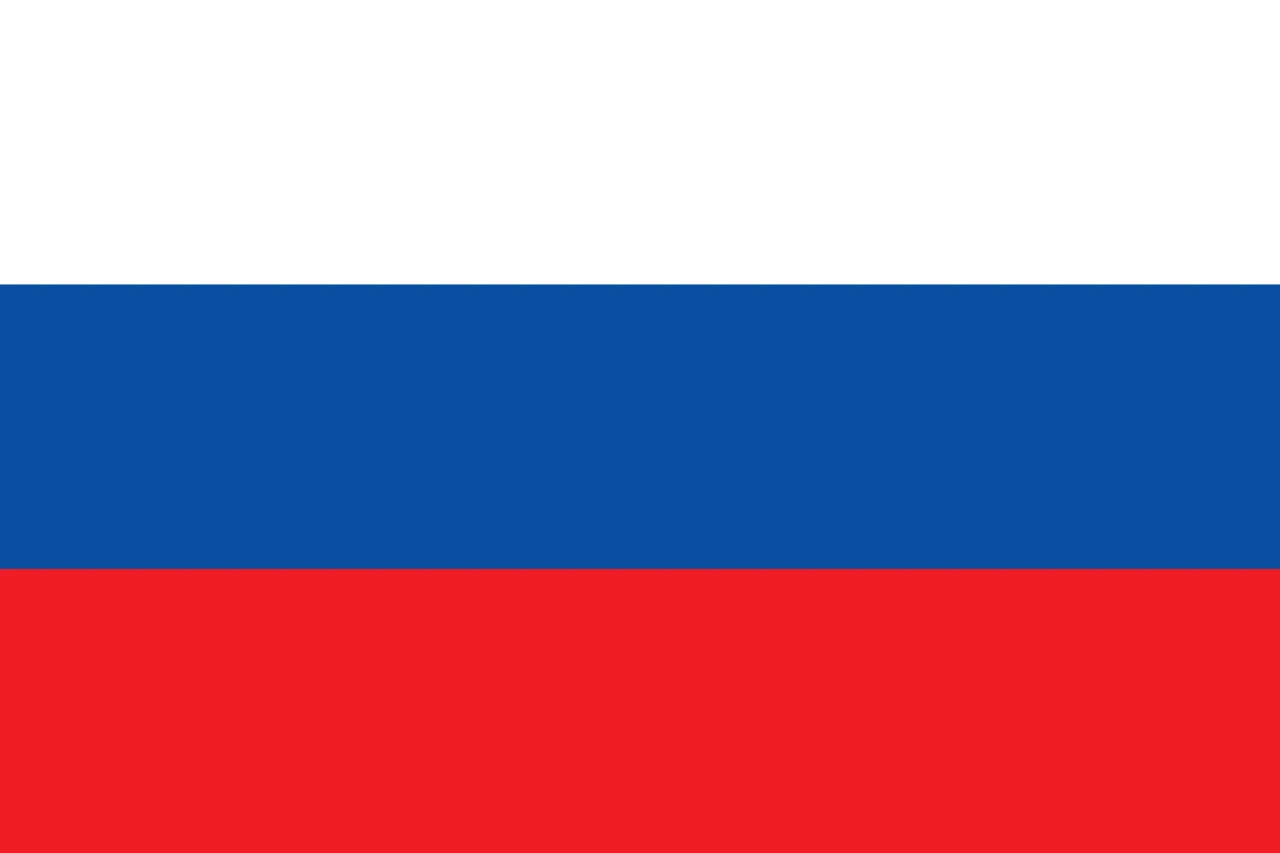
The flag of Slovakia has three horizontal stripes, white, blue and red, and a coat of arms with a double cross on three mountains. The coat of arms is not in the centre, but a little closer to the mast. Without it, the flag would be almost identical to Russia’s.

How it came about

The three colours are the so-called Slavic colours: the white, blue and red that many Slavic peoples used in the nineteenth century, inspired by the Russian flag.

In 1848 Slovakia was part of the Kingdom of Hungary and the Slovaks were asking for more rights. In April of that year a Slovak flag was waved for the first time, in white and red, during a theatre performance in the village of Brezová. In August the blue was added. That tricolour took almost a century to become official.

How it has changed

Slovakia has been part of other countries for almost all its history, and its flag reflects that.

  1. 1848

    The white, blue and red tricolour is born as the flag of the Slovak national movement. It is not official.

  2. Flag of Czechoslovakia, white and red with a blue triangle
    Jaroslav Kursa · Public domain

    1918-1939

    Slovakia joins the Czechs in Czechoslovakia, which from 1920 uses that flag.

  3. Flag with three horizontal stripes, white, blue and red
    DarkEvil, PhiLiP · Public domain

    1939-1945

    Under the protection of Nazi Germany, Slovakia declares itself independent and makes the tricolour without the coat of arms official.

  4. Flag of Czechoslovakia, white and red with a blue triangle

    1945-1990

    It becomes part of Czechoslovakia again and returns to using its flag.

  5. Flag with three horizontal stripes, white, blue and red

    1990

    After the fall of communism, the Slovak region recovers the tricolour without the coat of arms.

  6. Current flag of Slovakia

    1992

    The new Constitution adds the coat of arms. Months later, on 1 January 1993, Slovakia becomes an independent country.

What it means

The colours speak of the Slavic origin of the country and the coat of arms of its land:

  • White, blue and red

    the Slavic colours, shared with Russia, Slovenia or Serbia.

  • Double cross

    a Christian symbol. A legend says that Cyril and Methodius brought it, the monks who evangelised the region in the ninth century, but there is no proof: it was in fact an emblem of the kings of Hungary from the twelfth century.

  • Three blue mountains

    according to tradition, the Tatra, Fatra and Mátra ranges. Today the Mátra is in Hungary.

Fun facts

  1. A coat of arms against confusions

    In 1992 the coat of arms was added because the tricolour on its own was confused with the Russian flag.

  2. Debut at 20:22

    The current flag was raised for the first time on 3 September 1992, at 20:22, in front of Bratislava Castle.

  3. A flag with faith

    Because of the double cross, it is one of the national flags that carry a clearly visible Christian symbol.

Country facts

Where it is and what borders it.

Capital
Bratislava
Area
49,037 km²
Country
Slovak Republic
Continent
Europe
Subregion
Central Europe
Independent state
Yes
UN member
Yes
ISO code
SVK · SK

How much have you learnt?

Test what you have read about the flag of Slovakia.

  1. 1. Which one is the flag of Slovakia?

  2. 2. Which of these elements appears on the flag?

  3. 3. What are the proportions (height:width) of the flag?

  4. 4. In which year was the current flag adopted?

Sources

Text based on the article “Bandera de Eslovaquia” from the Spanish Wikipedia, published under the licence CC BY-SA 4.0.

Sources consulted:

Credits

Flag image: Original: Ladislav Čisárik and Ladislav Vrtel Vector: SKopp, Wikimedia Commons · Public domain.

More flags

Accessibility preferences

Accessibility statement

Quick profiles

Text and reading

Text size
Default
Line height
Default
Letter spacing
Default
Word spacing
Default

Colour

Motion and orientation

Cursor