Skip to content

Wiki Banderas
Open menu

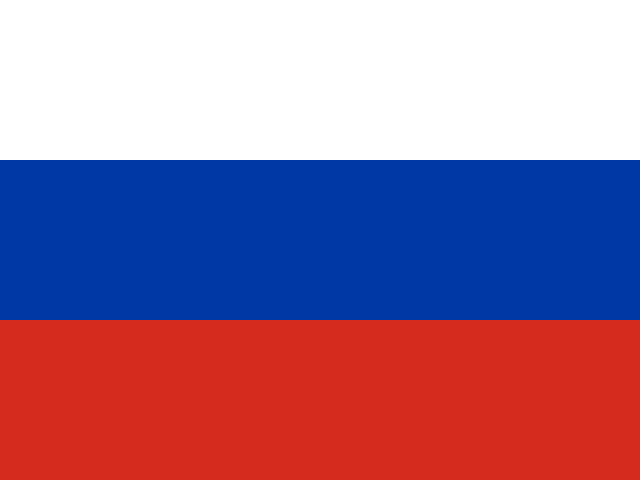
Flag of Russia

Three stripes, white, blue and red, that were born on the ships of Peter the Great, disappeared with the Soviet Union and came back in 1991.

Flag of Russia
Coat of arms

The flag, in figures

Every fact about the flag, each with what it means.

Proportions
2:33 wide for every 2 high. 989 flags in the catalogue share it.
Properties
Normal flagFIAV symbol: the form of the flag.
Use
CivilFIAV symbol: who may fly the flag.
Adopted
199311 December 1993 · 33 years ago
Colours
  • White
  • Blue
  • Red
Reference shades: the official one may vary slightly.
Coat of arms
YesIt carries the coat of arms on the cloth.
123

Take a closer look

  1. The three stripes

  2. 1

    The white stripe

  3. 2

    The blue stripe

  4. 3

    The red stripe

How it is described

The flag in the words of vexillology and heraldry.

Vexillological description

It is a rectangular field with a 2:3 ratio with three equal horizontal stripes.

Stripes
from top to bottom, white, blue and red, of the same thickness.
Field
no coat of arms or figures.
Origin
it appeared in the late 17th century on the ships of Tsar Peter the Great, inspired by the Dutch flag, and returned in 1991 when the red one of the Soviet Union disappeared.

What it carries

Each element and how many of the 1,390 flags in the catalogue carry it. In yellow, the rarest.

Its history in dates

Every date in its story, at a glance.

  1. 1668

    That is a popular tradition, not a proven fact: as early as 1668 there are records of a Russian…

  2. 1693

    In 1693 he had a white, blue and red flag with a double-headed eagle in the centre hoisted…

  3. 1705

    What is documented is that in 1705 the tsar ordered all Russian merchant ships to carry…

  4. 1848

    All three together: in 1848 a congress of Slavic peoples meeting in Prague took these colours…

  5. 1991

    It was born more than three hundred years ago, disappeared for almost all of the 20th century…

  6. 1993

    In December 1993 its current form is fixed, a little less elongated than in 1991

The full story

How it was born, how it has changed and what it means.

The flag of Russia has three horizontal stripes of the same size: white, blue and red. It was born more than three hundred years ago, disappeared for almost all of the 20th century and came back in 1991.

How it came about

The tricolour was born at sea. In the late 17th century Tsar Peter the Great wanted a modern navy, like those of Western Europe. In 1693 he had a white, blue and red flag with a double-headed eagle in the centre hoisted on one of his ships.

It is often said that Peter copied the Dutch flag, which he visited to learn how to build ships, and only swapped the colours round. That is a popular tradition, not a proven fact: as early as 1668 there are records of a Russian ship with a similar flag. What is documented is that in 1705 the tsar ordered all Russian merchant ships to carry the tricolour.

How it has changed

Russia has changed flags every time it has changed regime.

  1. White, blue and red flag

    1705-1858

    Peter the Great makes it the flag of Russian merchant ships.

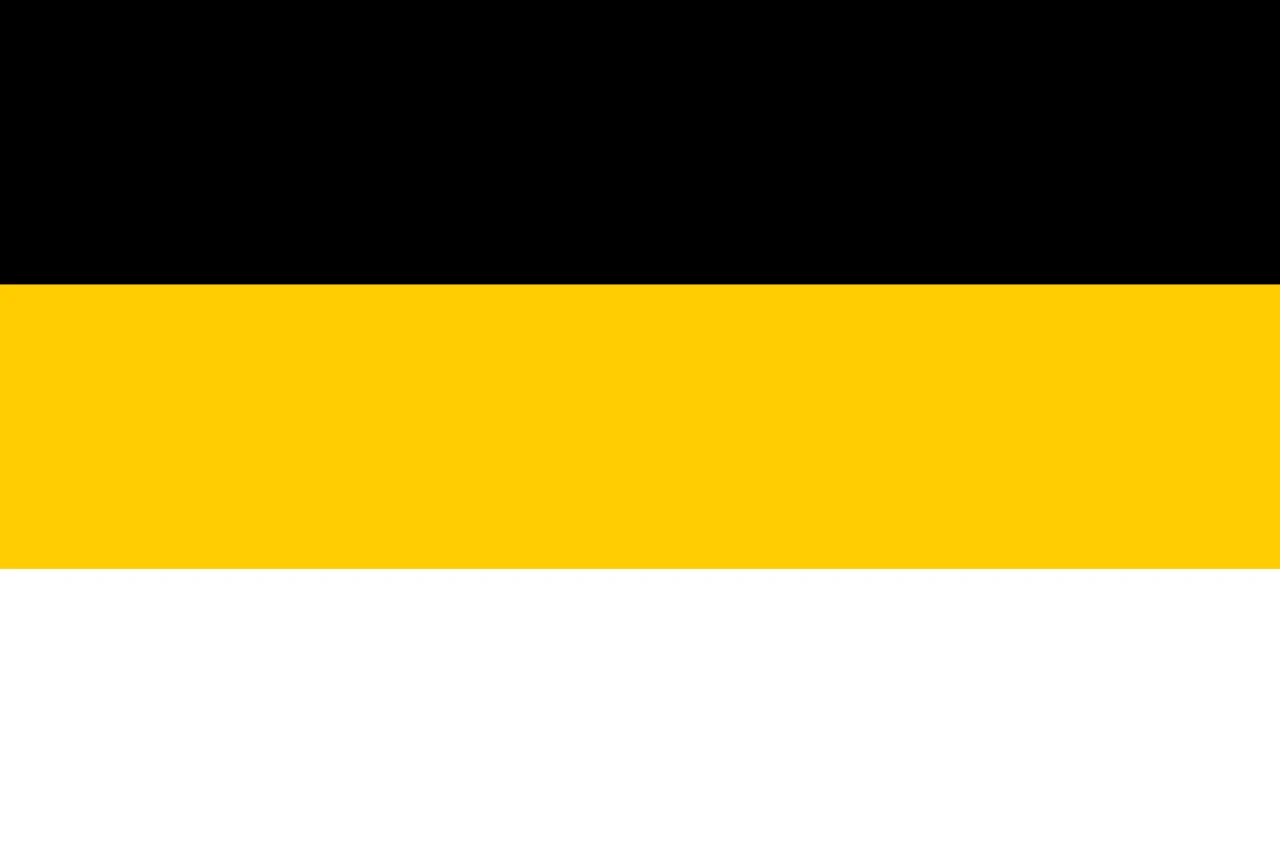
  2. Black, yellow and white flag of the Russian Empire
    Кёне, Бернгард Васильевич · Public domain

    1858-1896

    Tsar Alexander II chooses black, yellow and white for the state, the colours of his family’s coat of arms. Ships and ordinary people keep using the tricolour.

  3. White, blue and red flag

    1896-1917

    Nicholas II declares it the only official flag of Russia.

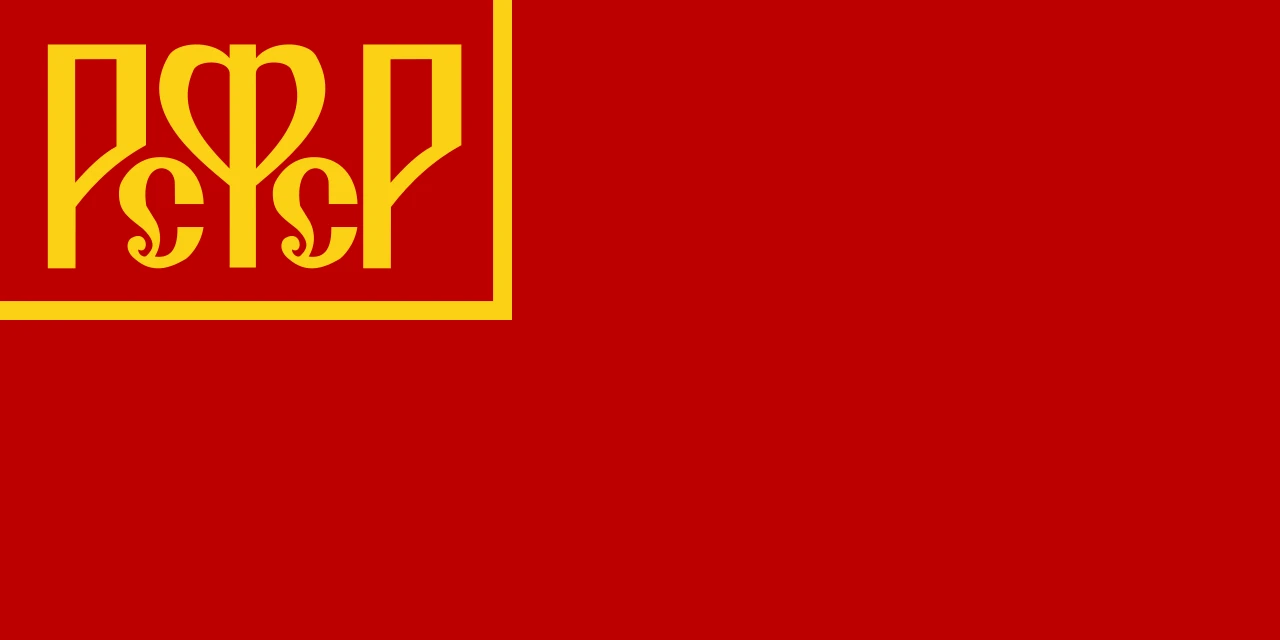
  4. Red flag with the initials of the Russian Soviet Republic in the upper corner
    Sergey Chekhonin · Public domain

    1918-1954

    After the October Revolution, Soviet Russia adopts a red flag with its initials in Cyrillic letters next to the flagpole.

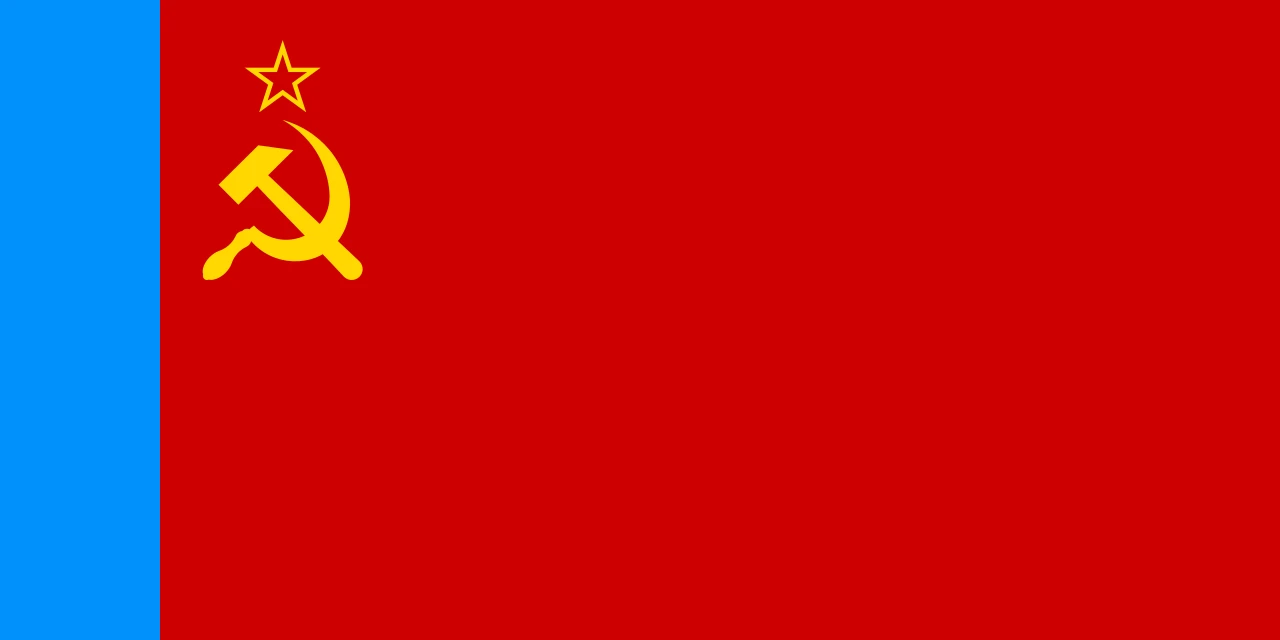
  5. Red flag with a blue stripe next to the flagpole, a sickle, a hammer and a star
    Pianist · Public domain

    1954-1991

    Russia is one of the republics of the Soviet Union. Its flag is the Soviet one with a blue stripe next to the flagpole.

  6. Current flag of Russia

    1991

    In August 1991 the tricolour comes back. In December 1993 its current form is fixed, a little less elongated than in 1991.

What it means

Russian law does not explain what the colours mean. There are several readings, but none is official today:

  • White

    in the times of Tsar Alexander III it was said to stand for nobility and sincerity.

  • Blue

    fidelity and honesty.

  • Red

    valour, generosity and love.

  • All three together

    in 1848 a congress of Slavic peoples meeting in Prague took these colours as a symbol of the Slavs. That is why they are repeated on the flags of Slovakia, Slovenia and Serbia.

Fun facts

  1. The oldest one is in a museum

    The first Russian tricolour that survives is the one that flew in 1693 on the yacht Saint Peter. It carries a double-headed eagle and is kept in the Central Naval Museum in Saint Petersburg.

  2. A sketch by the tsar himself

    In 1699 Peter the Great drew a flag of three white, blue and red stripes on the back of some instructions he was sending to his ambassador in Istanbul.

  3. It has its own day

    Since 1994, every 22 August is Flag Day, in memory of the day in 1991 when the tricolour became official again. It is not a public holiday: people work as normal.

Buy the flag

Buy the flag on AmazonAffiliate link: if you buy, Wiki Banderas receives a small commission.

Country facts

Where it is and what borders it.

Capital
Moscow
Area
17,098,242 km²
Country
Russian Federation
Continent
Europe
Subregion
Eastern Europe
Independent state
Yes
UN member
Yes
ISO code
RUS · RU

How much have you learnt?

Test what you have read about the flag of Russia.

  1. 1. Which one is the flag of Russia?

  2. 2. What are the proportions (height:width) of the flag?

  3. 3. In which year was the current flag adopted?

Sources

Text based on the article “Bandera de Rusia” from the Spanish Wikipedia, published under the licence CC BY-SA 4.0.

Sources consulted:

Credits

Flag image: Peter the Great, Wikimedia Commons · Public domain.

More flags

Accessibility preferences

Accessibility statement

Quick profiles

Text and reading

Text size
Default
Line height
Default
Letter spacing
Default
Word spacing
Default

Colour

Motion and orientation

Cursor