Skip to content

Wiki Banderas
Open menu

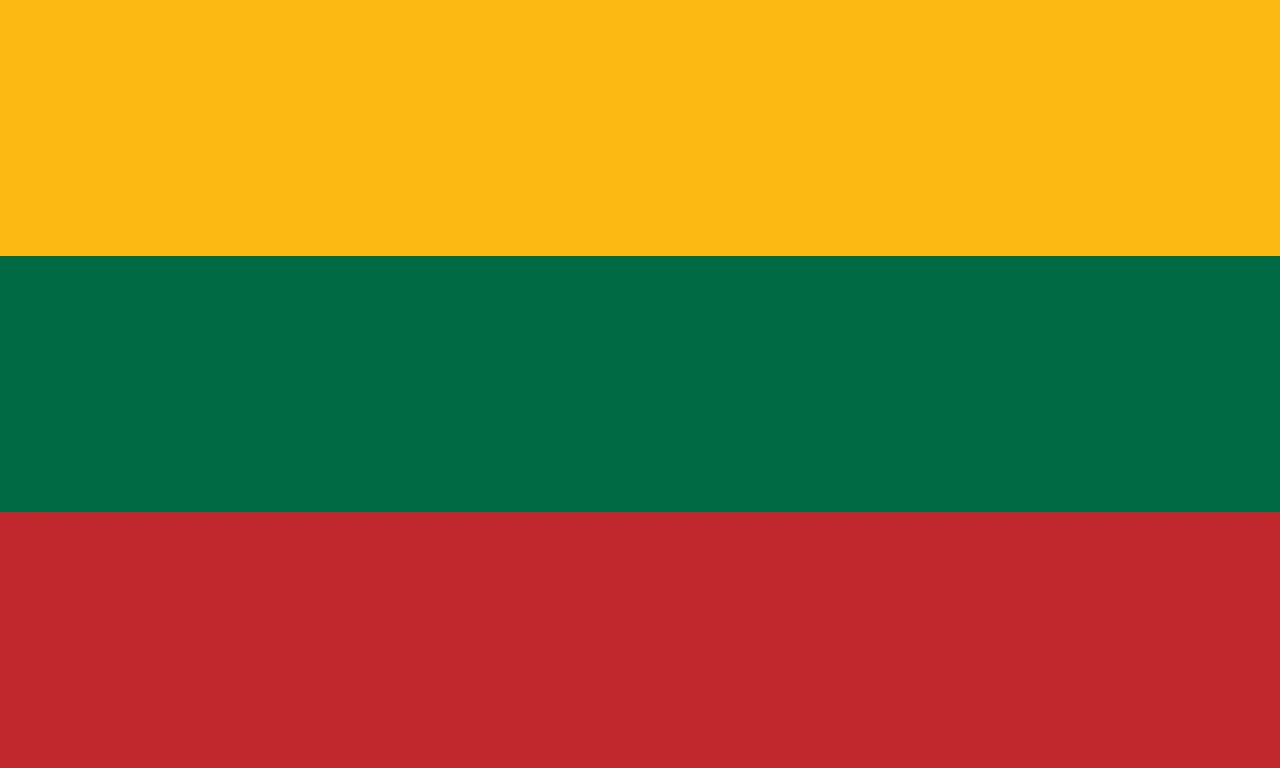
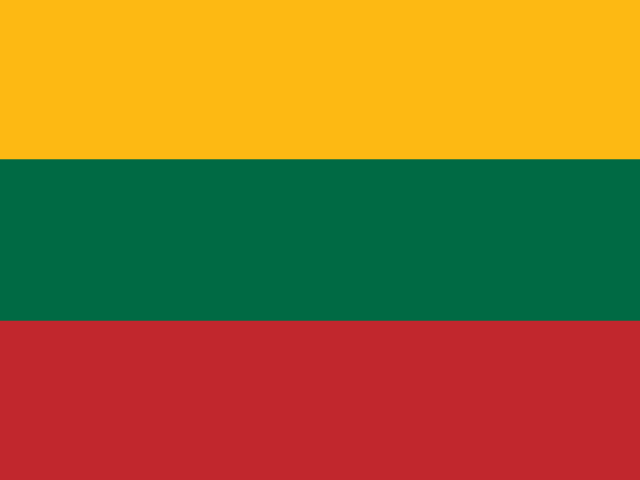
Flag of Lithuania

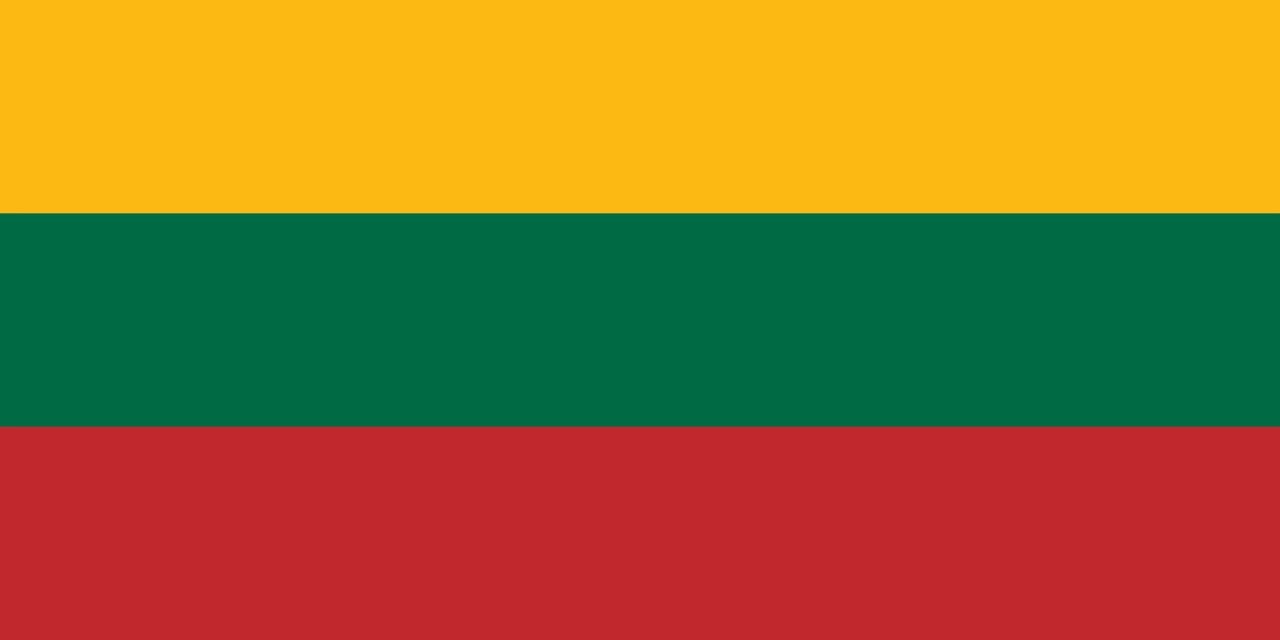
Yellow, green and red: the tricolour Lithuania chose in 1918, which the Soviet Union banned and which flew again in 1988.

Flag of Lithuania
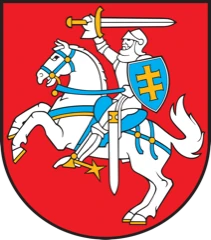
Coat of arms

The flag, in figures

Every fact about the flag, each with what it means.

Proportions
3:55 wide for every 3 high. 24 flags in the catalogue share it.
Properties
Normal flagFIAV symbol: the form of the flag.
Use
Civil, state and military, on land and at seaFIAV symbol: who may fly the flag.
Adopted
20048 July 2004 · 22 years ago
Colours
  • yellow
  • green
  • red
Reference shades: the official one may vary slightly.
Coat of arms
YesIt carries the coat of arms on the cloth.
123

Take a closer look

  1. The three stripes

  2. 1

    The yellow stripe

  3. 2

    The green stripe

  4. 3

    The red stripe

How it is described

The flag in the words of vexillology and heraldry.

Vexillological description

It is a rectangular field with a 3:5 ratio and three equal horizontal stripes.

Stripes
from top to bottom, yellow, green and red, of the same thickness.
Field
no coat of arms or figures.
Detail
until 2004 the Lithuanian flag was made more elongated (1:2); the change of shape brought it closer to that of its neighbours. The yellow, green and red had already been agreed in 1918, when independence was declared.
What it carries

Each element and how many of the 1,390 flags in the catalogue carry it. In yellow, the rarest.

Its history in dates

Every date in its story, at a glance.

  1. 1917

    In 1917 a green and red flag was proposed

  2. 1918

    A commission made up of him, Jonas Basanavičius and Antanas Žmuidzinavičius presented the final…

The full story

How it was born, how it has changed and what it means.

The flag of Lithuania has three equal horizontal stripes: yellow, green and red. It is a young flag for a country with so much history: Lithuania was a grand duchy in the Middle Ages, but this tricolour was born a little over a century ago.

How it came about

In the late nineteenth century Lithuania was part of the Russian Empire, and the Lithuanians argued over what flag should represent them. Some preferred the old red standard with the Vytis, a white knight on horseback. Others wanted the colours of the folk costume.

In 1917 a green and red flag was proposed, but to many it seemed too dark and sad. The painter Tadas Daugirdas suggested adding the yellow, like a rising sun. A commission made up of him, Jonas Basanavičius and Antanas Žmuidzinavičius presented the final design, and the Council of Lithuania approved it on 25 April 1918.

How it has changed

The tricolour was replaced for almost half a century and, on returning, ended up changing its shape.

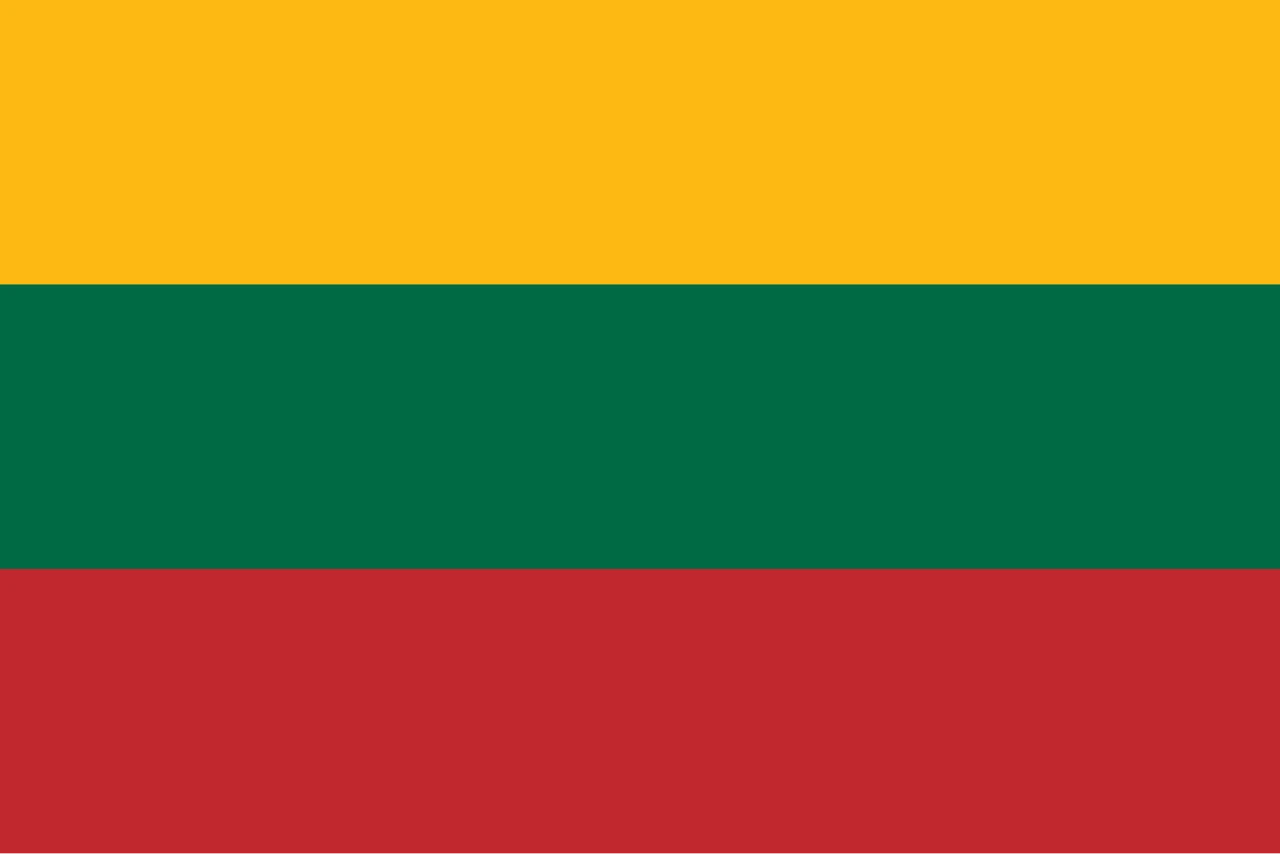
  1. Yellow, green and red tricolour
    Original: Jonas Basanavičius, Tadas Daugirdas and Antanas Žmuidzinavičius Vector: Conti · Public domain

    1918

    The Council of Lithuania approves the yellow, green and red tricolour.

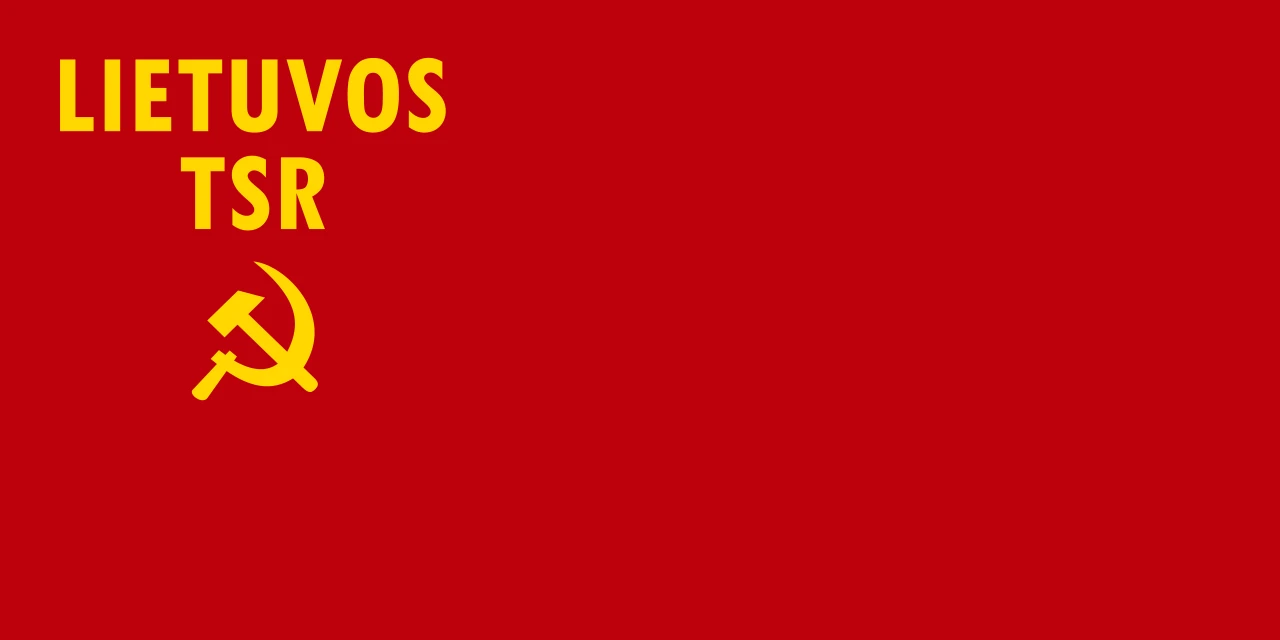
  2. Red flag with the hammer and sickle of Soviet Lithuania
    Vectorized by Froztbyte · Public domain

    1940

    The Soviet Union occupies the country and replaces the tricolour with a red flag with the hammer and sickle.

  3. Very elongated Lithuanian tricolour, with a 1:2 ratio
    Original: Jonas Basanavičius, Tadas Daugirdas and Antanas Žmuidzinavičius Vector: Conti · Public domain

    1988

    The tricolour returns to the streets with the Sąjūdis movement. On 7 October it flies on the tower of Gediminas castle in Vilnius, and in November it is recognised as the official flag.

  4. Current flag of Lithuania

    2004

    The shape changes: it goes from 1:2, very elongated, to 3:5.

What it means

The most accepted explanation is this:

  • Yellow

    the sun, the light and the cereal fields.

  • Green

    the forests, the countryside and hope.

  • Red

    the blood and the courage of those who defended the country.

Fun facts

  1. A sun to cheer it up

    The yellow was not in the first proposal: it was added so that the flag would not come out so gloomy.

  2. The other flag

    Since 2004 Lithuania also has a historical flag, red with the knight Vytis, which is hoisted on marked days.

  3. An inherited measurement

    The tricolour recovered in 1988 copied the 1:2 ratio of the Soviet flag. It was not corrected until 2004.

Country facts

Where it is and what borders it.

Capital
Vilnius
Area
65,300 km²
Country
Republic of Lithuania
Continent
Europe
Subregion
Northern Europe
Independent state
Yes
UN member
Yes
ISO code
LTU · LT

4 neighbouring countries

How much have you learnt?

Test what you have read about the flag of Lithuania.

  1. 1. Which one is the flag of Lithuania?

  2. 2. What are the proportions (height:width) of the flag?

  3. 3. In which year was the current flag adopted?

Sources

Text based on the article “Bandera de Lituania” from the Spanish Wikipedia, published under the licence CC BY-SA 4.0.

Sources consulted:

Credits

Flag image: Original: Jonas Basanavičius, Tadas Daugirdas and Antanas Žmuidzinavičius Vector: SKopp, Wikimedia Commons · Public domain.

More flags

Accessibility preferences

Accessibility statement

Quick profiles

Text and reading

Text size
Default
Line height
Default
Letter spacing
Default
Word spacing
Default

Colour

Motion and orientation

Cursor