Skip to content

Wiki Banderas
Open menu

Flag of Stjordal

A yellow dragon on red: the flag of Stjørdal (Norway) came from a seal of 1344 in which Saint Margaret trampled the monster.

Flag of Stjordal
Coat of arms

The flag, in figures

Every fact about the flag, each with what it means.

Proportions
8:1111 wide for every 8 high. 5 flags in the catalogue share it.
Properties
Normal flagFIAV symbol: the form of the flag.
Use
CivilFIAV symbol: who may fly the flag.
Adopted
198325 November 1983 · 43 years ago
Colours
  • red
  • yellow
Reference shades: the official one may vary slightly.
Coat of arms
YesIt carries the coat of arms on the cloth.
Origin
Seal of Stjørdal of 1344
Designer
Hallvard Trætteberg

Take a closer look

  • Field

  • Lindworm

How it is described

The flag in the words of vexillology and heraldry.

Vexillological description

It is a plain red field (the cloth) with a yellow dragon in the centre. It repeats the municipal coat of arms: ‘in red, a lying gold lindworm’. No rule fixes its ratio.

Field
red, with no stripes or borders.
Lindworm
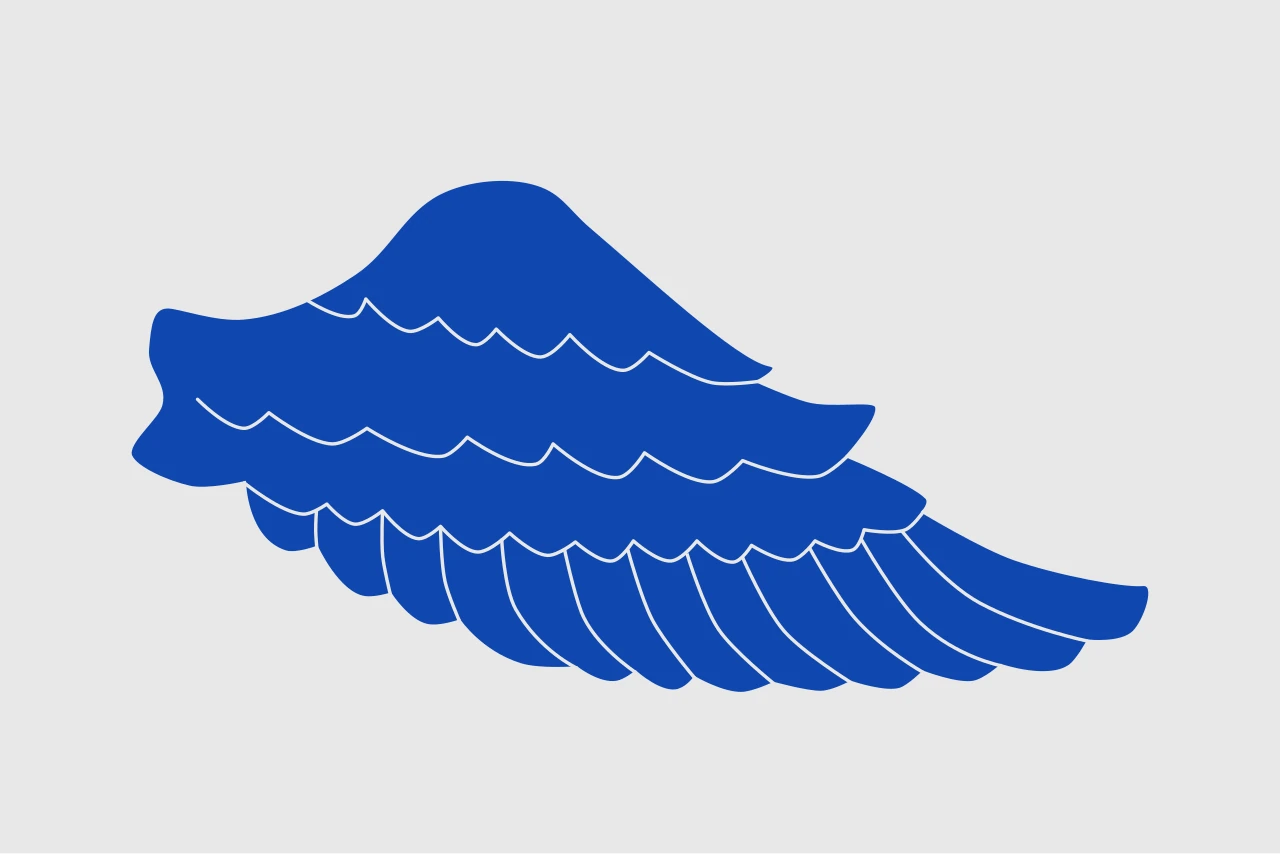
a dragon from Norse legend, with two legs and wings, drawn in yellow. It lies with its head towards the flagpole and its tail raised towards the fly side.
What it carries

Each element and how many of the 1,390 flags in the catalogue carry it. In yellow, the rarest.

Its history in dates

Every date in its story, at a glance.

  1. 1344

    In 1344 the representatives of Stjørdal sealed a document with an image of Saint Margaret…

  2. 1983

    The king approved them on 25 November 1983

The full story

How it was born, how it has changed and what it means.

The flag of Stjørdal, a municipality in the Trøndelag region of Norway, is red with a yellow dragon. The dragon comes from a medieval seal.

How it came about

In 1344 the representatives of Stjørdal sealed a document with an image of Saint Margaret of Antioch standing on a dragon. The main church of the valley, in Værnes, was dedicated to her. In the late 19th century the municipality used that seal again.

For the coat of arms and the flag it was simplified: the saint disappeared and only the dragon was left. The king approved them on 25 November 1983, with a drawing by Hallvard Trætteberg.

How it has changed

It has not changed since it was approved in 1983.

What it means

  • Dragon

    the monster that, according to the legend, Saint Margaret defeated. It recalls the patron saint of the old church of Værnes.

  • Red and yellow

    the colours of the coat of arms, which the flag copies exactly.

Fun facts

  1. A dragon of almost 700 years

    The drawing comes from the seal stamped on 17 July 1344 on a document signed at Båhus castle, today in Sweden.

  2. Drawn by Norway’s great heraldist

    Hallvard Trætteberg was the Norwegian government’s heraldic adviser for much of the 20th century. He modernised the coat of arms of Norway and drew those of dozens of municipalities.

  3. One figure and two colours

    Almost all Norwegian municipal coats of arms and flags follow the same rule: a single figure and two colours. That is why the saint from the seal was left out.

Location

How much have you learnt?

Test what you have read about the flag of Stjordal.

  1. 1. Which one is the flag of Stjordal?

  2. 2. Which of these elements appears on the flag?

  3. 3. In which year was the current flag adopted?

Sources

Text based on the article “Stjørdal, Nord-Trøndelag (Norway) — Flags of the World” from the Spanish Wikipedia, published under the licence CC BY-SA 4.0.

Sources consulted:

Credits

Flag image: Strenatos, Wikimedia Commons · Public domain.

More flags

Accessibility preferences

Accessibility statement

Quick profiles

Text and reading

Text size
Default
Line height
Default
Letter spacing
Default
Word spacing
Default

Colour

Motion and orientation

Cursor