Skip to content

Wiki Banderas
Open menu

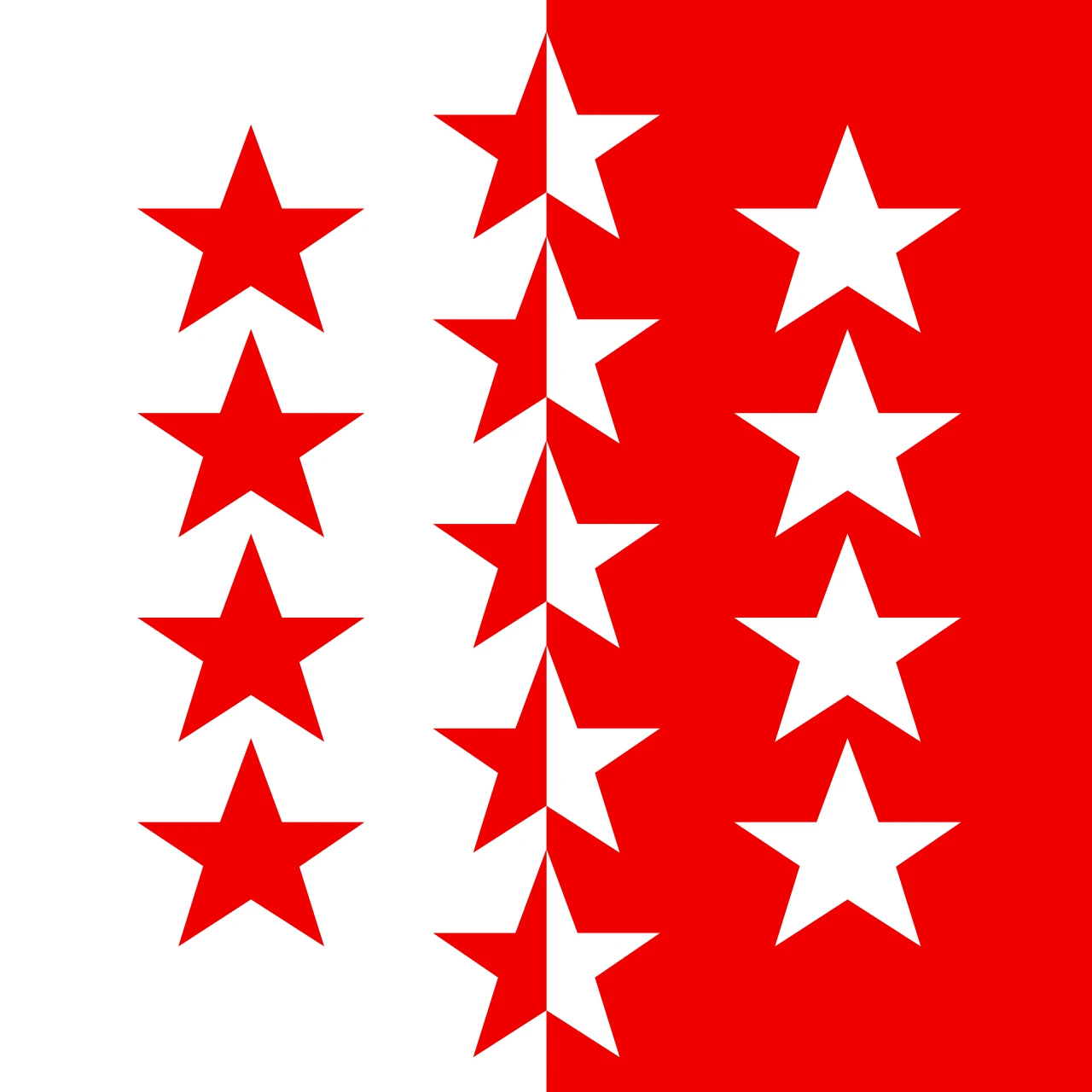
Flag of Valais

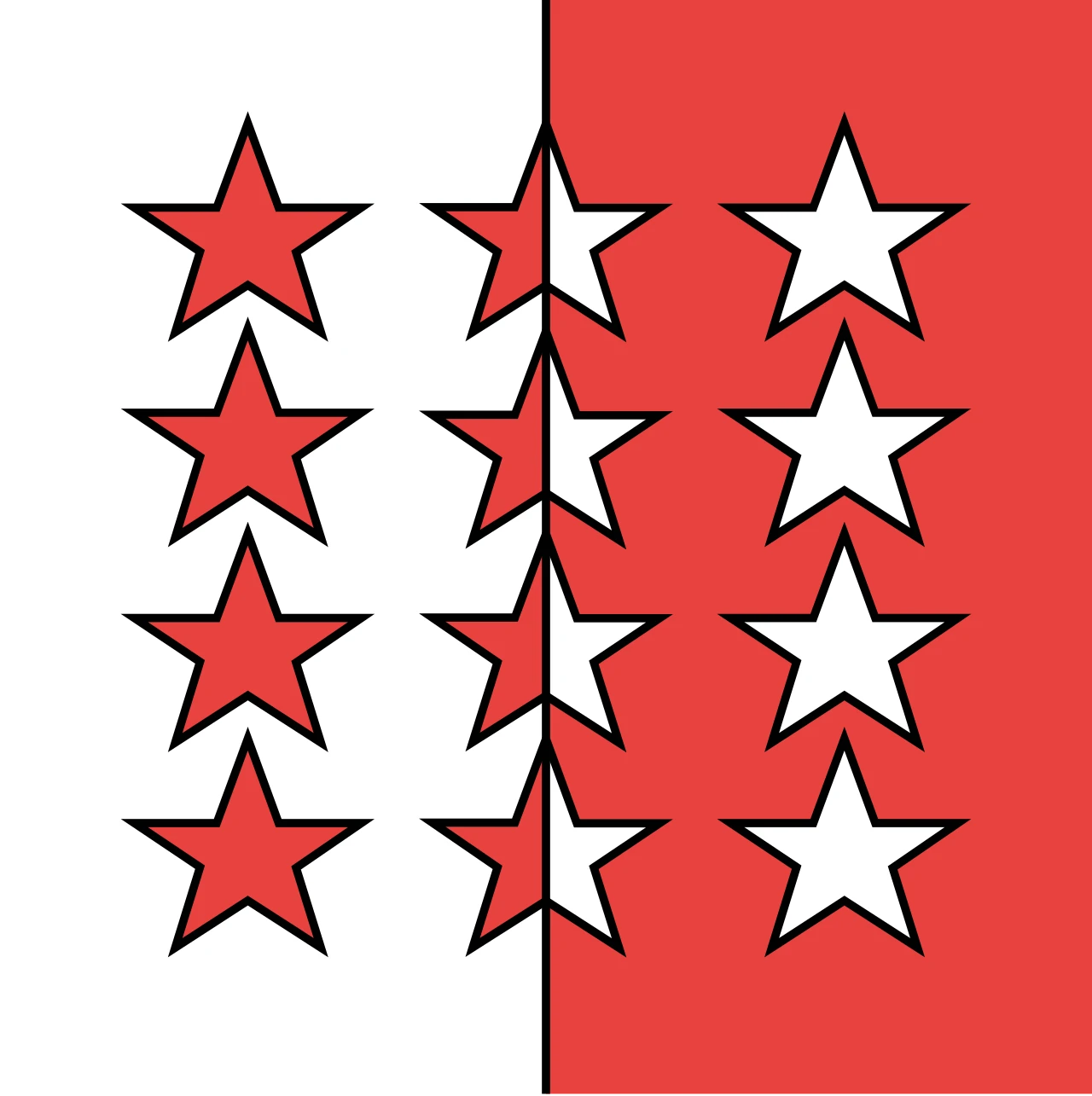
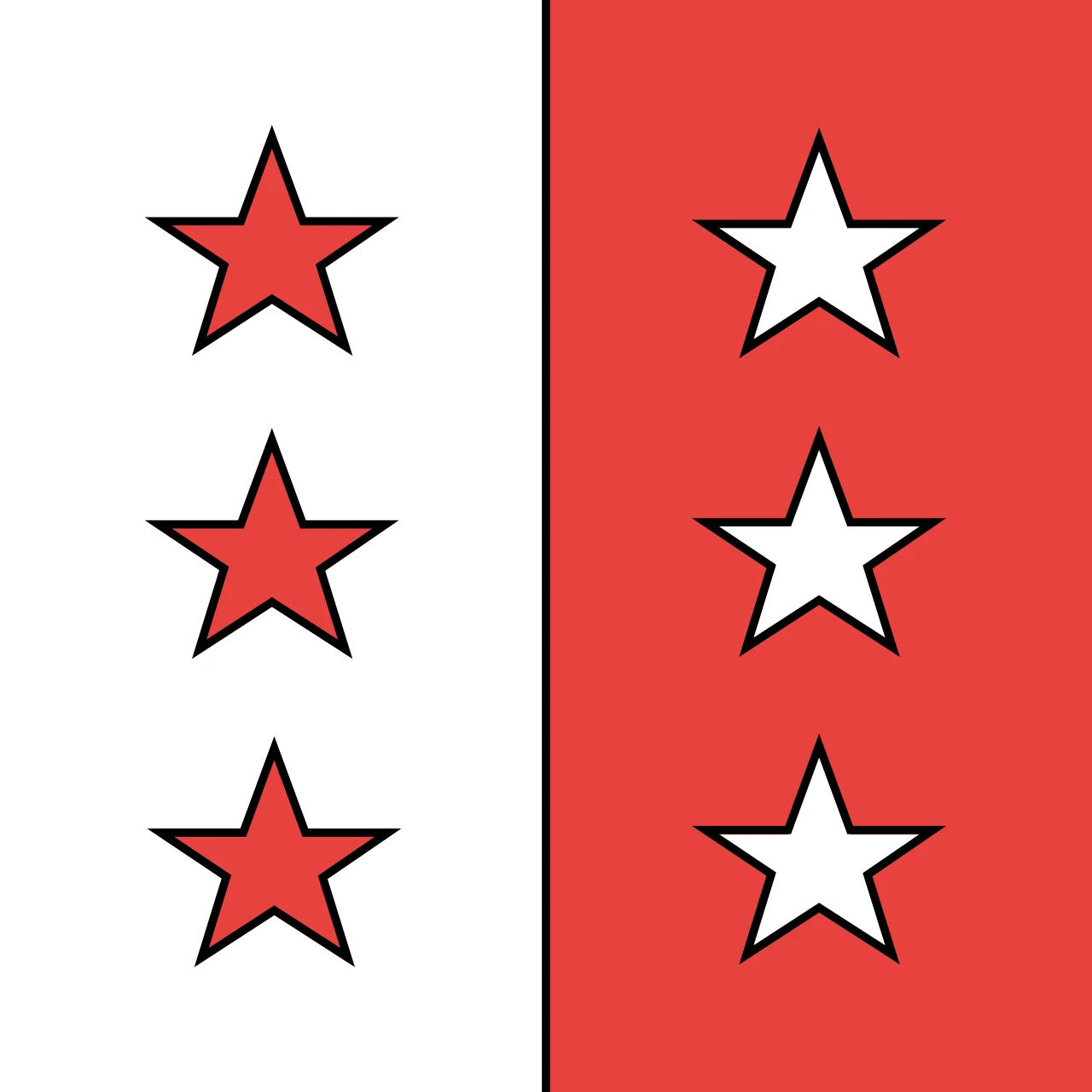
Thirteen stars in three rows on white and red: each star is a district of the canton, and the number was fixed by the constitution of 1815.

Flag of Valais

The flag, in figures

Every fact about the flag, each with what it means.

Proportions
1:11 wide for every 1 high. 29 flags in the catalogue share it.
Properties
Normal flagFIAV symbol: the form of the flag.
Use
CivilFIAV symbol: who may fly the flag.
Adopted
181512 May 1815 · 211 years ago
Colours
  • White
  • Red
Reference shades: the official one may vary slightly.

Take a closer look

  • Field

  • Stars

  • Arrangement

How it is described

The flag in the words of vexillology and heraldry.

Vexillological description

It is a square field, of a 1:1 ratio, divided horizontally into two halves of sixteen alternating red and white stripes, with thirteen white five-pointed stars, each on red.

Field
square (1:1), sixteen horizontal stripes alternating red and white.
Stars
thirteen, white, five-pointed, on red.
Arrangement
five on the left, five on the right and three on the central line.
What it carries

Each element and how many of the 1,390 flags in the catalogue carry it. In yellow, the rarest.

Its history in dates

Every date in its story, at a glance.

  1. 1220

    The red and white belong to the bishop of Sion, lord of the valley since the Middle Ages:…

  2. 1628

    in 1628 France, Savoy and the Confederation recognise Valais as a free republic

  3. 1802

    The law of 4 September 1802 fixes twelve stars: when the lower valley joined

  4. 1815

    The constitution of 12 May 1815

The full story

How it was born, how it has changed and what it means.

The flag of Valais cuts the field in two, white by the hoist and red after it, and lines up thirteen five-pointed stars in three rows: four red, five straddling the line and four white. Almost nobody put stars like that on a flag when they were first drawn.

How it came about

The red and white belong to the bishop of Sion, lord of the valley since the Middle Ages: his standard, divided in the two colours, is documented around 1220. Valais was not a state but a republic of communities called dizains, almost independent, each with its own flag. When they unified, around the turn of the sixteenth century, they added stars to the bishop’s field: at first without counting districts, and in a number varying between six and sixteen.

How it has changed

The stars were counted from the seventeenth century, and the number followed politics: seven when Valais was recognised as a free republic, twelve on the creation of the Helvetic canton and thirteen when it joined the Confederation.

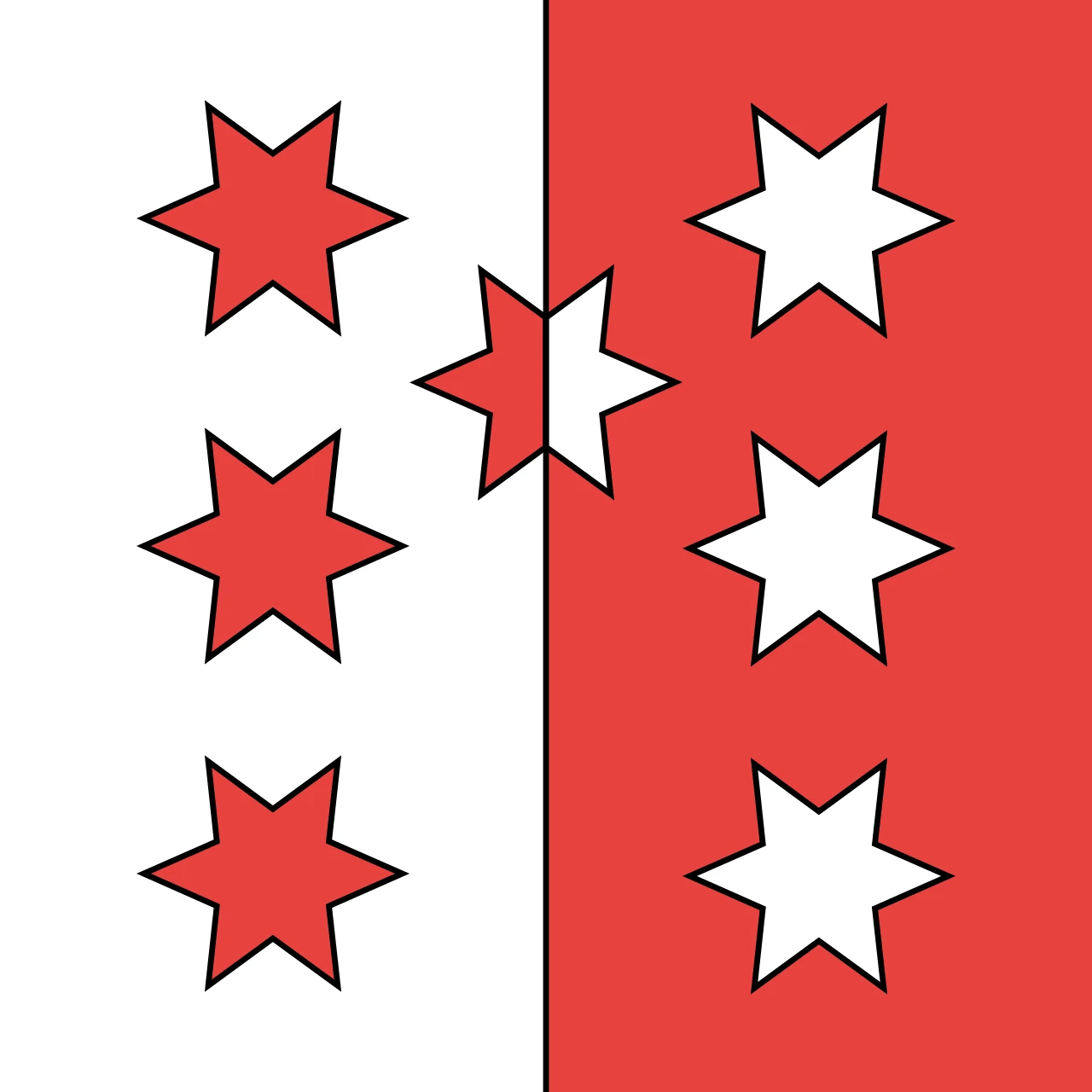
  1. Flag of Valais with six stars in two rows
    Ngagnebin · Public domain

    1498-1628

    The first drawings with fixed stars: six, corresponding to the six dizains united in a republic.

  2. Flag of Valais with seven stars
    Ngagnebin · Public domain

    1628-1802

    A seventh dizain joins the republic and adds its star; in 1628 France, Savoy and the Confederation recognise Valais as a free republic.

  3. Flag of Valais with twelve stars in two rows
    Ngagnebin · Public domain

    1802-1815

    The law of 4 September 1802 fixes twelve stars: when the lower valley joined, they are divided six and six across the two fields.

  4. Current flag of Valais with thirteen stars

    1815

    The constitution of 12 May 1815, with the entry into the Confederation, creates the thirteenth district: the thirteen stars in three rows of today are born.

What it means

  • White and red

    the colours of the bishop of Sion, documented since 1220.

  • Thirteen stars

    the thirteen dizains or districts of the canton; the central row is shared, astride the line. Their number has not moved since 1815.

Fun facts

  1. Almost nobody used stars

    The historian Whitney Smith noted that in 1795 five-pointed stars on a flag were almost a world rarity: Valais, the German town of Norden and a few military standards were among the few examples.

  2. Napoleon erased it from the Swiss map

    In 1810 France annexed Valais outright, as the department of the Simplon, in order to control the alpine passes; in 1815 Valais returned to Switzerland already with thirteen stars.

Localisation

How much have you learnt?

Test what you have read about the flag of Valais.

  1. 1. Which one is the flag of Valais?

  2. 2. Which of these elements appears on the flag?

  3. 3. What are the proportions (height:width) of the flag?

  4. 4. In which year was the current flag adopted?

Sources

Sources consulted:

Credits

Flag image: Original: Unknown author Vector: SpinnerLaserzthe2nd, Wikimedia Commons · Public domain.

More flags

Accessibility preferences

Accessibility statement

Quick profiles

Text and reading

Text size
Default
Line height
Default
Letter spacing
Default
Word spacing
Default

Colour

Motion and orientation

Cursor