Every fact about the flag, each with what it means.
Proportions
2:33 wide for every 2 high. 989 flags in the catalogue share it.
Properties
Normal flagFIAV symbol: the form of the flag.
Use
CivilFIAV symbol: who may fly the flag.
Adopted
196226 January 1962 · 64 years ago
Colours
green
white
gold
red
Reference shades: the official one may vary slightly.
Coat of arms
YesIt carries the coat of arms on the cloth.
Take a closer look
The eight gores
1
The coat of arms
2
The mural crown
3
The ribbon with the name
How it is described
The flag in the words of vexillology and heraldry.
Vexillological description
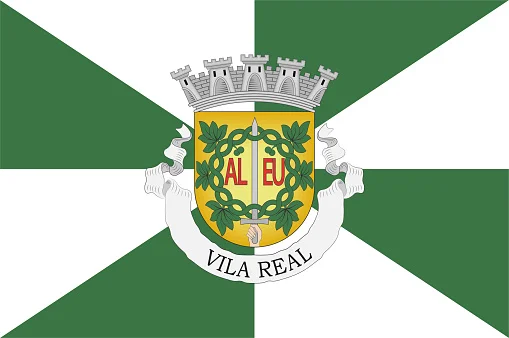
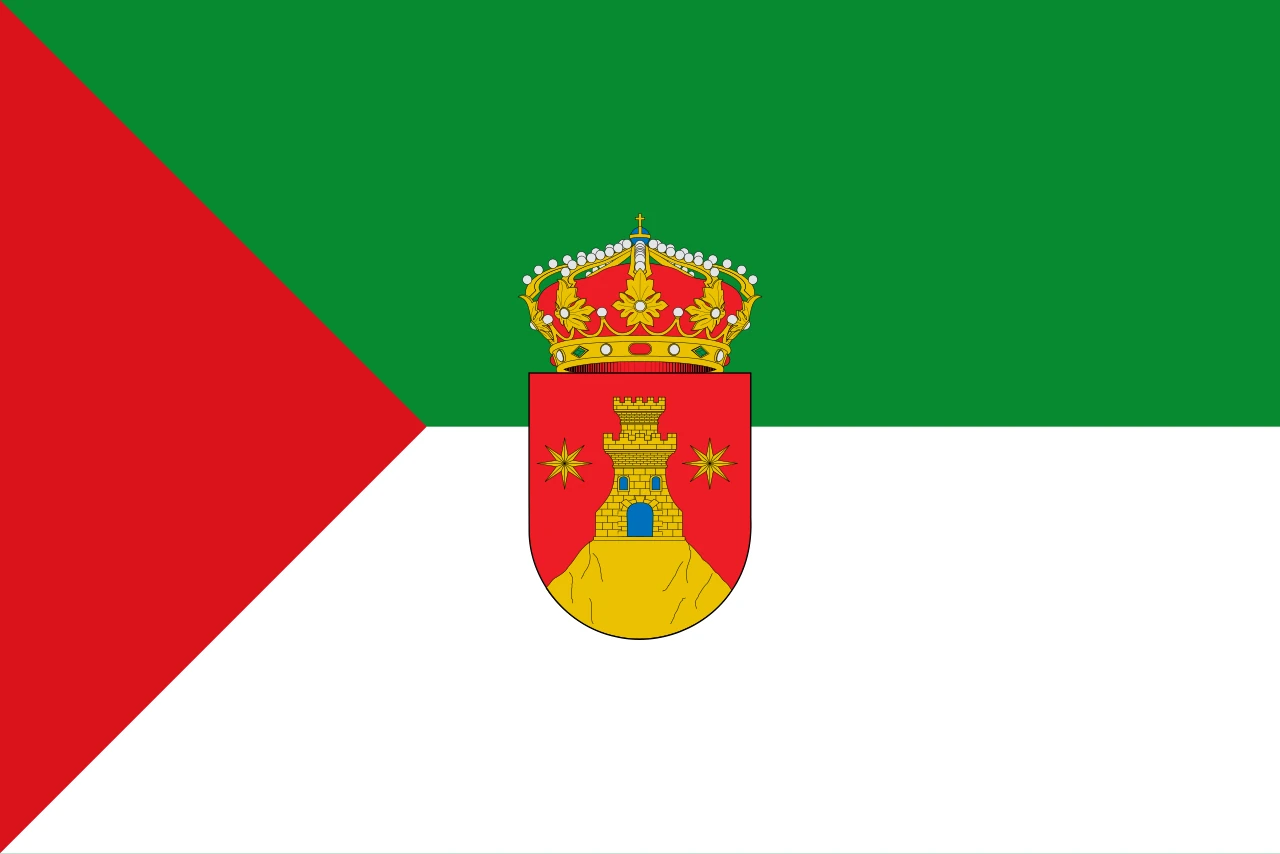
It is a rectangular field with a 2:3 ratio divided into eight green and white gores (triangles that all start at the centre), alternating, with the city arms in the centre.
Gores
four green and four white, alternating; the field is divided by a cross and on the diagonal.
Arms
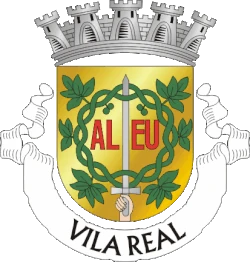
centred; a silver sword stuck in a wreath of leaves, with the word “Aleu” in the centre.
Scroll and crown
a white scroll with “VILA REAL” and, above it, a crown of five towers.
Colours
green and white on the field; the arms add gold and red.
What it carries
Each element and how many of the 1,390 flags in the catalogue carry it. In yellow, the rarest.
The arms are much older: they appear on the Fonte Nova, a fountain of 1588, where they have…
1934
This flag came late: Portalegre and Santarém received theirs in 1934 and 1935
1962
The order that fixed its symbols is of January 1962 and was published on 31 January in the Diário…
The full story
How it was born, how it has changed and what it means.
The flag of Vila Real has eight triangles, four green and four white, with the city arms in the centre. The arms are yellow, with a sword stuck into a wreath of leaves and a mysterious word in red: “Aleu”. Vila Real is the capital of the district of the same name, in the north of Portugal.
How it came about
This flag came late: Portalegre and Santarém received theirs in 1934 and 1935. The order that fixed its symbols is of January 1962 and was published on 31 January in the Diário do Governo, the official gazette now called the Diário da República. That order describes the arms, the seal and the flag: green and white, with a white scroll reading “Vila Real”.
How it has changed
The 1962 flag is the first documented and has not changed. The arms are much older: they appear on the Fonte Nova, a fountain of 1588, where they have appeared inverted since 1641.
What it means
Green and white
the eight triangles indicate that it is a city. They are the same colours as the flag of Oporto.
Sword
silver, gripped by a hand coming out of the bottom of the arms.
Wreath of leaves and “Aleu”
the word, in red, sits in the centre of the wreath.
Mural crown of five towers
the sign of a city.
The word “Aleu” is explained in two ways. For one, it was the war cry of a medieval knight, Mem Martins. For another, it comes from the tomb of Pedro de Meneses, first count of Vila Real, and alludes to “aleo”, an old word for a game staff.
Fun facts
A staff against Morocco
According to a tradition, after the conquest of Ceuta in 1415 Pedro de Meneses played with that staff before the king and said that with it alone he would defend the city against all the power of Morocco. It is a traditional anecdote, not a documented fact.
An upside-down coat of arms
Since 1641 the arms appear inverted on the Fonte Nova, a fountain built in 1588.
Localisation
How much have you learnt?
Test what you have read about the flag of Vila Real.